
NEWS
China’s new steel export licensing system, implemented on January 1, 2026, entered its first full month of operational impact as of May 18, 2026. The policy—introduced to enhance export oversight, curb low-value exports, and align with broader industrial upgrading goals—is now visibly reshaping global procurement behavior, documentation workflows, and regional demand dynamics across key steel-consuming markets.
Event Overview
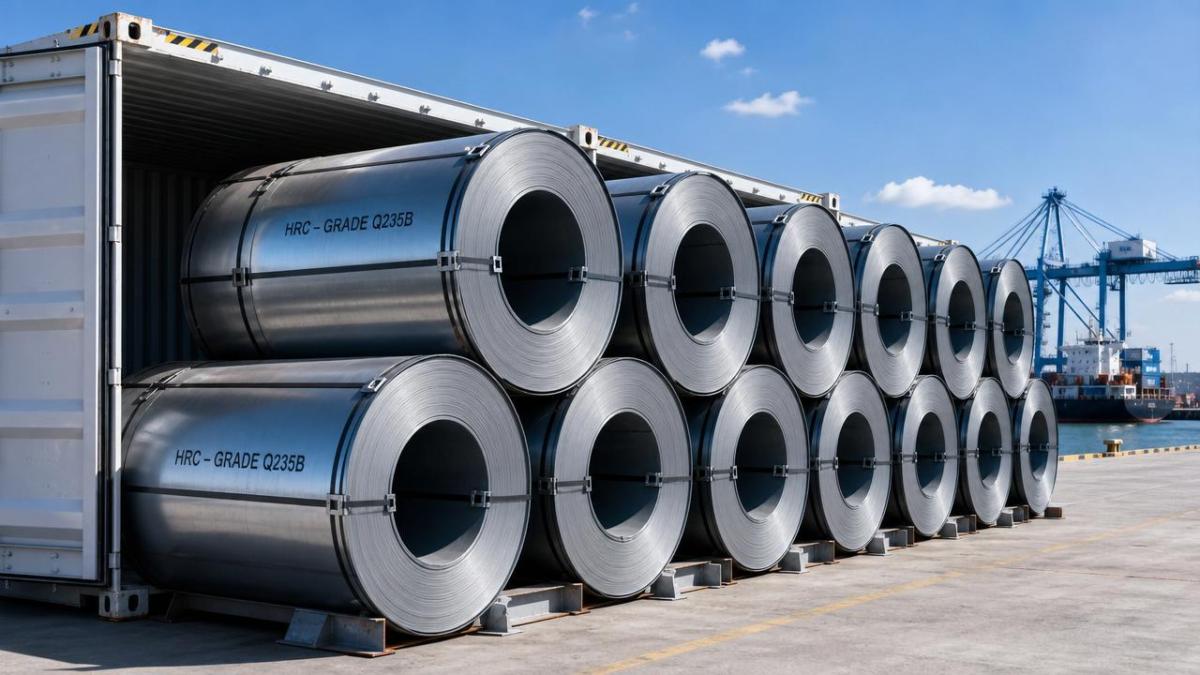
According to a weekly survey released on May 18, 2026, hot-rolled coil and billet export quotations declined modestly in the first month under the licensing regime. Order intake weakened, particularly from Southeast Asia, where demand softened under macroeconomic headwinds and tighter import scrutiny. Meanwhile, inquiry volume from Middle Eastern buyers rose notably—but actual order conversion remained limited. Domestically, billet demand held firm, supporting price stability. Market participants anticipate external export prices may stabilize starting July 2026.
Industries Affected
Direct Trading Enterprises: Export-oriented trading firms face heightened compliance burdens—including pre-shipment license applications, enhanced documentation traceability, and stricter eligibility verification for overseas buyers. Lead times for order confirmation have extended, and transaction costs have risen due to added administrative layers and third-party verification requirements.
Raw Material Procurement Enterprises: Downstream raw material buyers—especially those sourcing iron ore or scrap for export-oriented billet producers—are adjusting procurement cycles to accommodate longer production-to-shipment windows. Inventory planning now incorporates license approval timelines, increasing working capital pressure and reducing flexibility in spot purchasing.
Processing & Manufacturing Enterprises: Steel processors (e.g., galvanizers, pipe mills) relying on imported semi-finished products—such as hot-rolled coils or billets from China—are encountering delays in supply arrival and greater uncertainty around landed cost components. Some report renegotiating incoterms to shift licensing responsibility to Chinese suppliers, raising contractual complexity.
Supply Chain Service Providers: Freight forwarders, customs brokers, and trade finance institutions are updating internal protocols to verify license authenticity, validate end-user declarations, and support clients in real-time license status tracking. Demand is rising for integrated digital platforms that link license issuance, bill-of-lading generation, and customs clearance data.
Key Focus Areas & Recommended Actions
Verify Supplier Licensing Status Proactively
Importers must now confirm that their Chinese suppliers hold valid, category-specific export licenses prior to contract signing—not after shipment. License validity should be cross-checked against China’s Ministry of Commerce (MOFCOM) public portal; expired or mismatched licenses risk customs rejection at destination ports.
Reassess Lead Time Assumptions
License processing currently averages 5–7 business days post-application, but varies by product category and exporter history. Buyers should extend procurement lead times by at least 10–12 days and build buffer inventory for critical SKUs—especially for hot-rolled products facing elevated scrutiny.
Evaluate Documentation Responsiveness
Exporters’ ability to issue compliant commercial invoices, packing lists, and origin certificates within 48 hours of license approval has become a de facto performance benchmark. Importers should include documentation SLAs in supplier contracts and conduct quarterly audits of response timeliness.
Editorial Perspective / Industry Observation
Analysis shows the licensing system is functioning less as a volume control mechanism—and more as a structural filter. It is not suppressing exports outright, but rather accelerating market segmentation: high-compliance, vertically integrated exporters gain share, while smaller traders with fragmented supply chains face margin compression or exit. Observably, the policy’s most immediate effect lies in recalibrating buyer expectations—not on price, but on procedural reliability. From an industry perspective, this signals a broader shift toward “compliance-first” sourcing in global steel trade, where trust in documentation integrity now rivals quality or cost in procurement decision hierarchies. Current data does not yet support claims of long-term export contraction; instead, it suggests a transitional realignment period extending through Q3 2026.
Conclusion
The first-month performance of China’s steel export licensing system underscores a maturing regulatory approach—one prioritizing transparency, traceability, and systemic resilience over blunt administrative controls. For global stakeholders, the change is less about reduced access and more about redefined accountability. A rational interpretation is that the policy strengthens long-term market discipline, even as it imposes near-term adaptation costs across the value chain.
Source Attribution
Data sourced from the Ministry of Commerce of the People’s Republic of China (MOFCOM) official release dated May 18, 2026, supplemented by proprietary weekly export sentiment surveys conducted by China Iron & Steel Association (CISA). Note: MOFCOM’s public license registry remains under phased rollout; full transparency on license categories and renewal criteria is pending further guidance—this remains under active observation.
NEWS NAVIGATION
CONTACT US