
NEWS
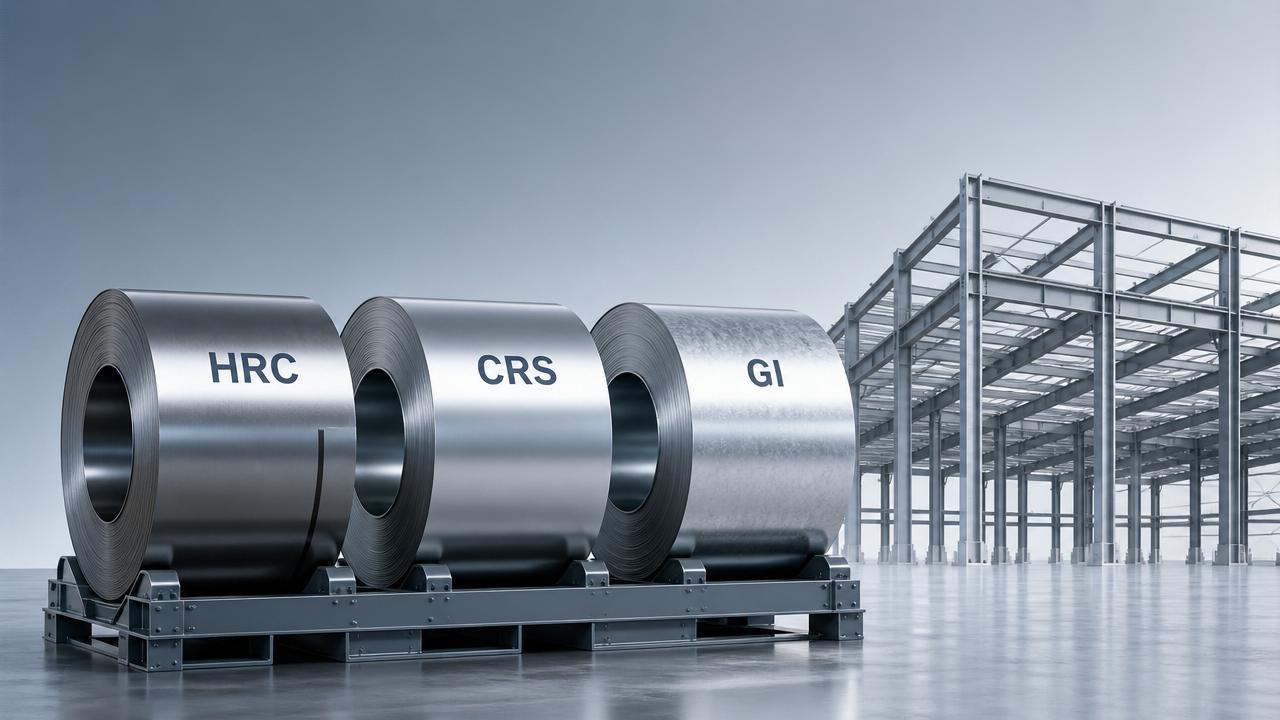
South Africa’s government announced a significant increase in import tariffs on key steel products effective 20 May 2026 — a move poised to reshape trade flows, pricing strategies, and supply chain planning for Chinese exporters and their regional partners.
Event Overview
On 20 May 2026, the South African government implemented immediate tariff hikes on hot-rolled coil, cold-rolled sheet, and galvanized steel sheet — raising duties to a range of 25%–35%. The stated objective is to strengthen domestic steel production capacity and safeguard local mills from imported competition.
Industries Affected
Direct Trading Enterprises
Chinese steel exporters with active distribution networks or project-based sales in South Africa face direct margin pressure. The new tariffs apply at the point of customs clearance, meaning landed cost increases are unavoidable unless absorbed by the exporter or passed on to buyers. This may trigger contractual renegotiations — especially under Incoterms® such as CIF or CFR where pricing was set pre-tariff change. Additionally, increased scrutiny of origin documentation (e.g., Form A, Certificate of Origin) is now expected during customs processing.
Raw Material Procurement Enterprises
Firms sourcing semi-finished or finished steel from China for onward use in South Africa — including trading houses supplying construction contractors or infrastructure developers — must reassess landed cost models. Higher duties compound existing logistics and currency volatility risks. Some may shift toward alternative suppliers in Turkey, India, or Egypt where preferential trade agreements or lower effective duties apply — though product specification alignment remains a constraint.
Manufacturing & Fabrication Enterprises
Local South African fabricators importing Chinese steel for downstream manufacturing (e.g., structural components, roofing systems, or agricultural equipment) confront dual challenges: rising input costs and longer customs clearance timelines due to enhanced verification protocols. This could delay project schedules and prompt accelerated evaluation of local or regional alternatives — even if quality consistency or lead time trade-offs exist.
Supply Chain Service Providers
Freight forwarders, customs brokers, and trade compliance consultants operating in the China–South Africa corridor are seeing increased demand for tariff classification support, origin verification audits, and real-time duty impact simulations. The shift also raises the value of bonded warehousing and JIT inventory solutions that help clients stagger imports and manage cash flow amid tariff uncertainty.
Key Considerations & Recommended Actions
Review Contractual Terms and Incoterms® Allocation
Exporters and importers should audit active contracts for force majeure clauses, price adjustment mechanisms, and responsibility for tariff-related cost increases — particularly where DAP or DPU terms place customs duty liability on the seller.
Validate and Strengthen Origin Documentation
Given heightened customs scrutiny, enterprises must ensure all Certificates of Origin meet South African Revenue Service (SARS) requirements — including correct HS code alignment, accurate consignment details, and authorized chamber of commerce certification. Pre-shipment verification is advisable.
Model Alternative Sourcing Scenarios
For long-term procurement planning, companies should benchmark landed costs from non-Chinese origins (e.g., Vietnam, Türkiye, or UAE-based mills), assess logistics feasibility, and evaluate minimum order quantity implications — not as replacements, but as strategic hedges.
Editorial Insight / Industry Observation
Analysis shows this tariff revision reflects a broader trend across emerging markets: shifting from broad-based protectionism to targeted, product-specific measures aligned with industrial policy goals. Observably, South Africa’s move follows recent capacity expansions at ArcelorMittal South Africa and renewed emphasis on beneficiation under the National Development Plan. From an industry perspective, the 25–35% band appears calibrated not only to deter volume-driven imports but also to incentivize localized assembly or finishing — suggesting future regulatory attention may extend beyond raw steel to downstream value-added categories. Current data — showing an 18.7% year-on-year decline in Chinese steel exports to South Africa for Jan–Apr 2026 — signals market sensitivity; however, it remains unclear whether this reflects pre-emptive order acceleration or genuine demand softening. What is more telling is the acceleration in local procurement discussions among engineering contractors — a shift better understood as structural adaptation rather than temporary friction.
Conclusion
This tariff adjustment marks more than a short-term cost recalibration — it signals a tightening of the operational envelope for international steel trade into South Africa. For Chinese exporters, success will depend less on price competitiveness alone and more on agility in compliance, transparency in origin assurance, and collaboration with local partners to co-develop adaptive supply models. Rational observation suggests the policy’s long-term impact will be measured not in tariff revenue, but in how quickly — and how sustainably — supply chains reconfigure around localization imperatives.
Source Attribution
Official announcement issued by the South African Department of Trade, Industry and Competition (DTIC), 20 May 2026. Supporting export data sourced from China Iron and Steel Association (CISA) and corroborated by Lan ge Steel Research Center. Customs implementation guidance published by the South African Revenue Service (SARS) on 21 May 2026. Note: Further detail on tariff application scope (e.g., exemptions, transitional arrangements, or product exclusions) remains pending official clarification and is under ongoing monitoring.
NEWS NAVIGATION
CONTACT US