
NEWS
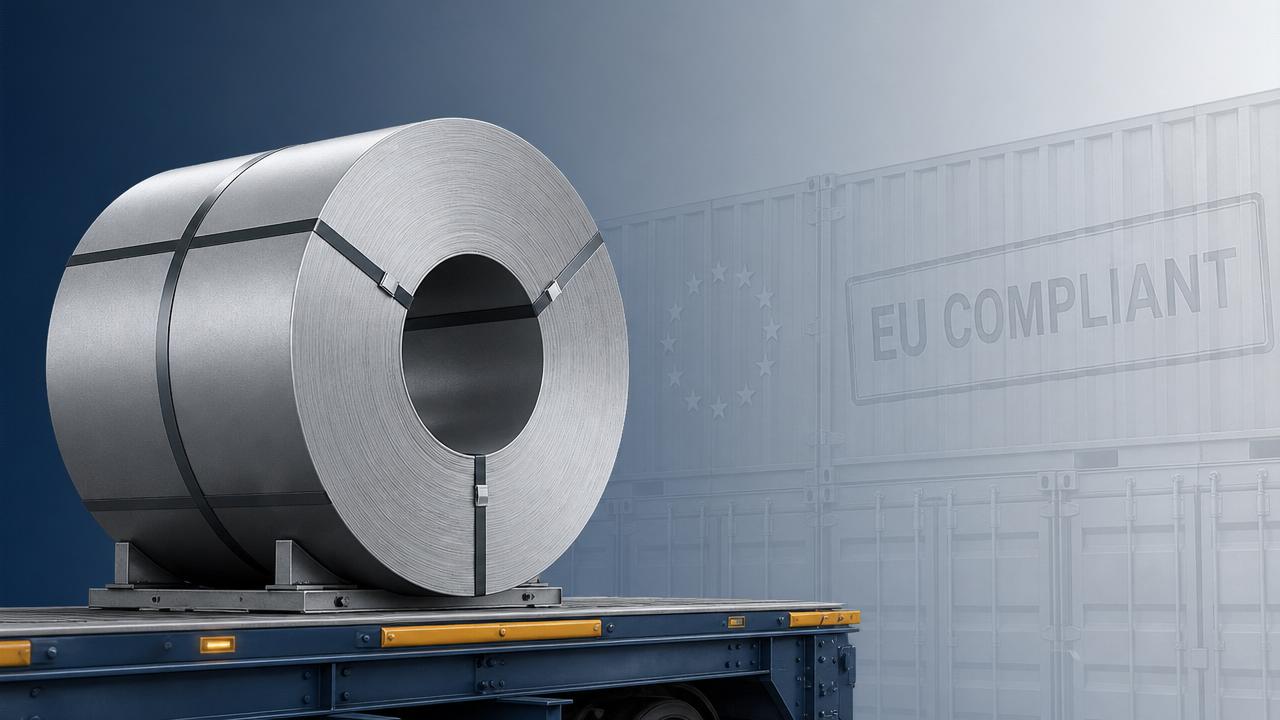
On 19 May 2026, the European Parliament adopted a revised steel import regulation—approved by 606 votes in favour and 16 against—with implementation scheduled from June 2026. The measure significantly tightens market access for non-EU steel exporters, particularly affecting producers and traders of semi-finished and finished steel products. Exporters, customs compliance providers, and EU-based steel distributors should closely monitor its operational implications.
Event Overview
On 19 May 2026, the European Parliament passed the updated Steel Import Regulation. It enters into force in June 2026. Key provisions include: (1) the annual duty-free quota reduced from 34.8 million tonnes to 18.3 million tonnes—a 47% cut; (2) the tariff on imports exceeding the quota increased from 25% to 50%; and (3) a new ‘melting and casting’ origin tracing rule introduced to prevent transshipment via third countries.
Impact on Specific Industry Segments
Direct Trading Enterprises
These include exporters—especially those based in China—who ship steel slabs, billets, hot-rolled coils, and finished structural products directly to EU customers. The quota reduction and tariff hike directly compress profit margins and increase landed cost uncertainty. Delivery timelines may extend due to stricter origin verification, and fast-turnover models face higher compliance overhead.
Raw Material Procurement Entities
Firms sourcing semi-finished steel (e.g., blooms, slabs) for further processing before export are affected by the ‘melting and casting’ origin rule. Suppliers must now document furnace-level production data—not just final product origin—to qualify for quota allocation or avoid punitive tariffs. This adds traceability requirements upstream of export preparation.
Steel Processing & Manufacturing Firms
EU-based processors importing semi-finished steel for rolling, galvanising, or fabrication face higher input costs and tighter quota availability. Their ability to secure consistent volumes under the reduced 18.3 Mt quota may constrain production planning—particularly for firms relying on just-in-time supply chains.
Distribution & Channel Operators
EU-based steel distributors and service centres handling imported stock face dual pressure: diminished quota access per supplier and increased documentation burdens for each consignment. Inventory turnover models may need recalibration, especially where rapid resale of imported goods was previously standard practice.
Supply Chain & Compliance Service Providers
Customs brokers, certification bodies, and logistics platforms supporting steel exports must adapt systems to verify and attest to melting/casting origin. Demand is likely to rise for technical documentation support—including furnace logs, ladle numbers, and heat treatment records—though no formal template has yet been published by EU authorities.
What Relevant Enterprises or Practitioners Should Focus On
Monitor official guidance on origin verification protocols
The ‘melting and casting’ rule is newly introduced and lacks detailed implementation guidelines. Enterprises should track updates from the European Commission’s Directorate-General for Taxation and Customs Union (TAXUD) and national customs administrations—especially regarding acceptable evidence formats and audit expectations.
Assess exposure by product category and shipment timing
Not all steel products are equally affected. Slabs, billets, and hot-rolled coils—commonly exported from China—are high-priority categories under scrutiny. Firms should map current and planned shipments against the 18.3 Mt annual quota, factoring in lead times and potential delays from origin checks.
Distinguish between regulatory signal and enforceable requirement
The 50% tariff applies only to volumes exceeding the quota—and only after full quota exhaustion is verified across all reporting channels. Until real-time quota tracking becomes publicly accessible, actual enforcement thresholds remain subject to administrative interpretation. Businesses should treat early-month quota usage reports as indicative, not definitive.
Prepare documentation workflows ahead of June 2026
Origin tracing requires furnace-level production records—not just mill certificates. Exporters should engage with domestic steel mills now to confirm data availability, format compatibility, and chain-of-custody integrity from melting through casting and rolling. Internal compliance teams should pilot documentation packages for at least one representative shipment before rollout.
Editorial Perspective / Industry Observation
Observably, this regulation signals a structural shift—not merely a cyclical adjustment—in how the EU manages steel trade exposure. The 47% quota cut and doubling of the over-quota tariff go beyond safeguard measures previously applied; they reflect an explicit policy choice to prioritise domestic capacity protection and supply chain sovereignty. Analysis shows the ‘melting and casting’ rule is designed less to deter legitimate trade than to raise barriers to indirect routing—making it harder for exporters to obscure origin through intermediate processing in third countries. From an industry perspective, this is best understood as a medium-term recalibration trigger: it does not immediately halt trade, but it demands earlier, deeper, and more granular engagement with compliance infrastructure. Continuous monitoring remains essential—not because details are pending, but because enforcement consistency and quota administration practices will evolve incrementally through 2026 and beyond.
In summary, the EU’s revised steel import rules represent a material tightening of market access conditions—not a temporary safeguard. Their significance lies not in abrupt disruption, but in the sustained operational adjustments they necessitate across sourcing, documentation, logistics, and commercial planning. Current conditions favour a pragmatic, process-oriented response: verifying data readiness, mapping quota exposure by product line, and treating origin tracing as a systemic requirement—not a one-off certification task.
Source: European Parliament legislative record (adopted 19 May 2026); official text of Regulation (EU) No [to be assigned], as published in the Official Journal of the European Union (forthcoming).
Note: Full technical specifications for the ‘melting and casting’ origin verification mechanism remain pending publication and are subject to ongoing consultation.
NEWS NAVIGATION
CONTACT US