
NEWS
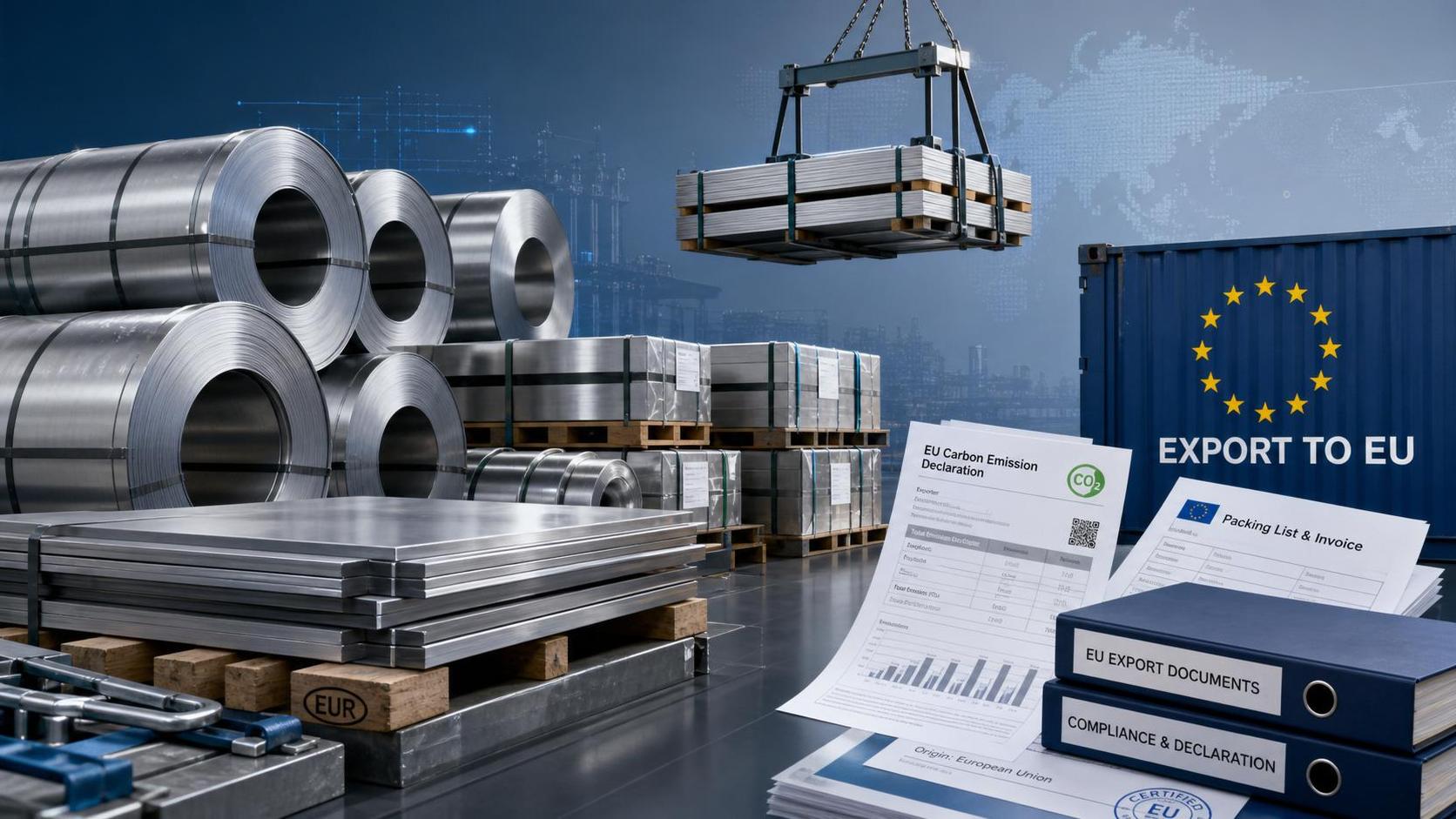
On June 26, 2026, the European Commission issued updated phase-three implementation rules for the CBAM transition period covering steel imports. From October 1, 2026, exporters shipping products such as hot-rolled coil, cold-rolled sheet, and stainless steel semi-finished materials to the EU will need to submit quarterly embedded carbon emissions data through the EU-MRVS system and link that reporting to an accredited third-party verifier. For Chinese steel exporters and the service providers around them, the development is worth close attention because it touches customs preparation, compliance cost, and delivery timing at the same time.
What the June 26 update confirms
The confirmed update is that the European Commission formally released detailed rules for the third stage of the CBAM transition period on June 26, 2026. The rules specify that, starting on October 1, 2026, steel products exported to the EU including hot-rolled coil, cold-rolled sheet, and stainless steel semi-finished products must report quarterly embedded carbon emissions data through the EU-MRVS system. The rules also require those filings to be tied to an accredited third-party verification body. The information provided further indicates that the new requirements directly affect customs declaration procedures, compliance costs, and delivery cycles for Chinese steel exporters.
Where the pressure is likely to appear first
Export-facing steel suppliers
From an industry perspective, exporters selling directly into the EU are the first group likely to feel the effect because the new requirement is attached to quarterly emissions reporting and third-party verification. The main impact is likely to appear in document preparation, reporting coordination, and shipment scheduling. What deserves closer attention is whether internal data collection and external submission timelines can align with existing export routines.
Processors and manufacturers in the supply chain
Analysis shows that upstream and midstream steel processors involved in hot-rolled, cold-rolled, or stainless semi-finished products may also be affected where their production information supports export declarations. The pressure point is less about policy interpretation and more about whether emissions-related data can move through the chain in a form that is usable for quarterly filing and verification. Businesses in this position should pay attention to data handoff, record consistency, and response time when exporters request supporting information.
Customs, logistics, and compliance service providers
Observably, service providers working around customs clearance, documentation, and trade compliance may face a more operational role as exporters adapt to the revised process. The impact is likely to show up in filing workflows, coordination with accredited verification bodies, and delivery planning where reporting readiness influences shipment timing. For these firms, the key change to watch is the growing connection between carbon reporting and transaction execution.
What companies should focus on now
Separate confirmed rules from later interpretation
The confirmed point is the reporting channel, the quarterly filing requirement, the covered steel categories mentioned in the input, and the obligation to connect with an accredited third-party verifier from October 1, 2026. Analysis shows that companies should distinguish these direct requirements from any later market interpretation or client-side expectation, especially when revising operating procedures.
Check product scope and filing readiness together
What deserves closer attention is the overlap between affected product categories and current EU-bound orders. For companies handling hot-rolled coil, cold-rolled sheet, and stainless steel semi-finished products, the practical issue is not only whether a product is covered, but whether the supporting emissions information can be prepared in a quarterly reporting format through EU-MRVS.
Review verifier linkage and supporting documents
Analysis shows that the requirement to associate filings with an accredited third-party verifier introduces an additional execution step, not just an additional formality. Companies should therefore focus on the availability of recognized verification support, the completeness of supporting records, and the sequencing between verification, customs-related documentation, and customer delivery commitments.
Prepare for lead-time discussions with customers and partners
Observably, the input already points to possible effects on delivery cycles. That makes communication across exporters, suppliers, service providers, and EU customers a near-term operational issue. The main point to monitor is whether new reporting and verification steps create timing pressure that needs to be reflected in order planning, document preparation, or shipment expectations.
Why this reads as more than a routine filing change
Analysis shows that this update should not be read only as a technical reporting adjustment. Within the scope of the information provided, it signals that embedded carbon reporting for steel exports to the EU is becoming more structured, more system-based, and more dependent on third-party validation during the transition period. At the same time, it is more appropriate to understand this as an implementation-stage development rather than a final statement on all future commercial effects, because the real business impact will depend on how reporting, verification, and shipment processes interact in practice.
How the market may need to frame this update
From an industry perspective, the June 26 development matters because it connects carbon disclosure requirements more directly with export execution for steel shipments to the EU. The most balanced reading is that this is both a near-term operational change and a longer-term compliance signal. It does not by itself confirm all downstream outcomes, but it clearly raises the importance of reporting readiness, verifier coordination, and timeline control for companies active in EU-bound steel trade.
Basis of this article and points for continued verification
This article is based on the user-provided news title, event date, and event summary describing the European Commission's June 26, 2026 update to CBAM transition-period reporting requirements for steel imports. For this type of industry development, commonly relevant source categories may include official announcements, company disclosures, industry association updates, authoritative media coverage, and standards-related documents. A specific official source link was not provided in the input, so it still needs to be verified on an ongoing basis. Continued attention should be given to any later official wording, further implementation clarification, and how the reporting and verification requirements are applied in actual export operations.
NEWS NAVIGATION
CONTACT US