
NEWS

On June 8, 2026, the Council of the European Union formally adopted a new steel trade protection framework that will replace the current safeguard measures on July 1. For steel exporters, EU importers, overseas distributors, and businesses relying on third-country processing before re-export, this development deserves close attention because it tightens tariff-rate quota (TRQ) conditions, adds a Melt and Pour origin rule, and raises the compliance threshold around origin verification and anti-circumvention review.
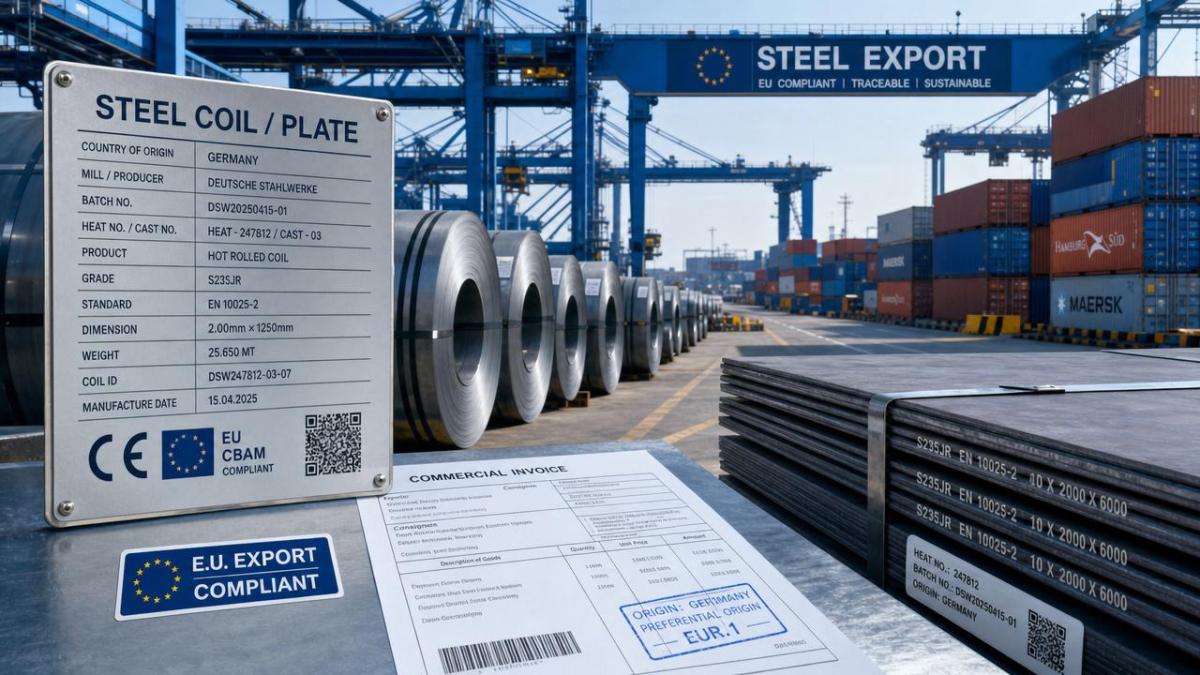
What the new framework changes
The confirmed change is that the EU has approved a revised steel trade protection regulation on June 8, 2026, with effect from July 1. According to the provided information, the new regime will replace the existing safeguard measures, tighten import TRQs, introduce a Melt and Pour rule for origin, and strengthen anti-circumvention review mechanisms.
The same information also indicates that the framework has direct implications for steel exports to the EU from China and other exporting countries. It specifically affects compliance routes, the feasibility of transshipment or re-export through third countries, and the supporting certification required for market access.
Where the pressure is likely to appear first
Export transactions face a narrower compliance path
From an industry perspective, direct trading companies shipping steel into the EU may be affected first because tighter TRQs and stricter origin rules can change how shipments are structured and documented. The practical pressure is likely to center on whether products can meet the required origin standard and whether existing export arrangements remain workable under the new review environment.
Third-country processing models become more exposed
Analysis shows that overseas distributors and importers relying on processing in a third country before re-export to the EU face a more immediate access risk. The reason is not only the new origin test, but also the stronger anti-circumvention scrutiny signaled in the framework. Business models that depend on intermediate processing routes may therefore need closer review at the transaction and documentation level.
Certification and supply-chain support functions gain importance
Supply-chain service providers, compliance teams, and sourcing functions may also feel the impact because origin evidence and certification requirements are becoming more central. What deserves closer attention is whether current supplier records, production traceability, and shipping documents are sufficient under the new framework, especially where multiple jurisdictions are involved in processing and delivery.
What companies should watch now
Track how origin will be demonstrated in practice
Analysis shows that the Melt and Pour rule is not just a wording change; it affects how companies must think about origin substantiation. Businesses involved in EU-bound steel trade should closely review whether their current documentation chain can clearly support the claimed origin under the new requirement.
Reassess exposure in re-export and transshipment arrangements
For companies using third-country processing or redistribution models, the immediate issue is whether those arrangements still remain commercially and procedurally viable after July 1. What deserves closer attention is the gap between a workable logistics route and an acceptable compliance route under tighter anti-circumvention review.
Review supplier qualifications and document readiness
Observably, supplier qualification is becoming more closely tied to market access risk. Companies should pay attention to whether upstream mills, processors, and trade partners can provide complete and consistent origin, production, and certification materials for EU-facing orders.
Prepare for customer and contract-side communication
Importers, distributors, and exporters may also need to prepare for more detailed customer questions on origin, quota treatment, and delivery feasibility. From a practical standpoint, order confirmation, delivery commitments, and compliance representations may all require more careful internal coordination before shipment.
Why this matters beyond a single rule change
It is more appropriate to understand this as both an immediate operational change and a longer-term policy signal. The immediate change is clear: a new framework takes effect on July 1 with tighter TRQs, a new origin rule, and stronger anti-circumvention review. The broader signal, in analytical terms, is that access to the EU steel market is becoming more closely linked to traceability, origin discipline, and the scrutiny of indirect trade routes.
At the same time, this should not be treated as a fully closed conclusion on every business model. Observably, the market still needs to watch how the framework is applied in practice, especially in documentation review, transaction screening, and the treatment of cross-border processing structures.
How to read the current development
The industry significance of this update lies less in headline policy language and more in the higher compliance threshold it creates for EU-bound steel trade. For exporters, importers, and distribution networks, the key issue is no longer only whether a shipment can move, but whether its origin, quota position, and route can withstand stricter review.
At this stage, it is more appropriate to understand the development as a confirmed near-term rule change with wider strategic implications that still require continued observation. The framework is already set to take effect, but its full commercial impact will depend on how companies adjust their sourcing, processing, certification, and customer-facing execution.
Basis of this article and what still needs checking
This article is based on the user-provided news title, event date, and event summary. The confirmed inputs are the June 8, 2026 adoption by the Council of the European Union, the July 1 replacement of current safeguard measures, tighter TRQs, the introduction of the Melt and Pour origin rule, and stronger anti-circumvention review, together with the stated implications for exporters, importers, and third-country processing models.
For this type of development, relevant source categories typically include official government or EU institutional notices, company disclosures, industry association updates, authoritative media reporting, and standard or compliance-related documents. A specific official source link was not provided in the input, so further verification remains necessary. Continued attention should focus on any subsequent official wording, implementation details, and practical compliance interpretation affecting origin proof, quota treatment, and anti-circumvention review.
NEWS NAVIGATION
CONTACT US