

Event Overview
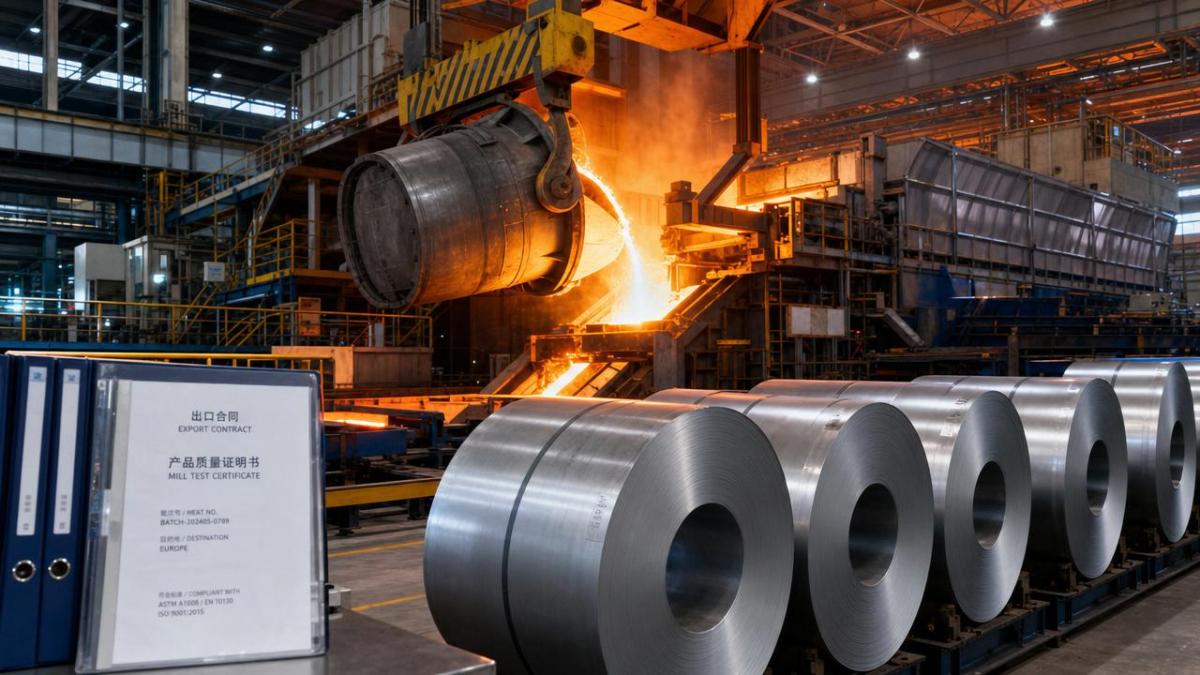
According to the available information, the European Union will formally apply a new steel origin traceability rule on July 1, 2026. Under the rule, all imported steel products must provide original country proof for the “melt and pour” stage.
The disclosed information states that the origin of steel products will no longer be determined by the location of final processing. Instead, the traceability requirement will go back to the first melting and casting stage. The rule is intended to block circumvention through simple processing and re-export via third countries.
The information also indicates that the rule will directly affect the compliance routes, customs declaration document preparation, and supply chain response timelines of Chinese and Asian steel mills exporting to the European Union.
Which Segments Will Be Affected
Direct Steel Trading Companies
From an industry perspective, direct steel trading companies will be among the first to face operational pressure because their business depends on matching overseas orders, customs declaration materials, and delivery schedules. Once the origin requirement is traced to the melt and pour stage, traders may need to confirm whether the steel products they handle can provide original country proof at the required stage.
The impact will mainly appear in document collection, order review, supplier confirmation, and communication with EU-side buyers. Trading companies that previously relied mainly on final processing documents may need to adjust their compliance checks before accepting orders for the EU market.
Steel Mills and Export-Oriented Producers
Analysis shows that steel mills in China and other Asian markets exporting to the EU will need to pay closer attention to whether their production and export documentation can clearly identify the melt and pour country. The rule directly concerns the origin evidence required for imported steel products, so mills involved in EU-bound business may face higher requirements for traceability records.
The impact is likely to concentrate on export compliance routes, document preparation before shipment, and the speed of responding to buyer or customs-related information requests. Mills that supply products through multiple processing or trading links may need clearer coordination across the supply chain.
Processing and Manufacturing Enterprises
From an industry perspective, processing and manufacturing enterprises may be affected when they purchase steel materials and then conduct downstream processing for products destined for the EU. Since the rule no longer recognizes origin based on the last processing location, simple processing in another country may not be sufficient to change the origin basis for steel products.
The main impact will be reflected in upstream material verification, contract documentation, and the ability to provide traceability evidence when processed products are linked to EU import requirements. Enterprises should not treat the processing location alone as enough evidence for origin determination.
Channel Distributors
Observably, channel distributors may face more complex product classification and document matching work. Distributors often handle products from different suppliers, batches, and processing routes. When EU import requirements focus on melt and pour proof, distributors may need to distinguish which inventory can support EU-bound transactions and which cannot.
The impact may appear in inventory management, buyer communication, and the timing of document confirmation. If documentation is incomplete, EU-related orders may face delays or require additional verification before shipment or customs declaration.
Supply Chain and Customs Service Providers
From an industry perspective, supply chain service providers, freight forwarders, and customs-related service companies may need to adjust their document review processes for EU-bound steel shipments. The key issue is not only shipment logistics, but whether the required origin proof for the melt and pour stage can be aligned with customs declaration needs.
The impact will mainly appear in pre-shipment document checks, communication between exporters and importers, and response speed when additional proof is requested. Service providers may need to help clients identify document gaps earlier in the transaction process.
What Companies and Practitioners Should Watch and How to Respond
Track Further Official Wording and Policy Updates
What deserves closer attention now is the detailed wording and any further official clarification related to implementation. The disclosed information confirms the effective date and the core requirement for melt and pour origin proof, but companies should continue monitoring how documentation and declaration requirements are expressed in official channels.
For practical preparation, enterprises involved in EU-bound steel trade should assign responsibility for tracking policy updates and comparing them with current export documentation practices.
Review EU-Bound Products and Documentation Flows
Analysis shows that companies should focus first on steel products currently exported to the EU or planned for the EU market. The review should identify whether each product can be linked to melt and pour country proof, rather than relying only on final processing documents.
Practical actions may include checking supplier-provided origin materials, confirming whether batch-level documentation is available, and reviewing whether customs declaration documents can support the new traceability requirement.
Separate Policy Signals from Business Execution
It is more appropriate to understand this as a compliance change with direct operational implications, rather than as a general market signal alone. The rule has a clear implementation date, but individual companies still need to translate the requirement into order review, supplier communication, and document preparation steps.
Enterprises should avoid assuming that existing processing-location documents will remain sufficient for EU-bound steel products. Before entering new contracts, they should clarify which party is responsible for providing melt and pour origin proof.
Prepare Supply Chain Communication in Advance
From an industry perspective, the most practical response is to start communication across the supply chain before the rule takes effect. Exporters, mills, processors, distributors, and service providers should align on what proof is available, when it can be provided, and how it will be used in customs declaration preparation.
Companies with multi-country processing routes should pay particular attention to whether each step can be documented clearly. Early communication can reduce the risk of delayed shipments or incomplete declaration materials after July 1, 2026.
Editor’s View / Industry Observation
Observably, the EU’s new rule points to a stricter approach to steel origin traceability. The core change is that origin recognition will be traced back to the first melting and casting stage, rather than the last processing location. This makes documentation at the upstream production stage more important for EU-bound steel trade.
Analysis shows that the rule is not merely a general policy signal. Because the effective date has been identified as July 1, 2026, it has already created a clear timetable for companies to review compliance routes and document readiness. However, practical implementation details and follow-up official explanations still require continuous attention.
From an industry perspective, the rule may reshape how steel exporters, traders, processors, and service providers evaluate EU-related transactions. The companies most exposed are those that rely on third-country processing routes or have limited visibility into the original melt and pour stage.
Conclusion
The EU’s upcoming steel melt and pour traceability rule is significant because it changes the focus of origin recognition for imported steel products. For companies serving the EU market, the key issue is no longer only where the final processing takes place, but whether the original country of melting and casting can be proven.
It is more appropriate to understand this development as a compliance-driven adjustment that will affect documentation, customs preparation, and supply chain coordination. A neutral and practical approach is to monitor further official details while reviewing EU-bound product records and supplier documentation before the July 1, 2026 implementation date.
Information Source Statement
Main source: Provided industry event brief on the European Union’s steel melt and pour origin traceability rule effective July 1, 2026.
Items requiring continued observation: further official wording, detailed document requirements, customs declaration procedures, and implementation guidance related to EU-bound steel imports.