
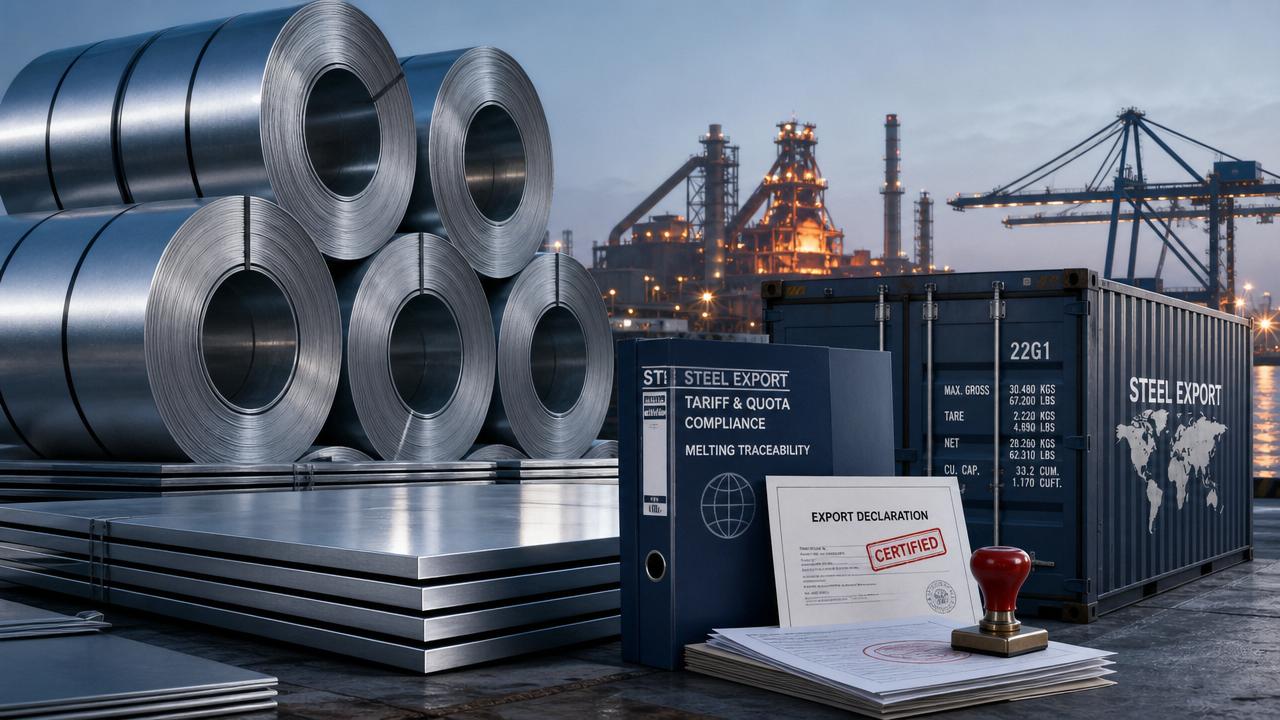
On July 1, 2026, the European Union Regulation 2025/0726(COD) is scheduled to take effect, replacing the current steel safeguard measures after their expiry on June 30. The new framework is particularly relevant to steel exporters, import customers, processors, distributors, and supply chain service providers because it combines a sharply reduced duty-free quota with a 50% tariff on over-quota steel products and introduces mandatory melt-and-pour origin traceability from October 1, 2026.
Event Overview
According to the provided information, the EU Regulation 2025/0726(COD) will be formally implemented on July 1, 2026, replacing the existing safeguard measures that expire on June 30, 2026.
The annual duty-free quota will be reduced by 47% to 18.3 million tonnes. Steel products exceeding the quota will face a 50% tariff.
The regulation also adds a melt-and-pour origin traceability requirement. This requirement will become mandatory from October 1, 2026. The stated rule identifies the country where the steel was first melted as the true country of origin, aiming to prevent simple processing in a third country from changing the origin declaration.
The rule directly affects compliance declarations by Chinese steel exporters, customs clearance by customers, and long-term cooperation models between trading parties.
Which Segments of the Industry Are Affected
Direct Steel Exporters
Direct steel exporters are affected because the new rule changes both quota access and origin declaration requirements. The reduction of the annual duty-free quota to 18.3 million tonnes means exporters need to pay closer attention to whether shipments may fall within or outside the quota.
From an industry perspective, the main impact for exporters will be reflected in quotation arrangements, delivery timing, origin documentation, and communication with overseas customers. For shipments that may exceed the quota, the 50% tariff becomes a key factor in transaction feasibility and customer acceptance.
Import Customers and Customs Clearance Parties
Import customers are affected because customs clearance will need to reflect the new tariff framework and, from October 1, the melt-and-pour origin traceability requirement. The rule makes the origin of the initial steelmaking process a central compliance point.
Analysis shows that customers may place greater emphasis on whether exporters can provide clear and consistent origin information. Any mismatch between commercial documents and origin declarations may increase clearance uncertainty under the new rule.
Processing and Manufacturing Enterprises
Processing and manufacturing enterprises are affected when their business model involves steel that may be exported to the EU after processing. The new traceability requirement states that the country where the steel was first melted is the true origin, rather than the country where simple later processing occurs.
It is more appropriate to understand this as a compliance pressure on processing-based origin arrangements. Companies involved in processing, finishing, or intermediate manufacturing need to review whether their declared origin can be supported by melt-and-pour records.
Channel Distributors and Trading Companies
Channel distributors and trading companies are affected because they often coordinate orders, inventory, shipping schedules, and customer documentation. Under the new rule, both quota exposure and origin traceability may influence contract execution.
Observably, distributors may need to communicate earlier with suppliers and customers about whether products are within quota, whether a 50% tariff could apply, and what origin documents are required for clearance.
Supply Chain Service Providers
Supply chain service providers, including parties involved in documentation coordination and shipment support, are affected because the new rule increases the importance of accurate product, origin, and clearance information.
From an industry perspective, the practical impact is not limited to logistics timing. It also extends to document consistency, traceability support, and the ability to help trading parties prepare for the October 1 mandatory implementation of melt-and-pour origin requirements.
What Companies and Practitioners Should Watch and How to Respond
Track Official Wording and Key Implementation Dates
Companies should closely monitor the confirmed implementation timeline: the current measures expire on June 30, 2026, the new regulation takes effect on July 1, 2026, and the melt-and-pour origin traceability requirement becomes mandatory from October 1, 2026.
What is currently more worth watching is whether later official explanations provide more operational details for quota management, customs declaration, and documentation requirements. Companies should avoid treating the headline tariff change as the only compliance issue.
Review Products, Orders, and Quota Exposure
Exporters and trading companies should review which products and orders may be exposed to the reduced duty-free quota and the 50% over-quota tariff. This review should be linked to shipment timing, customer contracts, and clearance responsibilities.
Analysis shows that the reduced quota may affect commercial negotiations even before a shipment reaches customs. If a buyer may face a 50% tariff, pricing, delivery schedules, and contract terms may need clearer prior communication.
Prepare Melt-and-Pour Origin Documentation
Companies involved in steel export, processing, or distribution should begin preparing documentation that can support the country where the steel was first melted. This is especially important because the traceability requirement becomes mandatory from October 1, 2026.
From an industry perspective, the key issue is whether the origin declaration can be supported by traceable records. Enterprises should check whether supplier documents, production records, and commercial documents are consistent with the declared origin.
Align Communication with EU Customers and Clearance Partners
Exporters should communicate with EU customers and customs clearance partners about the new tariff and origin requirements before shipment arrangements are finalized. This includes clarifying who is responsible for providing origin evidence, how quota-related risks are handled, and how possible over-quota tariffs are reflected in commercial terms.
It is more appropriate to understand this as a need for earlier coordination across the transaction chain. The rule affects not only exporters, but also buyers, distributors, processors, and documentation service parties.
Editor’s View / Industry Observation
Analysis shows that the EU steel import rule is not simply a tariff adjustment. It combines quota reduction, a high over-quota tariff, and stricter origin traceability into one regulatory framework.
Observably, the July 1 implementation creates an immediate tariff and quota concern, while the October 1 melt-and-pour requirement introduces a second compliance milestone. For companies trading steel products with the EU market, the rule is more than a short-term customs issue; it may affect how supply chains document origin and how business partners allocate compliance responsibilities.
It is more appropriate to understand this development as both a concrete regulatory change and a signal that origin traceability will become more central in steel trade compliance. The industry needs to continue monitoring implementation details because the practical impact will depend on how declarations, documents, and customer clearance are handled after the rule takes effect.
Conclusion
The implementation of the EU Regulation 2025/0726(COD) on July 1, 2026 marks an important change for steel trade involving the EU market. The reduction of the duty-free quota to 18.3 million tonnes, the 50% tariff on over-quota products, and the mandatory melt-and-pour origin traceability requirement from October 1 create direct compliance and commercial implications.
From an industry perspective, companies should treat this as a practical compliance and supply chain coordination issue, not only as a tariff headline. The current situation is best understood as a regulatory transition that has already formed a clear implementation timetable, while some operational details still require continued attention.
Information Sources
Main sources: provided industry news brief on EU Regulation 2025/0726(COD) and the related steel import rule implementation timeline.
Items requiring continued observation: subsequent official explanations on quota operation, customs declaration practice, and detailed documentation requirements for mandatory melt-and-pour origin traceability after October 1, 2026.