
NEWS

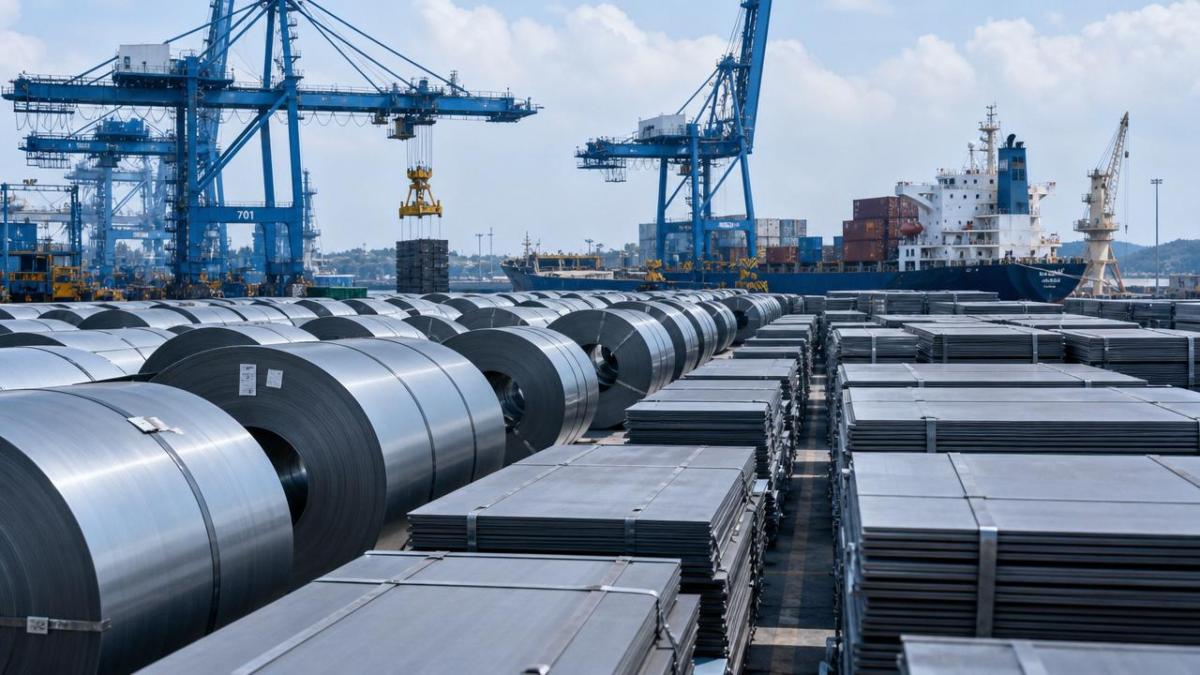
On June 1, 2026, Japan’s Ministry of Finance formally launched an anti-dumping investigation into hot-rolled iron or non-alloy steel strip and plate originating in mainland China, Taiwan, and South Korea. For companies involved in importing hot-rolled steel into Japan, especially in automotive, shipbuilding, and machinery manufacturing, this is not just a trade-policy development: it directly raises questions around customs compliance, potential additional duty exposure, and the longer-term structure of procurement costs.
What has been officially confirmed so far
According to the information provided, the investigation was initiated by Japan’s Ministry of Finance following applications from four Japanese steelmakers, including Nippon Steel and JFE Steel. The products under review are hot-rolled iron or non-alloy steel strip and plate originating in mainland China, Taiwan, and South Korea.
The scope of the case covers 21 HS codes ranging from 7208 to 7226. Based on the same provided information, the case is expected to affect import compliance for overseas buyers sourcing hot-rolled steel from China, as well as the risk of additional duties and the long-term cost structure tied to those imports.
Where the pressure points may emerge across the supply chain
Importers face immediate compliance sensitivity
From an industry perspective, direct trading companies and importers are likely to be the first to feel the impact because the investigation centers on product origin, product classification, and customs handling. What deserves closer attention is whether affected shipments fall within the covered HS code range and how import documentation aligns with the declared product scope.
For these businesses, the main pressure point is not only pricing uncertainty but also whether future customs clearance may involve closer scrutiny. That makes internal checks on contracts, origin-related records, and product specifications more important during the investigation period.
Manufacturers using hot-rolled steel may need to reassess cost assumptions
Automotive, shipbuilding, and machinery manufacturers are specifically identified in the provided information as sectors likely to be affected. Analysis shows the issue for these companies is less about the investigation as a legal event in itself and more about its possible effect on raw material sourcing economics.
If imports from China are exposed to added duty risk, procurement teams may need to revisit cost estimates, supplier allocation, and delivery planning. The practical concern is that a trade case can alter the expected landed cost of hot-rolled steel even before any final outcome is known.
Supply chain service providers may see rising documentation demands
Observably, logistics providers, customs brokers, and other supply chain service firms may also be drawn more deeply into transaction review and document preparation. Their role becomes more sensitive when buyers need stronger support on customs declarations, HS code matching, shipment records, and origin-related paperwork.
The key change to monitor is not necessarily a volume shift at this stage, but a likely increase in the importance of procedural accuracy in cross-border steel transactions connected to Japan.
What companies should watch in the coming stages
Track how official wording develops
Analysis shows companies should pay close attention to subsequent official statements and any further clarification on product coverage. In trade remedy cases, the difference between a broad headline and the actual operational scope can materially affect which contracts, shipments, and customers are exposed.
Review whether specific products fall inside the covered HS range
The provided information clearly states that 21 HS codes from 7208 to 7226 are involved. For importers and end users, a practical next step is to check whether current or planned purchases map directly to those codes and whether internal product descriptions are consistent with customs documentation.
Separate policy signal from immediate business execution
What deserves closer attention is the distinction between the start of an investigation and a final trade outcome. At this stage, the confirmed fact is that an investigation has been opened. Companies should therefore avoid treating the case as a completed result, while still preparing for possible effects on customs handling and cost planning.
Prepare supplier and customer communication in advance
From an industry perspective, businesses relying on imported hot-rolled steel should be ready to discuss origin, documentation, delivery timing, and pricing assumptions with both upstream suppliers and downstream customers. This is particularly relevant where contracts, lead times, or delivery commitments could become more sensitive if duty risk rises during the case.
Why this is more a signal than a settled outcome
Observably, this development is better understood as an active trade-policy signal rather than a concluded market result. The confirmed action is the opening of an anti-dumping investigation, and that alone is meaningful because it places hot-rolled steel imports from the named origins under a higher level of regulatory and commercial attention.
Analysis shows the immediate significance lies in risk management: compliance, classification, documentation, and procurement budgeting all become more sensitive once an investigation begins. At the same time, it would be premature to present the case as a final determination, since the provided information does not establish a completed duty outcome.
For the steel-consuming sectors mentioned in the input, the reason to keep watching is clear: even before any definitive result, the investigation can influence purchasing decisions and internal cost expectations.
How the market may best interpret this development now
At present, this news is more appropriate to understand as a development that requires continued monitoring rather than as a fully settled shift in trade conditions. Its importance lies in the fact that hot-rolled steel imports tied to the covered origins may now carry greater compliance sensitivity and possible cost uncertainty for affected buyers.
For automotive, shipbuilding, machinery manufacturing, and related supply chain participants, the near-term task is not to assume a final outcome, but to identify exposure early, verify product and customs data, and follow the investigation’s next official steps closely.
Basis of this article and points for continued verification
This article is based on the user-provided news title, event date, and event summary. The confirmed elements used here are limited to the reported launch date of June 1, 2026, the involvement of Japan’s Ministry of Finance, the application by four Japanese steelmakers including Nippon Steel and JFE Steel, the covered origins, the product description, and the HS code range of 7208 to 7226.
For this type of industry development, relevant source categories typically include official government announcements, company statements, industry association updates, authoritative media reports, and customs or standards-related documents. No specific official source link was provided in the input, so further verification remains necessary as the case develops. Continued attention should focus on later official wording, product-scope clarification, and any changes affecting import compliance or duty exposure.
NEWS NAVIGATION
CONTACT US