
NEWS
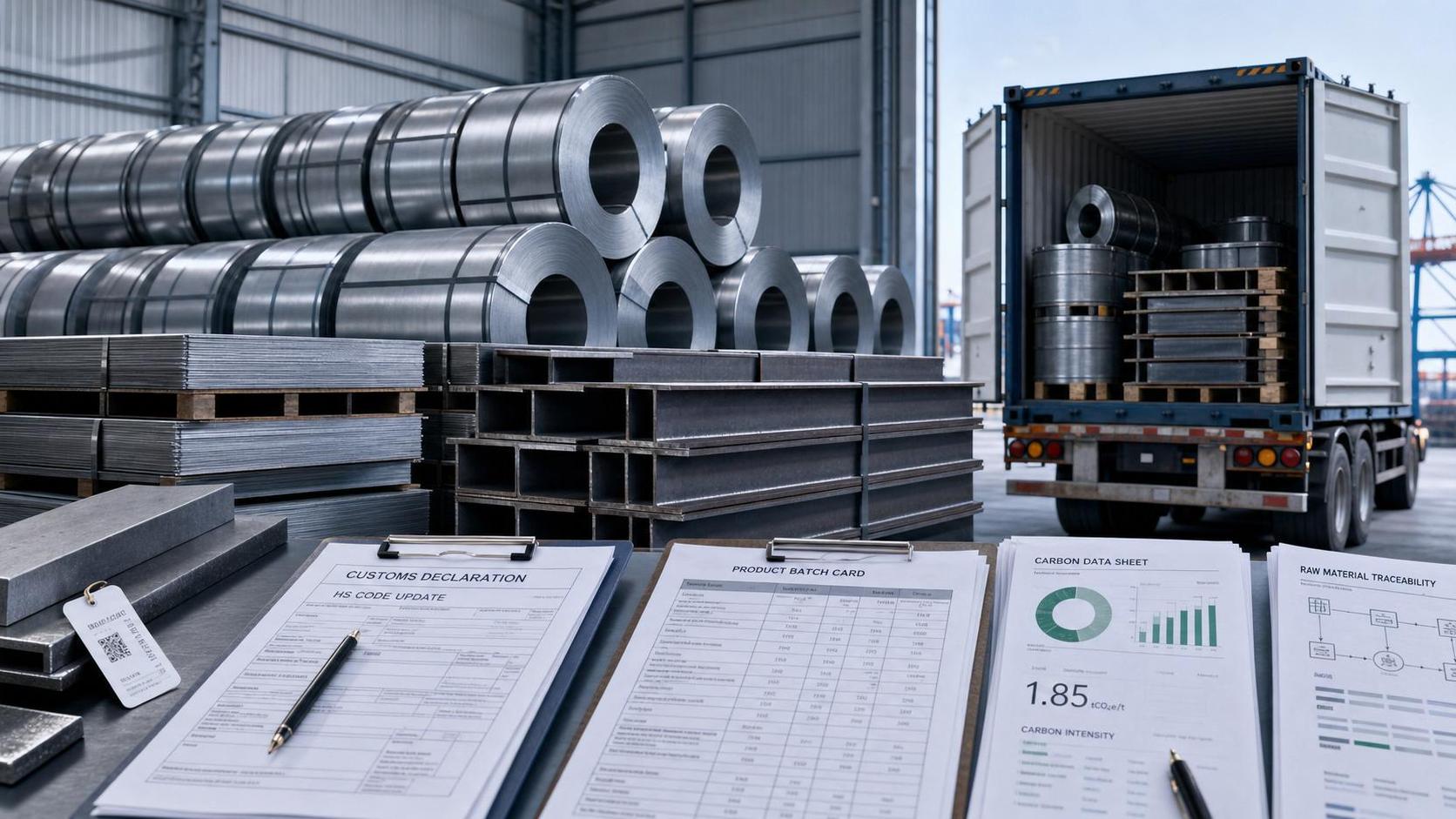
China’s customs authority moved quickly on June 28, 2026 to change how key steel exports must be declared, combining revised HS subheadings with a new pre-filing requirement for product carbon intensity and upstream raw material origin information. For exporters, overseas buyers, compliance teams, and supply chain service providers, this is worth close attention because it affects customs classification, document preparation, clearance timing, and the information base used in green procurement reviews.
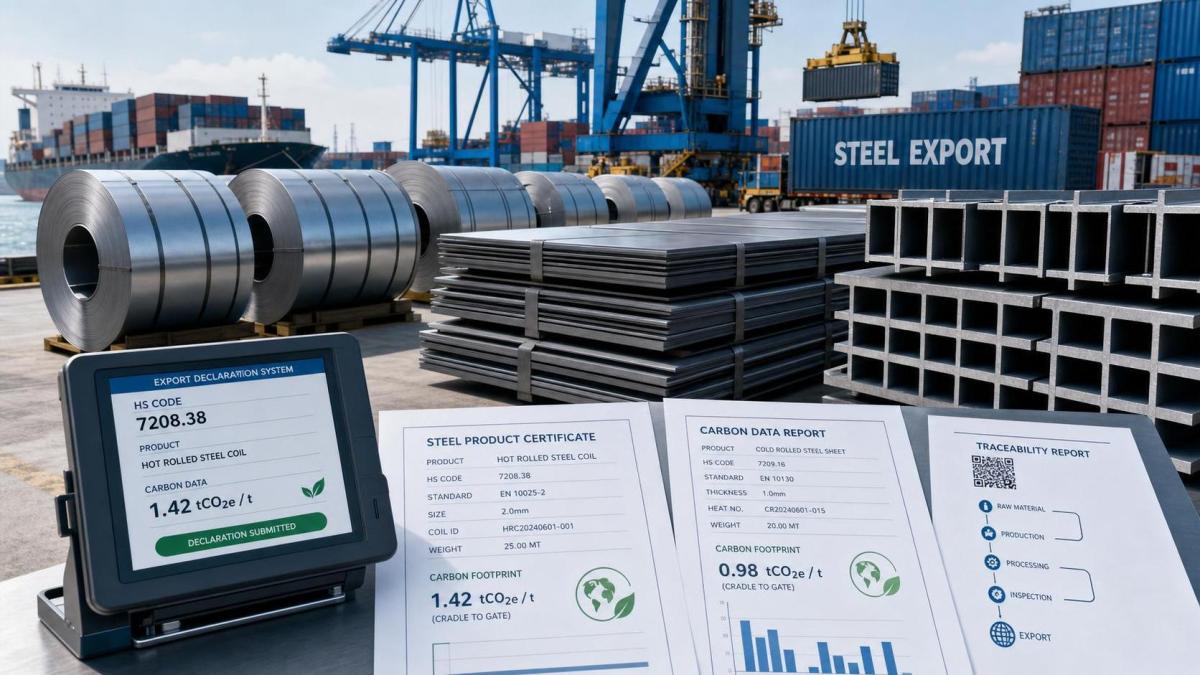
What the June 28 change formally introduced
According to the provided event summary, the General Administration of Customs of China issued an announcement on June 27, 2026 and began implementation on June 28, 2026. The change applies to 12 major categories of steel products for export, including hot-rolled coil, cold-rolled sheet, and H-beam steel.
The confirmed changes are twofold. First, new HS code subheadings are now used for these steel exports. Second, exporters are required for the first time to pre-fill product carbon intensity data, expressed in kg CO₂e/ton, as well as the country of origin of upstream raw materials in the electronic port system.
The provided information also states that the adjustment directly affects customs clearance timing for overseas importers, preparation for compliance-related certification, and due diligence processes linked to green procurement.
Where the operational pressure is likely to appear first
Export filing teams will face a more detailed declaration workflow
From an industry perspective, exporters are the first group affected because the rule change sits directly inside the export declaration process. The practical impact is likely to center on product classification, internal data collection, and consistency between customs filings and supporting trade documents. What deserves closer attention is whether companies can match the revised HS subheadings accurately and prepare carbon intensity and upstream origin information before shipment filing.
Overseas buyers may see effects in clearance and supplier review
For importers and procurement teams overseas, the relevance is not only customs timing but also document alignment with supplier compliance files. Analysis shows that when declaration fields become more specific, importers may need cleaner supporting information from exporters to avoid delays, especially where internal review processes already examine product origin, technical conformity, or sustainability-related disclosures.
Certification and compliance functions will need closer document coordination
The event summary explicitly links the change to compliance certification preparation. Observably, this does not mean a new certification regime has been confirmed in the provided facts, but it does indicate that companies handling audits, customer questionnaires, or product-related compliance checks may need to align customs filing information more carefully with technical documents and existing compliance records.
Supply chain and sourcing teams will need better upstream visibility
The new requirement to pre-fill upstream raw material source country information matters beyond customs paperwork. For sourcing, supplier management, and trade support functions, the pressure point is traceability. It is more appropriate to understand this as a signal that upstream input data is becoming more relevant to downstream trade execution and procurement review, even where the final execution standards are not yet fully detailed in the provided information.
What companies should watch in the near term
Check classification readiness for the affected steel categories
Companies dealing in the covered steel products should review whether their internal product mapping, declaration templates, and trade documentation can support the revised HS subheadings from the implementation date. The provided information confirms the classification change, but not the detailed coding logic, so this remains an area where execution accuracy should be watched closely.
Prepare carbon and upstream origin data before filing stages
Because the new data must be pre-filled in the electronic port system, exporters and relevant service providers should focus on whether carbon intensity figures and upstream origin information can be assembled in time for shipment processing. Analysis shows that this is less about broad sustainability positioning and more about whether operational data is available in a form usable for customs submission.
Align buyer-facing compliance materials with customs declarations
Where customers, certifiers, or procurement teams request product and supply chain information, companies should pay attention to consistency across declarations, supporting documents, and commercial communications. The provided event summary links the rule change to compliance certification preparation and green procurement due diligence, so mismatched information may become a practical risk area even before any broader market standardization becomes visible.
Track follow-up clarification rather than assuming a settled practice
The input does not provide detailed enforcement guidance, verification methods, or document format rules. For that reason, businesses should treat the current development as implemented but still operationally evolving, and continue to monitor official wording, filing practice, and counterpart expectations rather than assuming all execution questions have already been resolved.
How this should be read at this stage
Analysis shows that this development is more than a routine coding update because it combines customs classification with pre-filed carbon and upstream sourcing information. At the same time, it should not be overstated as a complete rewrite of steel trade rules based on the limited confirmed facts available here.
Observably, the stronger signal lies in execution direction: export declarations for certain steel products are being asked to carry more product-level and supply-chain-level information than before. That matters for trade operations, buyer due diligence, and compliance preparation. What deserves closer attention is how consistently this information will be interpreted in practice, how supporting documents will be matched to filings, and how market participants adjust their internal workflows.
Why the market is likely to keep watching this move
At this point, it is more appropriate to understand the announcement as an implemented rule change with broader compliance implications still unfolding in practice. The immediate fact is clear: revised HS subheadings and pre-filing of carbon intensity and upstream raw material origin now matter for the covered steel exports from June 28, 2026.
The broader industry meaning remains procedural rather than speculative. Companies across export, procurement, compliance, and supply chain management should read this as a concrete filing requirement and an execution signal that product traceability and carbon-related data are becoming more relevant in trade handling. How far that influence extends into certification practice, tender documentation, or buyer requirements still requires continued observation.
Basis of this article and what still needs verification
This article is generated based on the user-provided news title, event date, and event summary. For developments of this kind, the source types typically relevant include official announcements, releases from regulatory authorities, customs or trade administration information, industry association updates, standards-related documents, and reporting by authoritative media.
No specific official source link was provided in the input, so the exact official publication path still requires follow-up verification. Further observation is also needed on detailed implementation language, compliance interpretation, buyer and tender document changes, market feedback, and how enterprises execute the new filing requirements in practice.
NEWS NAVIGATION
CONTACT US