
NEWS
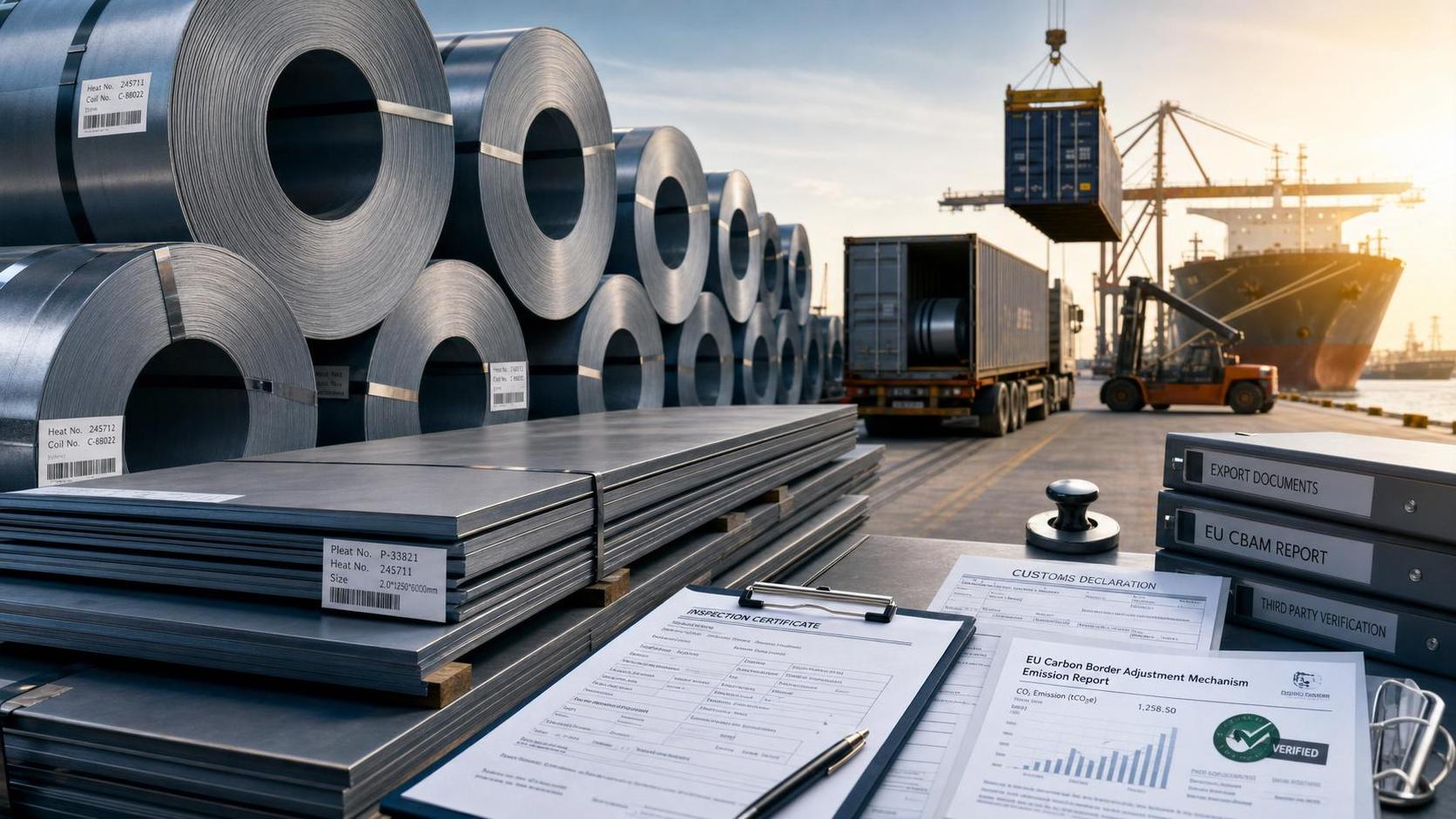
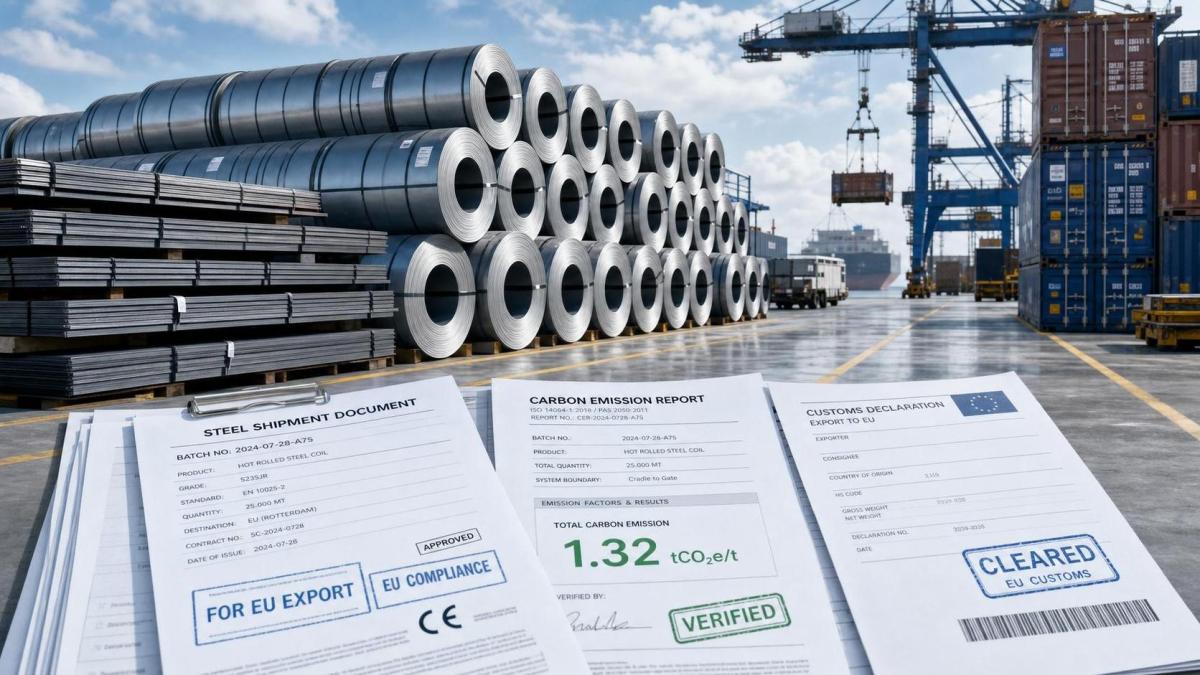
Starting on October 1, 2026, the EU’s CBAM requirements for steel move into a more operational compliance phase for third-country exporters, including Chinese steel mills. Based on the European Commission’s latest implementation guidance issued on June 28, 2026, exporters must submit batch-level measured Scope 1 and Scope 2 emissions data through the EU-ETS portal and link that data to an accredited third-party verification report. For steel producers, traders, customs-facing teams, and supply chain service providers, the immediate concern is not only carbon reporting itself, but also its effect on export declarations, customs clearance timing, and compliance cost exposure.
What the new reporting requirement confirms
The confirmed change is that, from October 1, 2026, all third-country suppliers exporting steel products to the EU are required to file measured Scope 1 and Scope 2 carbon emissions data for each export batch via the EU-ETS portal. The guidance cited in the input was released by the European Commission on June 28, 2026. The submission must be connected to a verification report issued by an accredited third party.
The input also makes clear that this requirement has direct implications for export declaration procedures, customs clearance efficiency, and compliance costs. Products that do not meet the requirement may be refused entry into the EU or face the risk of retroactive carbon tariff exposure.
Where pressure is likely to appear first in the steel supply chain
Export-facing steel suppliers will be under the closest operational scrutiny
From an industry perspective, steel mills and other direct suppliers shipping to the EU are the first group affected because the rule attaches to each export batch. Their exposure is concentrated in emissions data preparation, document matching, and the ability to align shipment execution with verified reporting materials. What deserves closer attention is whether internal reporting and external verification can keep pace with dispatch schedules.
Trading companies may face document and timing risk
Companies handling cross-border steel trade may be affected because the new requirement can influence customs processing and entry acceptance. Even where they are not the original producer, their transactions may still depend on complete and verifiable batch-level emissions records. The practical issue here is whether contract execution, handover documents, and customs-facing submissions remain synchronized once the reporting obligation becomes mandatory.
Logistics and customs service providers will need tighter file coordination
Supply chain service providers, especially those involved in declaration and clearance workflows, may see more pressure around documentation accuracy and timing. Analysis shows that the requirement matters not only as an environmental reporting issue, but also as a file-readiness issue linked to release schedules and border processing. The key change to watch is whether incomplete verification materials begin to delay shipments or create rework at the customs stage.
EU buyers and downstream users may pay more attention to supplier readiness
Observably, buyers connected to EU-bound steel sourcing may need to pay closer attention to whether upstream suppliers can provide measured emissions data and accredited verification on a batch basis. The issue is less about broad sustainability positioning and more about transaction reliability, delivery predictability, and the risk of goods being rejected or later exposed to carbon-related cost claims.
What companies should focus on now
Separate confirmed obligations from broader policy interpretation
The confirmed obligation in the input is specific: batch-level measured Scope 1 and 2 emissions data must be submitted through the EU-ETS portal and tied to an accredited third-party verification report. Companies should avoid treating broader assumptions as settled requirements and should keep their compliance work anchored to the published guidance referenced in the input.
Review whether shipment documents can support batch-based filing
What deserves closer attention is the operational link between product batches, emissions records, and verification reports. If these records cannot be matched clearly at shipment level, the business impact may appear first in declaration handling and customs timing rather than in policy interpretation alone.
Check verification capacity and document lead times
Because the requirement includes accredited third-party verification, companies involved in EU steel exports should pay attention to the timing and availability of that verification step in relation to delivery commitments. Analysis shows that compliance risk may arise not only from missing data, but also from delays in obtaining the supporting report needed for submission.
Prepare customer and supplier communication around compliance status
For exporters, traders, and procurement teams, a practical focus area is communication with counterparties on who provides which data, when verification is completed, and how non-compliance scenarios are handled. The input already indicates potential consequences including refusal of entry and retroactive carbon tariff risk, so contract execution and shipment planning may require more explicit confirmation points.
Why this looks like more than a short-term reporting adjustment
Analysis shows that this update is best understood as an operational tightening of CBAM-related compliance for steel exports into the EU, rather than as a symbolic policy signal. The reason is that the requirement is connected directly to batch-level reporting, third-party verification, and border-facing procedures. That gives it immediate business relevance.
At the same time, it is more appropriate to understand this as a confirmed compliance step with ongoing implementation questions, not as a fully closed policy story. Observably, the rule itself is clear in the input, but the day-to-day impact for companies will depend on how consistently reporting, verification, declaration, and clearance processes align in practice.
How the market may need to read this development
The industry significance of this update lies in its direct link between carbon data and shipment execution for steel exports to the EU. It does not merely add another disclosure item; it raises the importance of verified emissions records in customs-facing trade processes. A neutral reading is that companies should treat this as an active compliance requirement with near-term operational consequences, while continuing to monitor how implementation details and enforcement practices develop.
Basis of this article and what still needs verification
This article is based on the user-provided news title, event date, and event summary. The core factual inputs used here are the stated October 1, 2026 start date, the European Commission’s June 28, 2026 implementation guidance, the requirement to submit measured Scope 1 and Scope 2 emissions data for each steel export batch through the EU-ETS portal, the need for an accredited third-party verification report, and the stated compliance risks affecting customs clearance and possible entry refusal or retroactive carbon tariff exposure.
For this type of industry update, relevant source categories would typically include official notices, company disclosures, industry association information, authoritative media coverage, and standard-setting or regulatory documents. No specific official source link was provided in the input, so the exact source document link remains to be further verified. Continued attention should be given to any subsequent official wording, implementation clarifications, and practical filing or verification arrangements that may affect execution.
NEWS NAVIGATION
CONTACT US