
NEWS

On July 15, 2026, the EU’s transitional CBAM rules for steel moved into a more operational phase for importers. Following the European Commission’s formal release of implementation guidance on July 4, importers of steel products from third countries, including China, are required to register through the CBAM portal and submit quarterly information on embedded carbon emissions and proof of carbon costs already paid. For steel exporters, EU buyers, customs-facing teams, and supply chain service providers, this is not just a policy update but a compliance issue that can affect documentation readiness, clearance timing, and purchasing cost discussions.
What the new requirement formally sets out
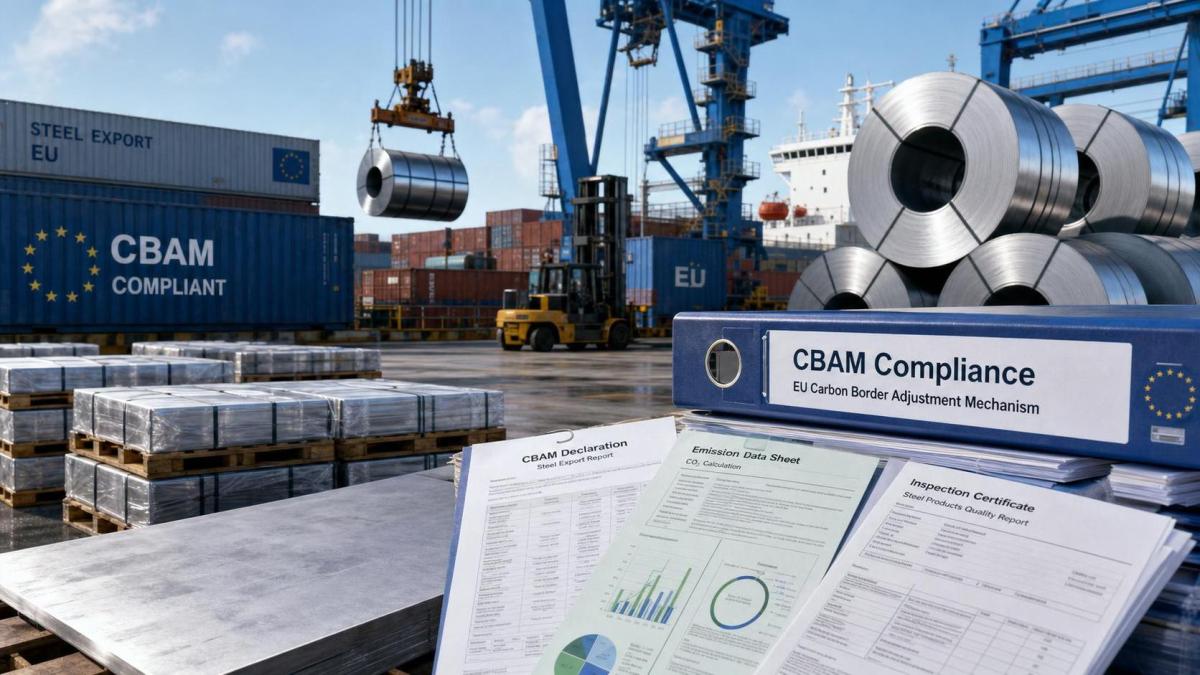
The confirmed facts are clear. The European Commission formally issued the Implementation Guidance for the transitional period of CBAM steel products on July 4, 2026. Under that guidance, from July 15, 2026, all importers handling steel exports into the EU from third countries, including China, must complete registration in the CBAM portal.
The same guidance also requires those importers to submit quarterly reports covering the embedded carbon emissions of imported batches and documentation showing carbon costs that have already been paid. According to the information provided, this requirement directly affects the compliance obligations of downstream customers of Chinese steel exporters, as well as customs clearance timing and the structure of procurement costs.
Where the pressure is likely to appear in the steel trade chain
For EU-facing traders, compliance shifts closer to transaction execution
From an industry perspective, trading companies and import-side buyers are likely to feel the most immediate operational pressure because the registration and quarterly reporting duty sits directly with importers. The impact is likely to show up in order execution, supporting documents, and internal review processes tied to each import batch. What deserves closer attention is whether transaction documents and emissions-related information can be aligned in time for routine import activity.
For Chinese steel exporters, customer-side obligations may reshape delivery coordination
Analysis shows that Chinese exporters are affected even though the stated obligation applies to importers. The reason is practical: downstream EU customers now face explicit filing and evidence requirements, which can feed back into what exporters are asked to provide during quotation, contracting, shipment preparation, and after-sales coordination. The main change to watch is how customer compliance needs begin to influence document requests, communication frequency, and acceptance timelines.
For customs and supply chain service providers, timing risk becomes a business issue
Observably, logistics coordinators, customs service teams, and other supply chain intermediaries may be drawn more deeply into documentation workflows. The information provided already points to possible effects on customs clearance timing, which means service providers will need to pay closer attention to whether importer registration status and quarterly reporting preparation affect shipment handling. The issue is less about policy interpretation alone and more about whether operational sequencing remains smooth.
For procurement teams, cost discussion may become more structured
Analysis shows that procurement functions may also face changes because the requirement covers both embedded emissions data and proof of carbon costs already paid. Based on the provided information, this can affect procurement cost structure. What deserves attention is not only the direct reporting duty, but also how buyers and sellers discuss price composition, compliance support, and allocation of document responsibility in ongoing business relationships.
What companies should monitor now
Registration status and reporting readiness
Companies involved in EU-bound steel business should closely monitor whether importer-side CBAM portal registration has been completed and whether quarterly reporting workflows are actually functioning in practice. The policy text and the day-to-day execution of the rule are not always the same issue, so businesses should distinguish between formal requirements and real transaction readiness.
Document coordination across each shipment batch
What deserves closer attention is the linkage between batch-level import activity and the required emissions and carbon cost documentation. Exporters, importers, and service providers may need tighter coordination on the completeness, timing, and consistency of supporting materials tied to each batch, especially where customs timing is commercially sensitive.
Customer communication on responsibilities and timelines
Observably, one practical focus is how responsibilities are divided between EU importers and upstream suppliers. Since the stated rule directly affects downstream customer compliance obligations, businesses should pay attention to whether customers begin revising their information requests, delivery expectations, or internal approval timelines. Early clarification of roles may matter as much as the data itself.
Further official wording and any follow-on clarification
Analysis shows that this development should also be followed as an evolving compliance matter. The current input confirms the publication of the guidance and the start of importer obligations from July 15, 2026, but companies should continue watching for any further official clarification on practical reporting expectations, wording, or implementation details that shape how the rule is applied in real transactions.
Why this looks like more than a routine reporting update
From an industry perspective, this development is better understood as a concrete operating signal rather than a purely symbolic policy statement. The key point is that the requirement is tied to importer registration and recurring quarterly submissions, which moves CBAM-related compliance closer to routine trade execution. At the same time, it is still more appropriate to understand the current stage as one that requires continued observation, because the full business effect will depend on how consistently these requirements are enforced and translated into shipment-level practice.
How this update should be read for now
At this stage, the most balanced reading is that the EU’s transitional CBAM steel guidance has created an immediate compliance checkpoint for importers and a near-term coordination issue for exporters and service providers connected to EU steel trade. The development should not be reduced to a simple headline about carbon reporting; it is more appropriately understood as a practical test of whether supply chain participants can align compliance, documentation, clearance timing, and procurement communication under the new requirement.
Basis of this article and what still needs verification
This article is based on the user-provided news title, event date, and event summary concerning the EU CBAM transitional steel rules, the European Commission’s publication of implementation guidance on July 4, 2026, and the importer registration and quarterly reporting requirement effective from July 15, 2026. For this type of development, commonly relevant source categories may include official notices, company disclosures, industry association updates, authoritative media coverage, and standards or regulatory documents. A specific official source link was not provided in the input, so the exact document path still requires ongoing verification. Continued attention should be paid to any later official clarification and to how the requirement affects compliance handling, customs timing, and procurement arrangements in actual business flows.
NEWS NAVIGATION
CONTACT US