
NEWS
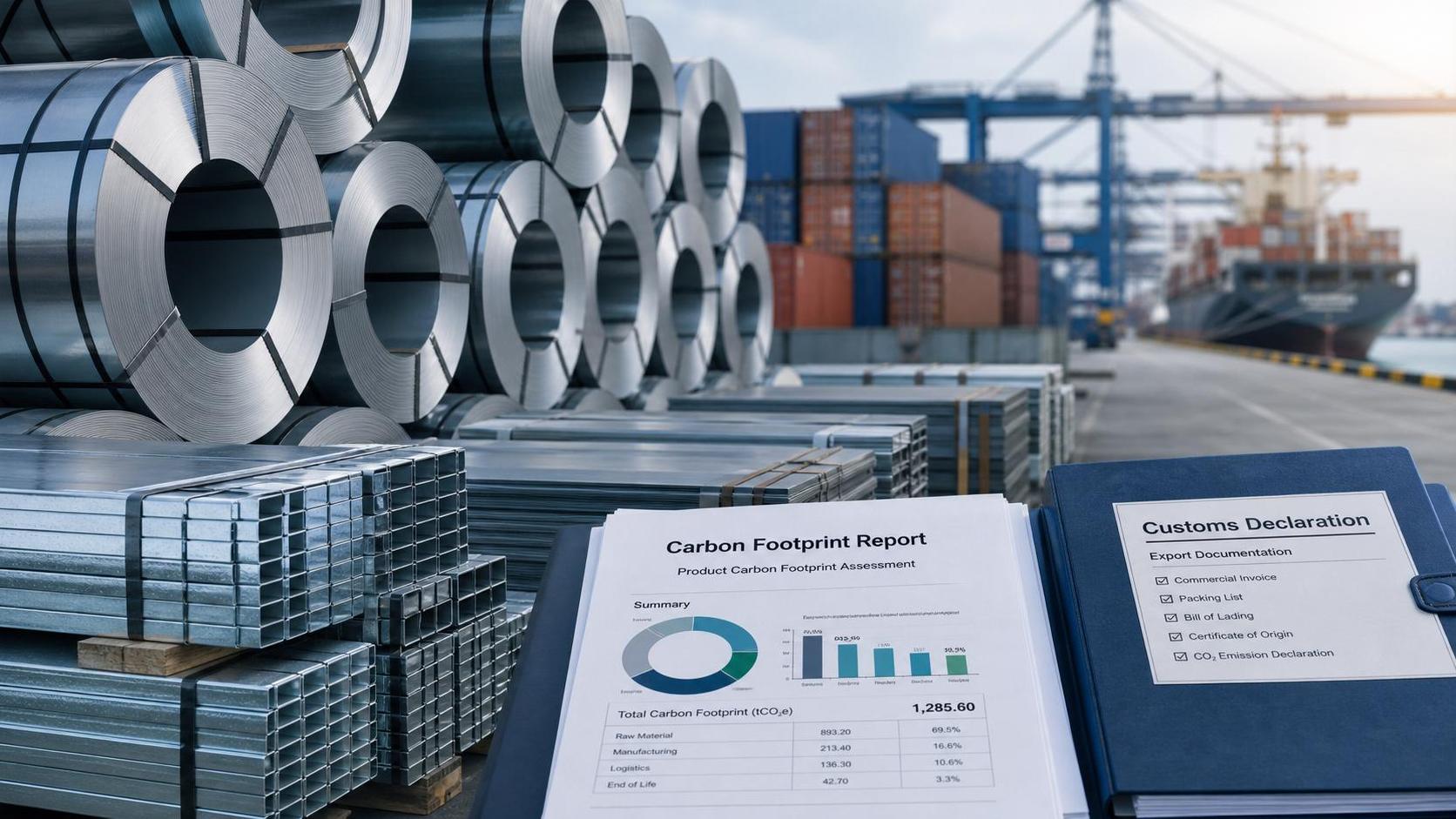
On July 1, 2026, China Customs began applying a new export filing requirement for certain steel products, linking customs declaration to carbon disclosure. For hot-rolled coil, cold-rolled sheet, galvanized steel and five other covered categories shipped to the EU, Canada, South Korea and RCEP member markets, exporters must submit a third-party carbon footprint statement at the time of customs clearance. This is worth close attention not only for steel exporters, but also for overseas buyers, supply chain service providers and testing-related participants, because the change reaches beyond documentation and may affect clearance timing, market access and delivery reliability.
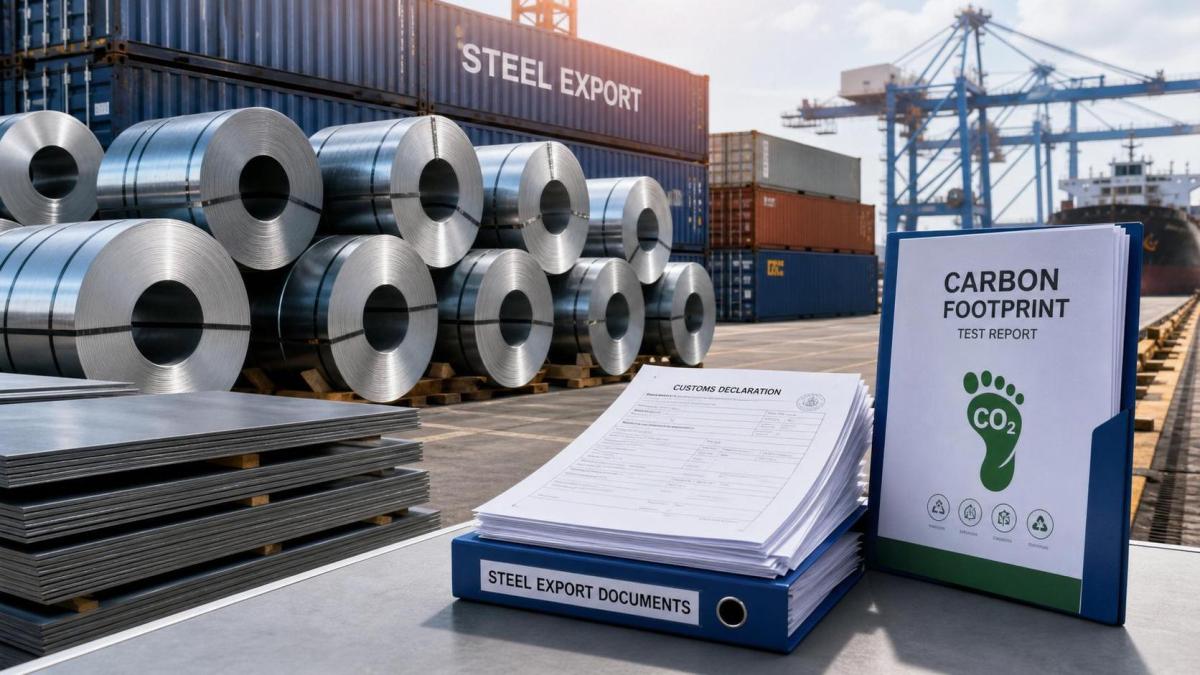
What the new filing requirement confirms
According to the provided event summary, the General Administration of Customs of China officially launched the Guidelines for Carbon Information Declaration of Export Steel Products (Trial) on July 1, 2026. The rule applies to eight categories of steel products including hot-rolled coil, cold-rolled sheet and galvanized steel when exported to the EU, Canada, South Korea and RCEP member countries.
The confirmed requirement is that a third-party carbon footprint statement must be uploaded together with the customs declaration. The statement must be issued by a laboratory accredited by CNAS and must conform to ISO 14067:2018.
The summary also makes clear that this requirement directly affects customs clearance timing and compliance access for overseas importers. Goods that do not meet the requirement may face return shipment or additional carbon adjustment charges.
Where the pressure is likely to appear first
Export transactions now depend more heavily on document readiness
From an industry perspective, export-oriented steel producers and trading companies are the first group likely to feel the operational impact. The change matters because the carbon footprint statement is no longer a supporting file that can be prepared later; it becomes part of the customs submission process itself. That raises the importance of internal document control, coordination with third-party testing resources and shipment scheduling.
What deserves closer attention is the handoff between production, export sales and customs filing teams. If the required declaration is incomplete, delayed or not aligned with the shipment, the immediate risk is not abstract regulatory exposure but disruption to clearance and delivery commitments.
Overseas buyers face a tighter link between supplier compliance and import timing
For importers and procurement teams in the covered destination markets, the rule change matters because supplier-side compliance now has a direct bearing on whether cargo can move through clearance as expected. Analysis shows that procurement decisions may increasingly need to consider whether a Chinese supplier can provide a CNAS-recognized third-party carbon footprint statement that meets the stated ISO standard.
This does not confirm a market-wide shift in sourcing strategy, but it does indicate that supplier qualification, pre-shipment document review and contract document requirements may need closer scrutiny in affected transactions.
Testing and compliance service participants may be drawn into earlier stages
Testing-related service providers and compliance support firms may also be affected because the required document must come from a CNAS-accredited laboratory and must align with ISO 14067:2018. Observably, this pushes carbon-related verification closer to the front end of export execution rather than leaving it as a downstream buyer request.
For companies that arrange export logistics or customs support, the practical issue is whether document preparation timelines, declaration workflows and client communication processes are set up for this requirement before cargo reaches the filing stage.
What companies should watch in current execution
Check whether covered products and destination markets fall within the new scope
Analysis shows that the first practical question is scope. Companies handling hot-rolled coil, cold-rolled sheet, galvanized steel and related covered categories should review whether planned shipments to the EU, Canada, South Korea or RCEP member markets are captured by the filing requirement described in the event summary.
Review carbon statement availability before customs declaration
What deserves closer attention is timing. The summary states that the third-party carbon footprint statement must be uploaded together with the customs declaration, so businesses should focus on whether the document can be obtained, checked and matched to shipment files before filing begins. Where internal workflows still treat such materials as post-order or customer-side paperwork, that assumption may no longer hold.
Revisit supplier, laboratory and handover controls
For manufacturers, exporters and procurement teams, a practical point is the reliability of supporting parties. The requirement specifically refers to CNAS-accredited laboratories and ISO 14067:2018 conformity. That means companies should pay attention to supplier documentation chains, laboratory qualification checks and the consistency of technical files used in export transactions. The input does not provide further execution details, so this should be treated as a compliance watchpoint rather than a confirmed checklist from authorities.
Monitor trade risk around clearance, delivery and cost exposure
Observably, the stated risks are concentrated in customs access and downstream trade performance: delayed clearance, return shipment or added carbon-related charges. Businesses with delivery commitments into the covered markets should therefore watch for knock-on effects in shipment planning, buyer communication, document submission sequencing and post-shipment dispute risk. The event summary does not establish how often such outcomes will occur, but it clearly signals where the exposure may arise.
Why this reads as an execution signal rather than a distant policy theme
Analysis shows that this development is better understood as a live compliance trigger than as a broad sustainability statement. The key reason is that the carbon footprint declaration is tied directly to customs filing for identified export steel categories and destination markets. That places the issue inside day-to-day export execution.
At the same time, it is also appropriate to treat this as a rule change that still requires continued observation. The provided information confirms the filing requirement and the basic risk of non-compliance, but it does not provide fuller operational detail on implementation practice, review thresholds or follow-up adjustments. For that reason, industry participants should keep watching official wording, certification interpretation, customer-side document demands and early market feedback.
How this change is best understood now
At this stage, the event is most appropriately understood as a formal compliance change that has already taken effect and that can influence export clearance, buyer access and delivery execution for covered steel products. It should not be overstated into a definitive market outcome, but it also should not be treated as a remote policy signal. For affected businesses, the immediate issue is whether carbon documentation is ready at the point where customs filing occurs, and whether commercial and supply chain teams are aligned around that requirement.
Basis of this article and what still needs verification
This article is generated on the basis of the user-provided news title, event time and event summary. For events of this type, relevant source categories would usually include official notices, releases from regulatory authorities, customs or trade administration information, industry association updates, standard organization documents and reporting by established professional media.
A specific official source link was not provided in the input, so the underlying source document and any subsequent explanatory materials still need ongoing verification. Observably, the areas that merit continued monitoring include detailed implementation language, certification interpretation, changes in tender or procurement documentation, market feedback and how companies are executing the requirement in practice.
NEWS NAVIGATION
CONTACT US