
NEWS
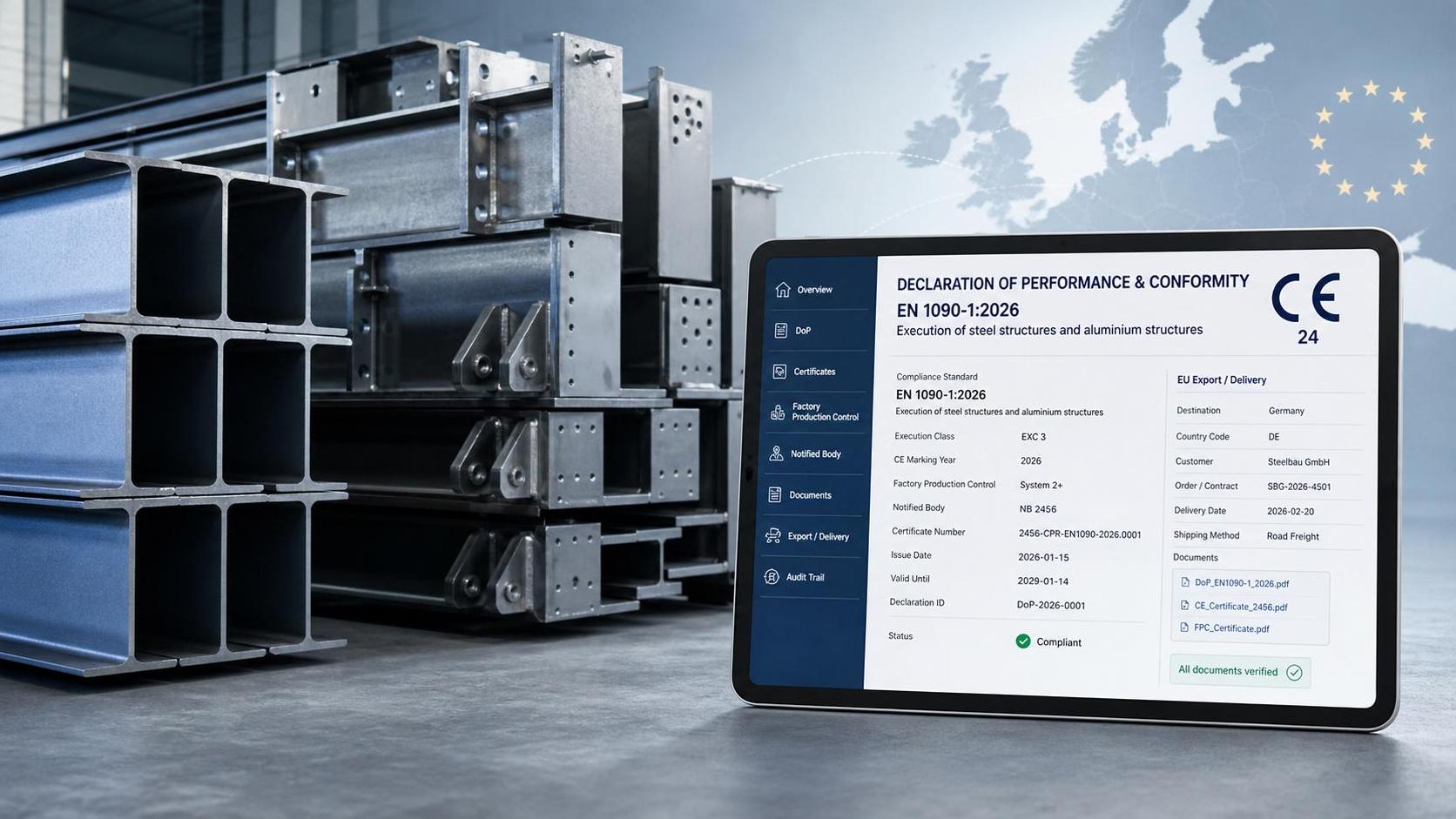
From July 1, 2026, a revised compliance requirement is now tied to the EU steel structure standard EN 1090-1:2026: load-bearing steel products entering the EU market must carry a mandatory Digital Declaration of Conformity. The change, later published by the European Commission in the Official Journal on July 2, directly matters to exporters, fabricators, buyers, certification-related service providers, and delivery teams handling H-beams, welded components, and modular steel building assemblies for EU-bound business. What makes this development worth close industry attention is that it affects not only product compliance on paper, but also the way technical documentation and shipment-related handover may need to be organized in practice.
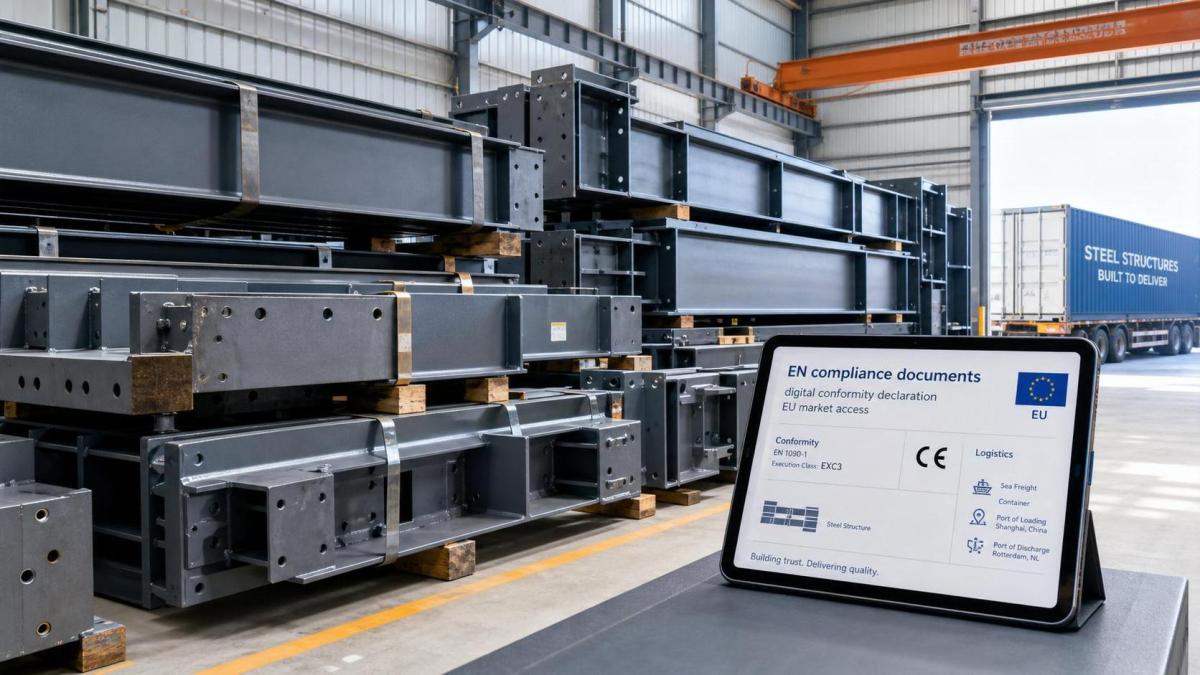
What Has Actually Entered into Effect
The confirmed change is limited but clear. According to the information provided, the European Commission published Official Journal OJ L 178/1 on July 2, 2026, bringing the revised steel structure CE certification standard EN 1090-1:2026 into effect. The revision adds a mandatory Digital Declaration of Conformity requirement. It applies to all load-bearing steel structure products placed on the EU market from July 1, 2026 onward. The supplied information also makes clear that this change directly affects the compliance route and delivery process for Chinese steel exporters supplying H-beams, welded structural components, and modular steel building components to the EU.
Where the Pressure Is Likely to Appear First
Export-facing steel suppliers may see documentation become a delivery issue
From an industry perspective, exporters are likely to be among the first parties affected because the rule change is tied to market entry and CE-related compliance. For these companies, the main point of impact is not only whether a product meets technical requirements, but whether the required conformity documentation is prepared in the form now expected under EN 1090-1:2026. What deserves closer attention is the handover of compliance records alongside shipment and project delivery materials.
Fabricators of structural components may need closer alignment between production and compliance files
For manufacturers of H-beams, welded assemblies, and modular steel building components, the issue is likely to reach into the production-to-documentation link. Analysis shows that where a Digital DoC becomes mandatory, the practical burden may shift toward making sure product identity, technical files, and conformity records are consistent at the point of dispatch and customer acceptance. The provided information does not define the full execution method, so this should be understood as a compliance focus area rather than a confirmed procedural outcome.
Buyers and project procurement teams may need to revisit submission requirements
Procurement teams, import-side buyers, and project contractors may also be affected because acceptance of structural steel products often depends on whether the compliance package can support ordering, customs, project filing, or site delivery steps. Observably, the rule change could push buyers to check whether tender documents, technical submission lists, and supplier qualification reviews properly reflect the Digital DoC requirement. That is an operational implication drawn from the nature of the change, not a confirmed instruction issued in the source information.
Certification and compliance service providers may face new review points
Certification-related firms and document support providers are also likely to see added scrutiny around how conformity materials are prepared and presented. Since the change is framed around a mandatory digital declaration, relevant service providers may need to pay closer attention to document completeness, consistency, and traceability in export files. Here again, the exact review criteria are not provided in the input and remain a matter for continued observation.
What Companies Should Watch Next
Check whether current CE documentation workflows still match shipment practice
Analysis shows that companies shipping load-bearing steel products to the EU should first examine whether their current CE-related documentation process can accommodate a mandatory Digital DoC without delaying dispatch, customs-facing paperwork, or customer handover. The key issue is less about broad strategy and more about whether existing internal steps are still usable under the revised standard.
Review product lines most directly named in the supplied event summary
The provided information specifically points to H-beams, welded components, and modular steel building assemblies. For companies with mixed export portfolios, these categories deserve early review because they are directly mentioned in connection with the compliance impact. What deserves closer attention is whether the products entering the EU from July 1, 2026 fall within the affected load-bearing scope described in the supplied event summary.
Keep tender files and technical submission packages under observation
Where EU-bound orders depend on buyer approval or project documentation, companies should watch for changes in tender wording, supplier document checklists, and requested conformity materials. The input does not provide any confirmed downstream procurement language, so this remains a practical monitoring point rather than an established market-wide shift.
Follow later clarification on implementation language and review practice
Because the supplied information confirms the rule change but does not provide full operational detail, companies should continue tracking how the Digital DoC requirement is described in later official wording, compliance reviews, and transaction-facing documentation requests. This is especially relevant for firms managing repeat exports, third-party coordination, and post-delivery traceability.
How This Change Is Better Understood at This Stage
Observably, this is more appropriately understood as a rule that has already landed rather than a distant policy signal, because the supplied information states that the revised EN 1090-1:2026 has formally taken effect and applies to products entering the EU market from July 1, 2026. At the same time, it should not yet be overstated as a fully settled execution framework, because the input does not provide detailed enforcement language, document format requirements, or market feedback. For that reason, the current industry task is twofold: recognize that the compliance threshold has changed, and keep watching for how that threshold is interpreted in actual transactions and certification practice.
A Practical Reading of the Update
At this point, the clearest takeaway is that the EN 1090-1:2026 revision introduces a concrete compliance change for load-bearing steel products entering the EU, with immediate relevance to exporters and supply-chain participants handling structural steel deliveries. Analysis shows that the development is best read as an implemented compliance signal with operational consequences for documentation and delivery coordination, while the finer points of execution still require ongoing verification through later official language and market practice.
Basis of This Article and What Still Needs Verification
This article is generated on the basis of the user-provided news title, event date, and event summary. For developments of this kind, commonly relevant source types include official notices, publications by regulatory bodies, trade or customs authorities, industry association releases, standard-setting documents, and reporting by authoritative media. No specific official source link was provided in the input, so the exact source document path still needs continued verification. What also remains worth monitoring is any later clarification on implementation details, certification interpretation, tender document changes, industry feedback, and how affected companies carry the requirement into actual export and delivery workflows.
NEWS NAVIGATION
CONTACT US