
NEWS

On July 5, 2026, the U.S. Department of Commerce announced an expedited sunset review of the antidumping order on hot-dip galvanized steel sheet (HDG) from China. A decision is expected within 90 days on whether the current antidumping duties of 12.3% to 48.7% will remain in place. For exporters, importers, and supply chain service providers linked to U.S.-bound HDG trade, this matters because it can directly affect pricing for the next 12 months, customs document preparation, and origin compliance planning.
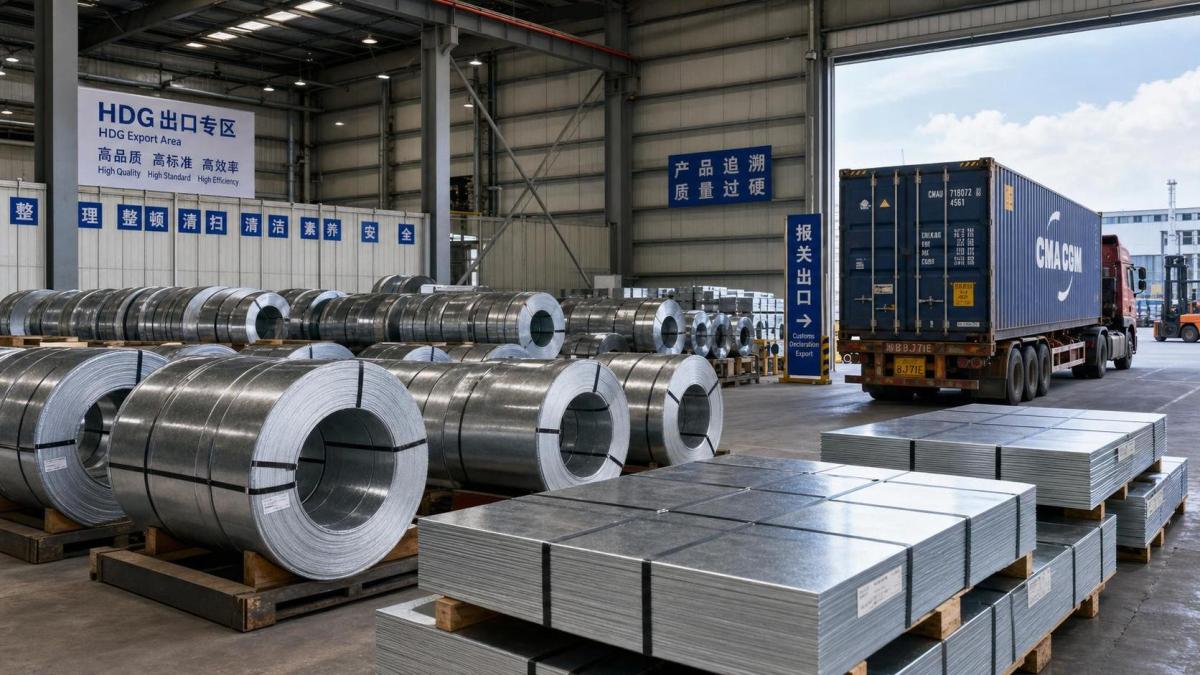
What Has Been Officially Announced
The confirmed facts are limited but commercially significant. The U.S. Department of Commerce formally initiated an expedited sunset review on July 5, 2026, covering hot-dip galvanized steel sheet from China. According to the disclosed summary, the review is expected to conclude within 90 days and will determine whether the existing antidumping duty order, currently ranging from 12.3% to 48.7%, should continue.
The same summary indicates that the review has immediate relevance for export quotations to the U.S. market, customs clearance documentation, and origin-related compliance strategy over the coming 12 months. It also states that importers need to promptly reassess supplier tariff classification and their ability to pass through additional costs.
Where the Near-Term Pressure May Appear
Export quoting is likely to become more cautious
From an industry perspective, direct trading companies involved in shipping HDG to the United States may face the earliest impact in quotation strategy. The reason is straightforward: when duty exposure remains under review, pricing assumptions for contracts, lead times, and margin allocation become harder to lock in. What deserves closer attention is whether counterparties start building wider buffers into offers or shortening quotation validity periods.
Import-side compliance work moves closer to the front of the transaction
For U.S.-side importers and customs-facing service providers, the pressure point is less about headline policy and more about execution. The summary specifically points to customs paperwork and origin compliance, which means documentation accuracy, tariff classification consistency, and supplier file readiness may become more important in day-to-day operations. Observably, even before a final outcome, administrative discipline can become a practical risk factor.
Suppliers and processors may need to revisit cost transfer assumptions
For manufacturers, processors, and upstream suppliers serving U.S.-linked orders, the issue is not only duty level but also who ultimately absorbs related costs. Analysis shows that the review may affect negotiations around landed cost, contract structure, and delivery responsibility. In that context, companies should pay attention to whether existing customer agreements clearly address tariff-related adjustments.
Supply chain intermediaries may see higher demand for document coordination
Logistics firms, trade compliance teams, and related service providers may be drawn more deeply into transaction preparation if customers seek stronger support on documentation and origin handling. The likely impact is operational rather than strategic: more verification steps, more coordination with exporters and importers, and potentially tighter review of shipment files tied to HDG cargoes.
What Companies Should Track Now
Watch the wording of the official follow-up
The current announcement starts the review process, but it does not itself settle the final result. Companies should therefore distinguish between the initiation of the review and any later determination on whether the existing duty order will remain. In practical terms, this means monitoring subsequent official language closely rather than treating the launch of the review as the final commercial outcome.
Recheck product classification and supplier mapping
The provided summary directly highlights tariff classification and supplier assessment. That makes internal product mapping a current priority, especially for businesses handling multiple steel categories or mixed sourcing arrangements. The immediate task is to confirm whether internal classification logic, supplier records, and transaction documentation align with the products being quoted or shipped.
Prepare documentation before shipment pressure builds
Because customs clearance documents and origin compliance are explicitly mentioned, companies with active or planned U.S. business should review paperwork readiness early. This is less about broad policy discussion and more about whether supporting files can withstand closer scrutiny if trade transactions move forward during the review window.
Align customer communication with cost exposure
Importers are specifically advised in the summary to assess cost pass-through capacity. Analysis shows that this is a commercial communication issue as much as a compliance issue. Companies may need to revisit how they explain pricing assumptions, tariff exposure, and adjustment mechanisms to customers when negotiating orders tied to the U.S. market.
Why This Matters Beyond the Headline
Observably, this development is best understood as an active review signal rather than a fully resolved policy result. The confirmed information already points to concrete business consequences in pricing, customs processing, and compliance preparation, but the review itself still sits within a decision-making window of about 90 days. That means the market is dealing with both an immediate operational issue and an unresolved policy question at the same time.
Analysis shows that the value of this update lies less in dramatic interpretation and more in timing. It tells relevant companies that waiting for a final determination before checking classifications, documentation, and cost-sharing assumptions may be too late from an execution standpoint.
How This Update Is Best Understood
At this stage, it is more appropriate to understand the review as a near-term operational alert with possible longer-tail implications, rather than as a definitive shift already completed. The key industry meaning is that U.S.-related HDG trade involving China now requires closer attention to quoting discipline, customs file quality, and origin compliance execution. A final outcome has not yet been confirmed in the provided information, so a measured and document-focused response remains the most rational approach.
Basis of This Article
This article is based on the user-provided news title, event date, and event summary concerning the July 5, 2026 announcement by the U.S. Department of Commerce on the expedited sunset review of antidumping duties on Chinese HDG. No additional unverified facts, company data, market figures, or policy details have been added.
For developments of this kind, commonly relevant source types may include official government announcements, company disclosures, industry association updates, authoritative media reporting, and trade-related compliance documents. The specific official source link was not provided in the input, so continued verification remains necessary. The main follow-up point to watch is the later determination within the stated 90-day review period and any official clarification affecting duties, documentation, or compliance treatment.
NEWS NAVIGATION
CONTACT US