
NEWS
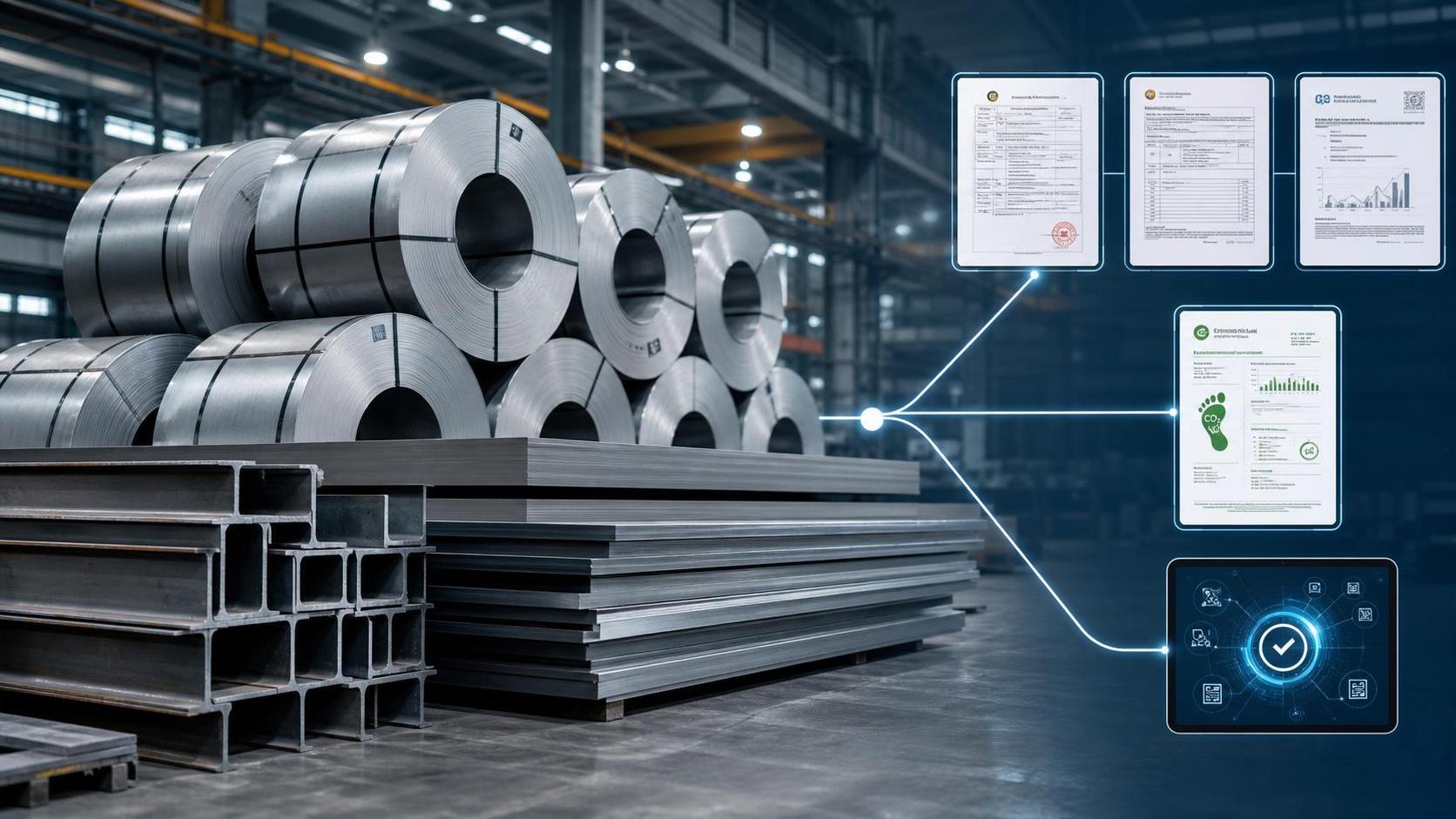
On July 8, 2026, the General Administration of Customs of China put a new export declaration system into operation for steel products, making carbon footprint data a mandatory filing item. For exporters, importers, procurement teams, testing and certification service providers, and supply chain operators handling steel trade, this is not just a digital form update. It introduces a new compliance checkpoint tied directly to customs processing, document readiness, and shipment timing, especially where export transactions are already being shaped by carbon-related trade and purchasing rules.
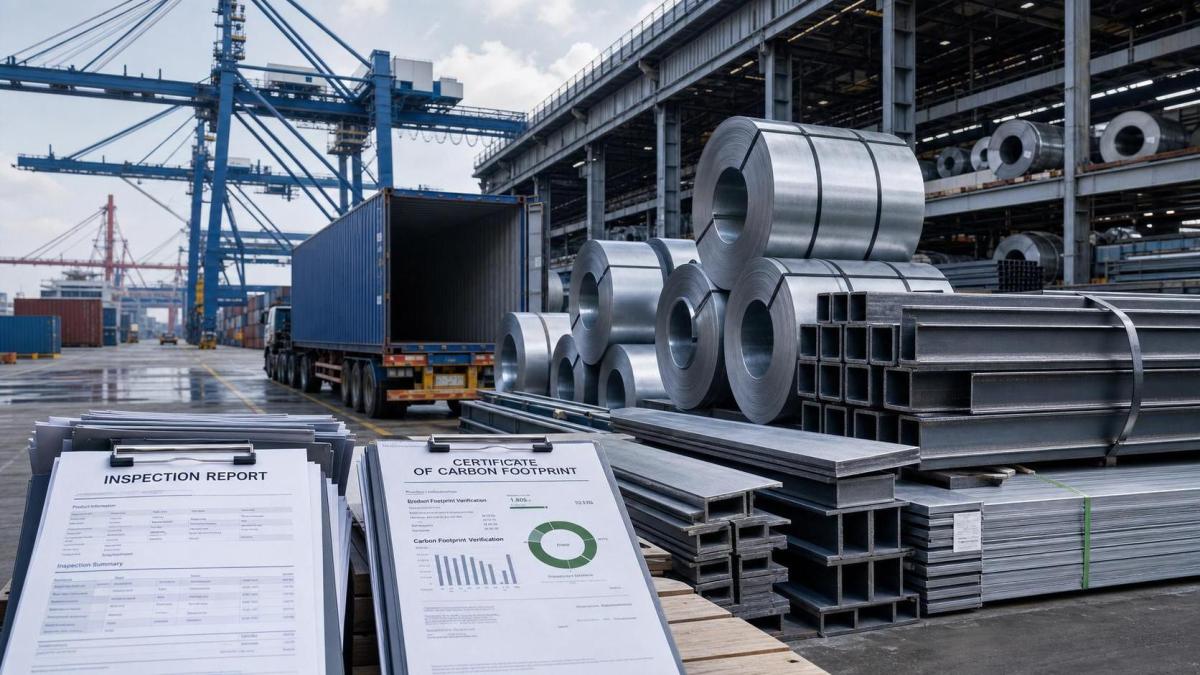
A customs filing change with defined document requirements
According to the provided event information, the new system took effect on 2026-07-08 and applies to all exported steel products, including hot-rolled coils, cold-rolled sheets, H-beams, and stainless steel semi-finished products. Under the new requirement, exporters must submit carbon footprint data as part of the export declaration.
The carbon footprint field must be supported by either an LCA report issued by a CNAS-accredited laboratory or a third-party digital carbon passport compliant with ISO 14067:2023. The provided information also states that if the field is left unfilled or if the data does not meet compliance requirements, the system will automatically reject the filing. The change is described as a direct response to the extended second phase of the EU CBAM and the new green procurement arrangement across the United States, Canada, and Mexico.
Where the pressure is likely to appear across the trade chain
Export declaration teams face a new pre-shipment document gate
For steel exporters and their customs filing teams, the most immediate impact is procedural. The filing process now requires carbon-related evidence at the declaration stage rather than leaving this issue to downstream customer requests or separate compliance reviews. Analysis shows that the practical exposure is likely to center on document collection, internal review of LCA materials or digital carbon passports, and coordination between production data and export paperwork.
Overseas buyers may feel the effect through timing and document alignment
Importers and procurement parties purchasing steel from China may be affected even though the filing obligation sits with the exporter. From an industry perspective, what deserves closer attention is customs timing: if declarations are rejected automatically because required carbon information is missing or non-compliant, delivery schedules and customs clearance planning for buyers may come under pressure. Buyers may also need closer alignment with suppliers on what carbon documentation will be available before shipment.
Testing and certification-related service providers move closer to transaction flow
Laboratories, verification providers, and service firms involved in carbon documentation may see a more operational role in export execution. The requirement specifically refers to CNAS-accredited laboratory LCA reports or third-party digital carbon passports compliant with ISO 14067:2023. Analysis shows that this brings technical documentation and conformity review closer to the actual shipment cycle, rather than treating them as separate sustainability materials.
Supply chain coordinators need to watch handoff points more carefully
For freight coordinators, traders, processors, and channel operators, the issue is not only whether carbon data exists, but whether it can be handed over in a form that matches the declaration requirement. Observably, the pressure point may emerge at contract execution, shipping preparation, and document exchange between mills, exporters, agents, and customers.
What companies should watch in current execution
Check whether carbon documents are declaration-ready, not only technically available
Analysis shows that having internal emissions or lifecycle data is not the same as having a filing-ready document. Companies involved in steel exports should pay close attention to whether their supporting files match the stated formats and qualification conditions, namely an LCA report from a CNAS-accredited laboratory or a third-party digital carbon passport aligned with ISO 14067:2023.
Review product coverage across export portfolios
The provided information indicates that the requirement covers all exported steel products and names categories such as hot-rolled coils, cold-rolled sheets, H-beams, and stainless steel semi-finished products. From an operational perspective, exporters and trading firms should therefore review which SKUs, declarations, and customer orders fall within this scope and whether existing documentation processes are consistent across product lines.
Revisit shipment planning and buyer communication
Because non-filled or non-compliant entries will trigger automatic rejection, what deserves closer attention is how this may affect shipment sequencing, document cut-off times, and customer communication. Where exporters serve buyers with strict customs or delivery windows, procurement and logistics teams may need to confirm document readiness earlier in the order cycle. This should be understood as a current compliance planning issue rather than a confirmed market outcome.
Follow official wording and market-side implementation closely
The provided information confirms the launch of the new system and the mandatory field, but it does not provide further detail on review practice, interpretation standards, or document handling variations. Companies should therefore keep watching for later official wording, implementation guidance, and any corresponding changes in bidding documents, supplier qualification requests, or customer-side compliance checklists.
Why this looks like an execution signal, not a distant policy theme
Observably, this development is more than a general sustainability direction. It places carbon footprint information inside the customs declaration workflow itself, which gives the requirement immediate operational weight. Analysis shows that the significance lies in the point of enforcement: once a trade, carbon, or procurement expectation becomes a mandatory customs field backed by automatic rejection, companies can no longer treat it as a secondary reporting matter.
At the same time, it would be premature to present this as a fully settled compliance environment beyond the confirmed facts. It is more appropriate to understand this as a landed execution signal with further market interpretation still worth watching, especially in relation to documentation practice, acceptance standards, and buyer responses linked to carbon-sensitive trade rules.
How the market may need to read this development now
In practical terms, the July 8 system launch should be read as an active compliance change affecting steel export execution rather than as a policy discussion still waiting for application. The confirmed facts already point to direct consequences for filing completeness and shipment flow. At the same time, the broader commercial effect on costs, lead times, supplier selection, and procurement behavior should still be treated cautiously as an area for ongoing observation rather than a fixed result.
Basis of this article and points that still need verification
This article is based on the user-provided news title, event date, and event summary. For developments of this kind, relevant source categories would usually include official notices, publications from customs or trade authorities, regulator releases, industry association updates, standard-setting organization documents, and reporting by authoritative media. A specific official source link was not provided in the input, so the underlying official release path and any later supporting notices still need to be verified on an ongoing basis.
Further observation is still needed on possible implementation details, interpretation standards for accepted carbon documentation, changes in tender or procurement requirements, market feedback from importers and exporters, and how companies adapt their execution processes after the new filing requirement takes effect.
NEWS NAVIGATION
CONTACT US