
NEWS

On July 15, 2026, the revised EN 1090-1:2026 becomes mandatory for steel construction products exported to the EU, shifting compliance from a document-centered process toward a digital filing requirement tied to the CE system. For manufacturers, exporters, certification-related service providers, buyers, and supply chain operators handling load-bearing components, fasteners, and modular building steel parts, the change matters because it affects not only product documentation but also certification workflows, traceability records, and customs timing.
What the revised standard now requires
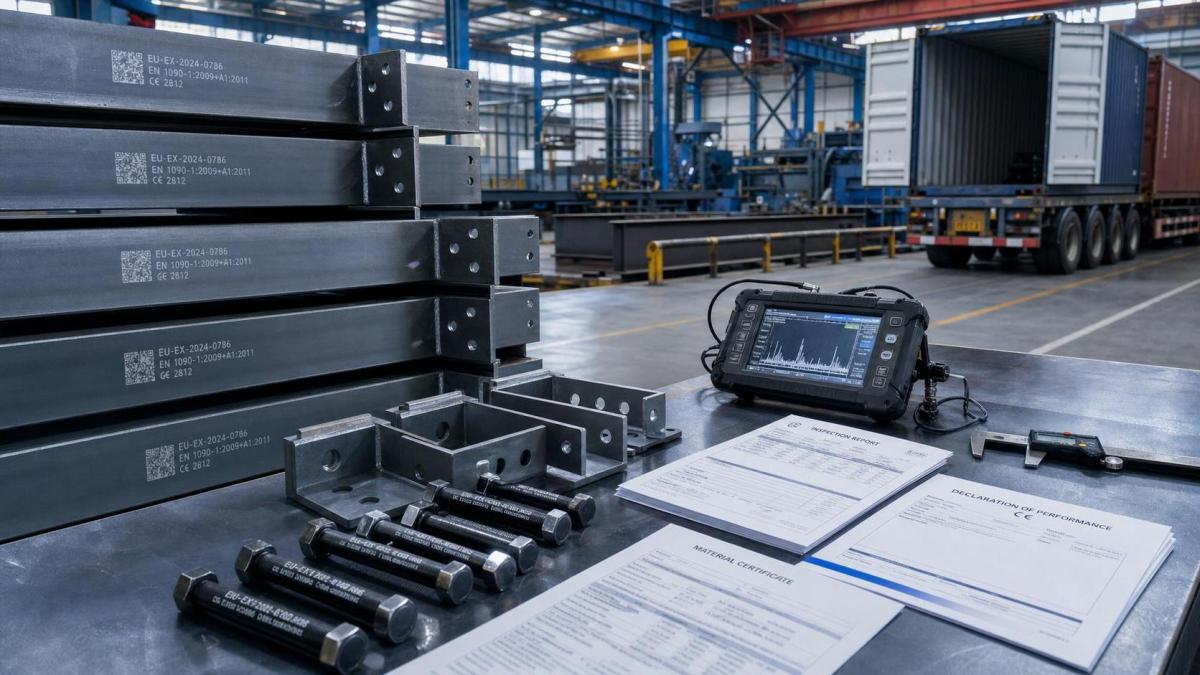
According to the provided event summary, the Official Journal of the European Union published the revised EN 1090-1:2026 on July 6, 2026. From July 15, 2026, all steel structure products exported to the EU, including load-bearing components, connection parts, and steel parts for modular buildings, must be accompanied by a Digital Compliance Declaration (DCD) issued by the manufacturer and uploaded to the EU CE digital portal.
The revised standard replaces the 2018 edition. It also adds mandatory requirements for carbon footprint data disclosure, laser-marking traceability, and AI-assisted weld inspection reports. The provided information further states that these changes directly affect the CE certification path and customs clearance timing for Chinese steel exporters.
Where the pressure is likely to appear first
Export documentation is no longer only a paper exercise
From an industry perspective, exporters are likely to feel the impact first because the rule change links shipment readiness to a manufacturer-issued DCD and portal upload. The practical effect is that compliance preparation may now sit closer to shipping and customs milestones, rather than remaining only within technical certification files.
What deserves closer attention is whether internal export teams, overseas sales staff, and document control functions are aligned around the new digital submission requirement, especially for goods already covered under earlier CE-related processes.
Manufacturing records move closer to audit-sensitive data
Processing and manufacturing companies may be affected because the new version makes carbon footprint disclosure, laser-based traceability, and AI-assisted weld inspection reporting mandatory. Analysis shows that this raises the importance of production-side data capture and technical record consistency, since the requirement is not limited to the final declaration itself.
For these firms, the pressure point is likely to be the connection between shop-floor records and export compliance files, including whether traceability marks, inspection outputs, and product-level supporting documents can be assembled in a form suitable for CE digital submission.
Certification and testing workflows may need to adjust
Certification-related companies and testing service providers may also be affected because the revised standard changes the content that manufacturers must be ready to support. Observably, this does not automatically confirm a new uniform market practice in every case, but it does indicate that technical files, review checklists, and supporting reports may need to reflect the revised standard language.
The main area to monitor is how documentation expectations are interpreted in certification review and shipment preparation, particularly where existing files were built around the 2018 edition.
Buyers and supply chain coordinators may face delivery timing questions
Procurement teams, project buyers, and supply chain service companies may be affected where purchase schedules depend on uninterrupted CE-related document flow. Analysis shows that any gap between manufacturing completion and digital compliance submission could become a delivery coordination issue, especially for products entering project-based construction timelines.
For these parties, the key concern is less the standard text itself and more whether suppliers can present complete compliance materials at the time goods are prepared for export and customs handling.
What companies should review now
Check whether existing CE file sets match the revised standard
Analysis shows that companies shipping steel structure products to the EU should first review whether their current CE-related documentation still aligns with EN 1090-1:2026 rather than the replaced 2018 version. The immediate issue is not broad policy interpretation but whether the required declaration format and supporting technical content are still fit for use after July 15, 2026.
Pay attention to data readiness behind the DCD
What deserves closer attention is that the DCD appears to depend on underlying data that now includes carbon footprint disclosure, laser-marking traceability, and AI-assisted weld inspection reporting. Companies should therefore focus on whether these records exist, whether they are internally consistent, and whether they can be linked clearly to the exported product batch or component.
Review tender files, purchase terms, and supplier qualification checks
Observably, the revised standard may also influence contract-facing documents even where formal implementation details are still being watched. Exporters, buyers, and procurement teams should monitor whether tender specifications, purchase conditions, supplier onboarding materials, or delivery acceptance documents begin to reference the DCD or the newly mandatory reporting elements.
Watch for execution signals rather than assume settled practice
The provided information confirms the rule change and the mandatory start date, but it does not provide full operational detail on every execution scenario. For that reason, companies should keep watching for official wording, certification practice, customs handling expectations, and document review standards that may shape how the rule is applied in day-to-day transactions.
Why this looks like an execution signal, not just a standards update
Analysis shows that this development is better understood as more than a routine revision of a technical standard. The mandatory DCD upload to the EU CE digital portal indicates a clearer move toward digitalized compliance management, while the added requirements on carbon footprint disclosure, traceability marking, and AI-assisted inspection reporting suggest a broader expectation that product conformity be supported by more structured and retrievable data.
At the same time, it is also appropriate to treat this as a rule change that still requires close observation in practice. The confirmed facts establish the effective date and the new mandatory elements, but industry participants still need to watch how these requirements are reflected in certification handling, bid documentation, customs interactions, and market feedback.
How the market should read this change now
At this stage, the update to EN 1090-1:2026 is most appropriately understood as a rule that has entered the implementation phase, rather than as a distant policy signal. The practical significance lies in the combination of a fixed start date, a mandatory digital declaration, and additional technical disclosure requirements tied to export readiness.
A neutral reading is that companies exposed to EU-bound steel structure trade should not treat this only as a standards revision on paper. It is better read as a compliance and delivery management issue whose full market effect will depend on how consistently the new requirements are reflected in certification review, shipment preparation, and customs execution.
Basis of this article and what still needs verification
This article is generated based on the user-provided news title, event time, and event summary. For events of this type, relevant source categories often include official notices, regulatory publications, customs or trade authority information, industry association updates, standards organization documents, and reporting by established business or industry media.
No specific official source link was provided in the input, so the exact official link still needs to be verified on an ongoing basis. Further observation is also needed regarding detailed implementation wording, certification interpretation, changes in tender and procurement documents, market feedback, and how companies are carrying out the new requirements in practice.
NEWS NAVIGATION
CONTACT US