
NEWS

On July 9, 2026, the U.S. Department of Commerce announced the start of the fifth administrative review of the antidumping duty order on hot-rolled steel products from China exported to the U.S. The review covers shipments made between October 1, 2024 and September 30, 2025. For U.S. importers, distributors, and channel partners selling these products in the U.S. market, this matters because the process can reset duty rates, re-examine exporter and producer status, and affect customs compliance and cost planning over the next 12 months.
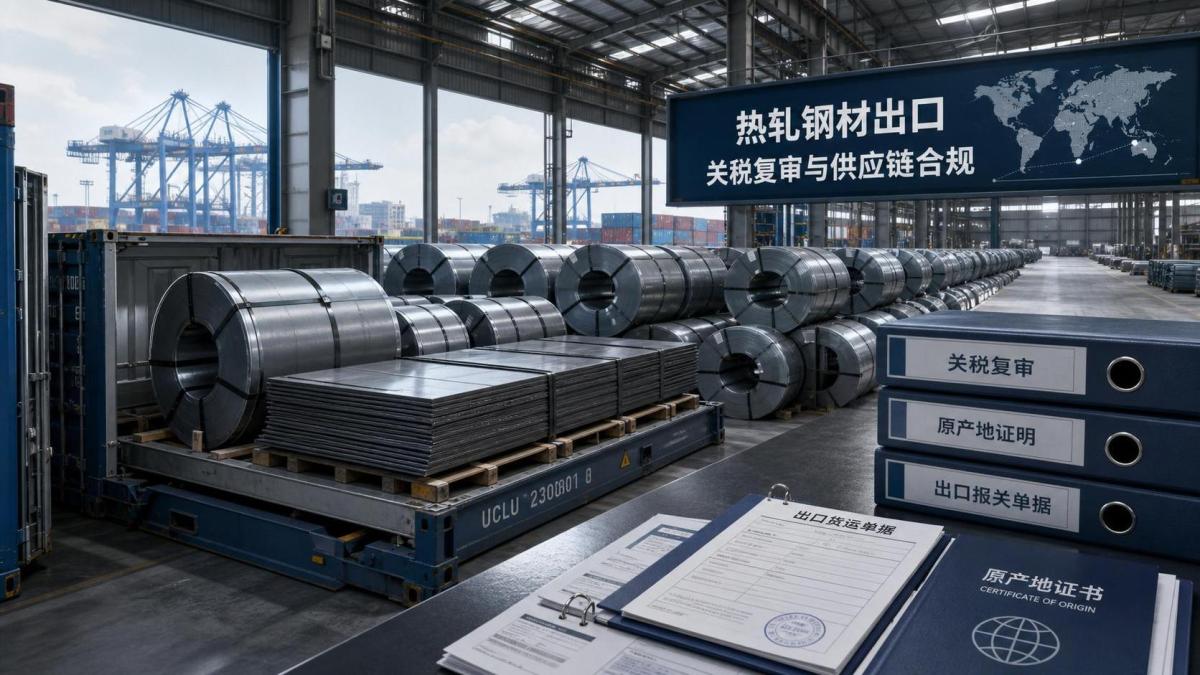
What the new administrative review covers
The announced proceeding is the fifth administrative review of the existing antidumping duty order on Chinese hot-rolled steel products entering the U.S. market. According to the provided information, the review applies to export batches shipped during the period from October 1, 2024 to September 30, 2025.
The review will re-determine applicable duty rates and examine the qualifications of exporters and producers involved in the covered trade. The provided summary also indicates that the outcome may influence customs clearance compliance and cost structures during the coming 12 months.
Where the immediate business impact may appear
Import-side purchasing and customs operations
From an industry perspective, U.S. importing companies may be affected first because duty recalculation can directly change the landed-cost assumptions attached to covered shipments. The main pressure point is not only pricing, but also whether supporting documents, supplier records, and origin-related files are complete enough for ongoing customs handling.
Distribution and in-market channel management
Distributors and channel partners selling hot-rolled steel products in the U.S. may face follow-on effects in margin management, order planning, and customer communication. Analysis shows that even before any final rate outcome is known, the review itself can create a need to recheck which suppliers remain commercially and procedurally reliable under the current trade framework.
Cross-border supply chain coordination
Supply chain service providers and counterparties managing documentation, scheduling, and delivery coordination may also need closer alignment with trading parties. What deserves closer attention is whether exporter or producer qualification questions create friction in shipment processing, record matching, or downstream compliance reviews.
What companies should review now
Supplier qualification should be checked without delay
For businesses tied to imports of the covered product, the most immediate practical issue is supplier status. The provided information specifically points to the need to verify the qualifications of existing suppliers, which makes supplier screening a current operational task rather than a later legal formality.
Origin and shipment documentation needs a closer audit
Observably, origin documentation and related trade files are central because the review may affect future customs compliance. Companies should therefore pay close attention to whether shipment records for the covered period are complete, internally consistent, and ready for scrutiny if needed in later clearance or compliance steps.
Commercial planning should be separated from final outcome assumptions
Analysis shows that the launch of a review is not the same as a confirmed change in final business conditions. Companies should distinguish between a current procedural development and any eventual duty-rate result, especially when discussing pricing, delivery timing, and customer commitments.
Customer and partner communication should stay precise
For distributors and channel partners, external communication may become sensitive if customers ask about pricing stability or delivery risk. It is more appropriate to communicate that a formal review has started, that compliance files are being checked, and that further official developments still need to be monitored.
Why this is a signal worth tracking, not a final outcome
As an editorial observation, this development is best understood as an active regulatory checkpoint rather than a concluded trade measure. The confirmed fact is that the review has been initiated and that it covers a defined shipment period. The unresolved part is how the recalculated rates and qualification review may ultimately affect specific market participants.
From an industry perspective, the significance lies in timing and exposure. Businesses connected to U.S.-bound hot-rolled steel trade do not need to wait for a final conclusion to begin internal checks, because supplier eligibility and document readiness already sit within current operational control.
How the market may need to read this stage
The current development should be read as a near-term compliance and cost-monitoring issue with broader implications still subject to the review process. It is not yet a definitive market result, but it is also not a routine update that can be ignored by affected trading parties. A measured interpretation is that this is a live procedural development with practical consequences for documentation, supplier review, and commercial preparation.
Basis of this article and what still requires verification
This article was generated based on the user-provided news title, event date, and event summary. The factual basis used here is limited to the stated announcement date, the launch of the fifth administrative review, the covered shipment period, the re-examination of duty rates and exporter/producer qualifications, and the stated implications for compliance and cost structure.
For this type of development, commonly relevant source categories may include official government notices, company disclosures, industry association updates, authoritative media reporting, and formal trade or standards documentation. The specific official source link was not provided in the input, so continued verification remains necessary. Follow-up attention should focus on subsequent official wording, any clarification on review scope, and later determinations that may affect customs handling and commercial exposure.
NEWS NAVIGATION
CONTACT US