
NEWS

The European Union’s new steel import regulation — slashing annual duty-free quotas by nearly half and doubling the tariff on excess imports to 50% — enters into force on 1 July 2026. This policy shift directly affects international steel traders, procurement teams, downstream fabricators, and global supply chain managers, particularly those engaged with Chinese-origin steel products. Its implementation marks a material tightening of market access conditions and signals a structural recalibration in EU trade posture toward key exporting nations.
Event Overview
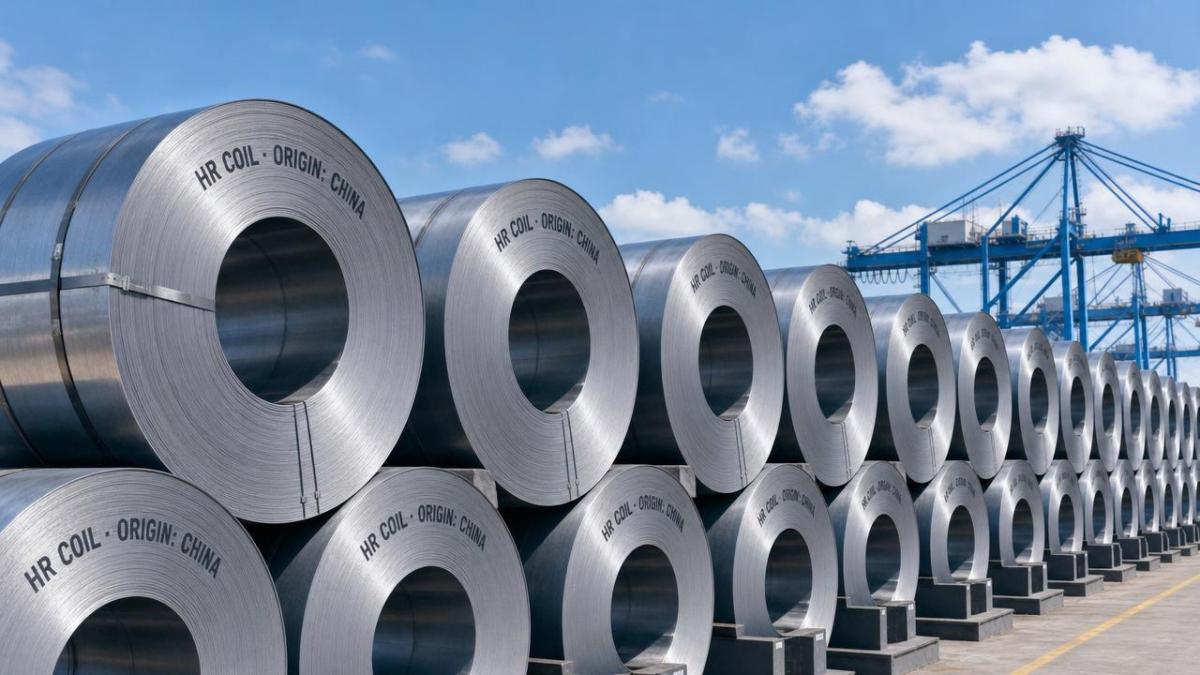
On 19 May 2026, the European Parliament approved the steel import trade protection measure with 606 votes in favour. The regulation takes effect on 1 July 2026. Under the new rules, the EU’s annual duty-free steel import quota is reduced from 34.5 million tonnes to 18.3 million tonnes. For volumes exceeding the quota, the applied tariff increases from 25% to 50%. The official rationale cites ‘global overcapacity’, though the policy’s practical impact is concentrated on steel exports originating from China.
Industries Affected
Direct Trading Enterprises
Companies engaged in cross-border steel trading face immediate cost escalation on shipments exceeding the revised quota. With the quota cut by 47%, even historically compliant import volumes may now trigger the 50% tariff — compressing margins and altering price competitiveness in EU markets.
Raw Material Procurement Entities
Manufacturers and industrial buyers sourcing semi-finished or finished steel products from outside the EU must reassess landed cost structures. The higher tariff applies not only to hot-rolled coil or rebar but also to downstream items where steel content exceeds thresholds defined under EU customs classification — increasing procurement risk for just-in-time inventory models.
Downstream Fabrication & Manufacturing Firms
Firms that process imported steel (e.g., tube mills, structural fabricators, automotive component suppliers) may experience delayed deliveries or contract renegotiations as overseas suppliers adjust pricing or shift allocation. Longer lead times and documentation requirements for quota utilisation could disrupt production planning cycles.
Distribution & Channel Intermediaries
Steel service centres, distributors, and third-party logistics providers handling EU-bound consignments will need updated customs compliance protocols. Verification of origin, quota usage tracking, and tariff classification accuracy become more critical — raising administrative overhead and potential liability for misdeclaration.
What Relevant Enterprises or Practitioners Should Monitor and Do
Track official quota utilisation reports and EU Commission guidance
The European Commission is expected to publish quarterly updates on quota exhaustion rates per product category and country of origin. Observably, early quota saturation — especially for categories heavily supplied by China — could trigger de facto import restrictions before year-end, warranting close monitoring beyond the formal effective date.
Review product-specific HS codes and origin documentation rigorously
Analysis shows that tariff applicability hinges on precise Harmonized System (HS) classification and verifiable proof of origin. Misclassification or incomplete origin paperwork may result in automatic application of the 50% rate — even if the shipment falls within nominal quota volume. Enterprises should audit current documentation workflows now.
Distinguish between policy announcement and operational implementation
While the regulation becomes legally effective on 1 July 2026, customs authorities may require additional time to integrate systems for real-time quota tracking. Current more suitable understanding is that full enforcement consistency across all EU member states may take several weeks — creating a short-term window for procedural alignment, but not for quota circumvention.
Reassess supplier diversification and inventory buffers ahead of Q3 2026
Given the abrupt quota reduction, enterprises reliant on single-source or high-volume Chinese steel supplies should initiate scenario planning now. This includes evaluating alternative origins (e.g., Turkey, India, ASEAN), testing qualification timelines for new suppliers, and assessing feasibility of modest safety-stock adjustments — without overcommitting to speculative inventory build-up.
Editorial Perspective / Industry Observation
This regulation is best understood not as an isolated trade adjustment, but as a calibrated escalation in the EU’s broader strategy to manage exposure to external industrial overcapacity — with China as the primary reference point. Observably, it functions less as an immediate barrier and more as a structural lever: reshaping long-term sourcing commitments, incentivising local value-add, and testing the resilience of globally integrated steel supply chains. Its significance lies not only in the tariff level, but in the precedent it sets for sector-specific, quota-based trade discipline — potentially informing future measures in aluminium, batteries, or solar PV.
From an industry angle, the policy’s enforcement rhythm — rather than its headline rates — will determine near-term impact. Early data on quota drawdown speed and customs interpretation variance across member states will be more telling than the regulation’s text alone.
Current more appropriate interpretation is that this is a signal of sustained regulatory intent, not a one-off intervention. It reflects a deliberate shift toward managed openness — where market access is conditional, quantified, and increasingly tied to strategic industrial considerations.
Conclusion
The EU’s revised steel import regime introduces a measurable constraint on global steel trade flows, particularly for exporters and buyers linked to China. Its core implication is not sudden disruption, but a recalibration of cost assumptions, lead-time expectations, and sourcing durability. For affected stakeholders, the priority is not reaction, but structured adaptation: verifying compliance pathways, mapping exposure by product and origin, and treating quota availability as a dynamic, time-sensitive input — not a static allowance.
Information Sources
Main source: European Parliament legislative record dated 19 May 2026 (Resolution on strengthening steel trade defence instruments). Quota figures and tariff levels confirmed in Annex I of the adopted regulation. Ongoing monitoring of quota utilisation and national customs implementation practices remains necessary; no consolidated EU-wide dashboard is yet publicly available.
NEWS NAVIGATION
CONTACT US