
NEWS

Effective 1 June 2026, China will reinstate export license requirements for 300 steel-related Harmonized System (HS) codes — spanning raw materials like steel billets and hot-rolled coils to high-end specialty alloy steels. This measure, jointly announced by China’s Ministry of Commerce and General Administration of Customs in December 2025, directly affects international buyers, exporters, and downstream supply chain actors in construction, automotive, machinery, and renewable energy sectors — where steel procurement timelines, supplier vetting, and cost structures are now subject to new regulatory scrutiny.
Event Overview
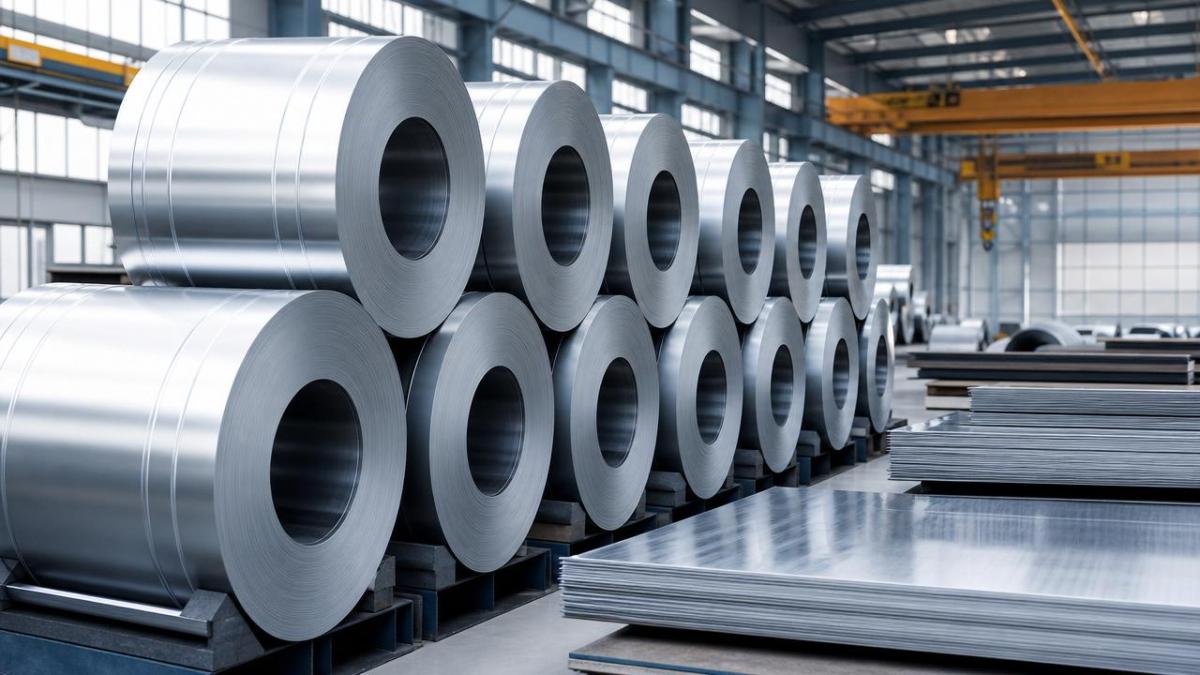
In December 2025, China’s Ministry of Commerce and the General Administration of Customs issued a joint announcement stipulating that, from 1 June 2026, export licenses will be mandatory for exports covering 300 designated HS codes under the steel product category. The scope includes steel billets, hot-rolled coils, cold-rolled sheets, stainless steel products, and specialty alloy steels. To apply for a license, exporting enterprises must submit verified export contracts and quality inspection certificates. Low-value-added steel products face higher compliance burdens, while certified ‘green steel’ and products meeting recognized environmental or quality standards are granted expedited licensing pathways.
Industries Affected
Direct Trading Enterprises
These include Chinese-based exporters and foreign trading companies sourcing steel directly from mainland producers. They are affected because license applications require binding export contracts and third-party quality documentation — introducing lead time extensions and contractual inflexibility. Delays in license approval may disrupt shipment schedules, particularly for time-sensitive orders or just-in-time delivery models.
Raw Material Procurement Entities
Buyers procuring steel inputs for fabrication (e.g., structural fabricators, pipe mills, or wire drawing plants) face increased uncertainty in upstream pricing and availability. With low-margin products bearing higher administrative costs, price pass-throughs or revised quoting cycles are likely — especially for non-certified grades.
Processing & Manufacturing Firms
Domestic manufacturers using imported semi-finished steel (e.g., hot-rolled coil for cold rolling) may experience tighter domestic supply as licensed export channels divert volume toward priority-certified products. This could tighten availability or elevate landed costs for certain intermediate grades used in downstream production.
Distribution & Channel Operators
Steel service centers, regional distributors, and e-platforms facilitating cross-border transactions must now verify supplier licensing status before listing or fulfilling orders. Their due diligence workflows — including contract review, certificate validation, and customs coordination — will require formalization and documentation upgrades.
What Enterprises and Practitioners Should Focus On Now
Monitor official implementation guidelines and list updates
The published list of 300 HS codes is definitive as of the December 2025 notice, but supplementary guidance on application procedures, document templates, and digital platform integration is expected in Q1–Q2 2026. Stakeholders should track announcements from MOFCOM and GACC portals — not only for procedural clarity but also for potential adjustments to priority categories or green certification criteria.
Map exposure across HS codes and key destination markets
Enterprises should cross-reference their current export SKUs against the official 300-code list and assess concentration risk by destination market (e.g., Southeast Asia, Middle East, Africa), where documentation capacity and buyer familiarity with Chinese licensing may vary significantly. High-exposure product lines warrant early engagement with customs brokers and local import agents.
Distinguish between policy signal and operational reality
While the regulation takes legal effect on 1 June 2026, actual processing timelines, inter-agency coordination, and system readiness remain unconfirmed. Analysis shows initial license issuance may involve manual review phases, meaning early adopters could encounter delays — making buffer planning essential for Q3 2026 shipments.
Prepare documentation infrastructure and internal alignment
Exporters and buyers alike should begin aligning internal systems: updating contract clauses to include license obligations, standardizing quality certificate formats (e.g., ISO/IEC 17025-accredited reports), and training sales and logistics teams on new verification checkpoints. For multinational buyers, this means revising supplier scorecards to incorporate licensing compliance as a core performance metric.
Editorial Perspective / Industry Observation
Observably, this policy reinstatement functions less as an abrupt trade barrier and more as a calibrated regulatory recalibration — reinforcing China’s dual focus on export quality governance and strategic resource allocation. From an industry perspective, it signals a structural shift toward administrative differentiation: compliance burden is deliberately weighted toward low-value products, while certified ‘green steel’ gains de facto preferential access. Current evidence does not indicate broad export volume contraction; rather, it suggests channel reallocation and timeline elongation. Therefore, the measure is best understood not as a short-term disruption, but as a medium-term signal of tightening administrative oversight aligned with broader industrial upgrading goals.
Conclusion
This licensing requirement marks a formal reassertion of administrative control over steel exports — one that reshapes transactional workflows, elevates documentation rigor, and introduces tiered treatment based on product value and sustainability credentials. It is neither a blanket restriction nor a temporary pilot, but a structured mechanism with lasting implications for global steel procurement. Currently, it is more appropriately understood as a compliance inflection point than a market-shifting event — demanding operational adaptation, not strategic reversal.
Source Attribution
Main source: Joint Announcement No. XX of 2025, issued by China’s Ministry of Commerce (MOFCOM) and the General Administration of Customs (GACC), published December 2025.
Points requiring ongoing observation: Final implementation rules, average license processing duration, and any subsequent expansion beyond the initial 300 HS codes.
NEWS NAVIGATION
CONTACT US