
NEWS
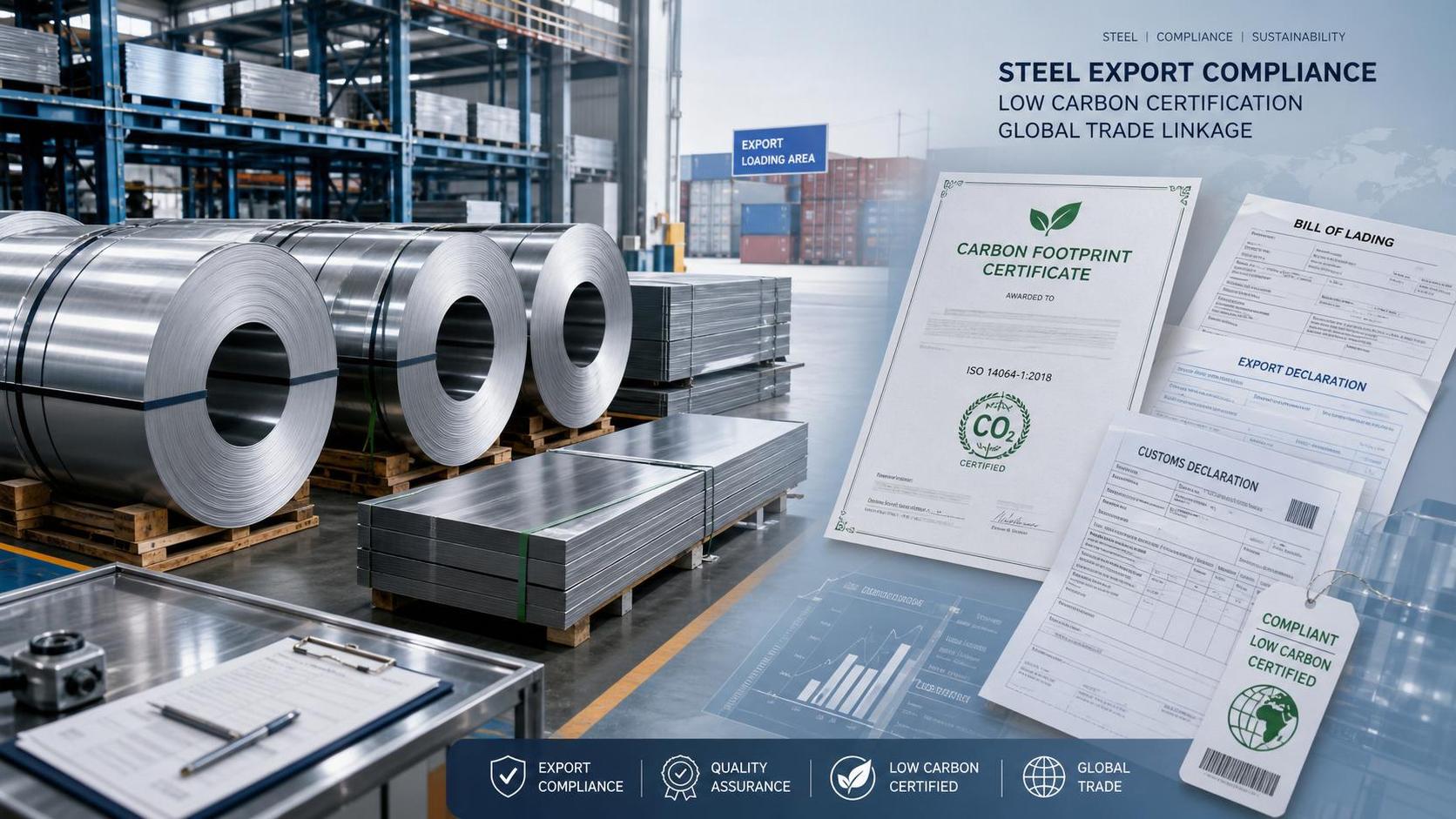
Starting July 15, 2026, China has moved a carbon disclosure requirement into the export process for selected steel products, shifting carbon footprint documentation from a voluntary or customer-driven matter into a customs-facing compliance step. The change follows a joint notice issued on July 14 by the General Administration of Customs and the Ministry of Ecology and Environment, and it is especially relevant for exporters, overseas buyers, certification-related service providers, and supply chain teams handling shipments into markets where green procurement requirements already influence customs clearance and market access.
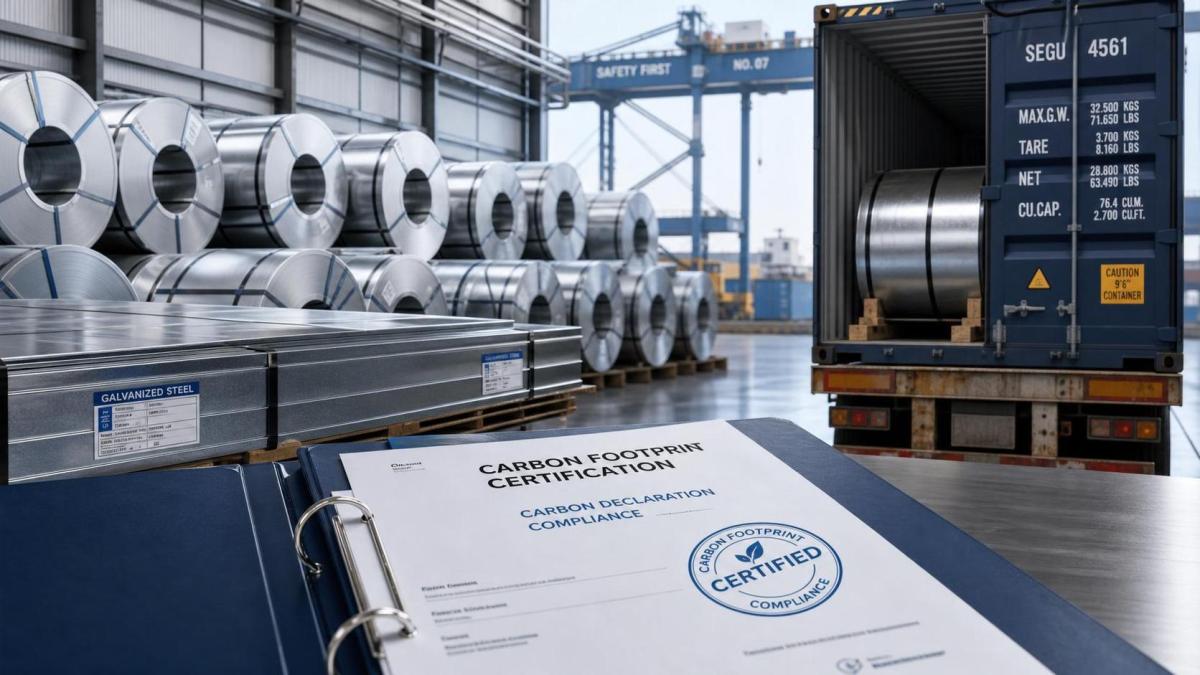
A New Filing Requirement at the Export Gate
On July 14, 2026, the General Administration of Customs of China and the Ministry of Ecology and Environment issued a trial notice on carbon footprint information declaration for certain exported steel products.
Under the notice, from July 15, 2026, 12 major categories of export steel products, including hot-rolled coil, cold-rolled stainless steel sheet, and galvanized steel sheet, must be accompanied by a carbon footprint declaration.
The declaration must be certified by a CNAS-accredited institution and comply with ISO 14067.
According to the provided event summary, the measure directly affects import customs clearance and compliance access in markets such as the European Union, South Korea, and Canada, where green procurement thresholds have already been established.
Where the Immediate Pressure Will Be Felt
Export transactions now depend on document readiness
For steel exporters, the direct impact is that shipment compliance is no longer limited to product, trade, and customs documentation in the conventional sense. A carbon footprint declaration certified by a CNAS-accredited institution becomes part of the practical readiness for export on the covered steel categories. From an industry perspective, what deserves closer attention is the handoff between production records, certification preparation, and customs filing, because any weakness in documentation timing may affect shipment execution.
Overseas buyers may tighten procurement screening
Buyers and import-side procurement teams in markets already using green procurement requirements are also likely to feel the effect quickly. Analysis shows that once carbon footprint documentation becomes a mandatory export-side requirement for covered products, purchasers may place greater attention on whether suppliers can provide compliant declarations in a complete and usable form for customs clearance and market entry. The issue is not only product availability, but also whether compliance paperwork aligns with purchasing and import procedures.
Certification and testing-related service links gain operational importance
The notice specifically refers to certification by CNAS-accredited institutions and compliance with ISO 14067. That means certification-related service providers and internal compliance teams will sit closer to the shipment decision path than before. Observably, the operational focus will be on the availability, format, and consistency of supporting materials tied to the declaration requirement, particularly for exporters working across multiple product categories or destination markets.
Supply chain coordination becomes part of delivery control
For traders, processors, and logistics-facing supply chain teams, the change may affect delivery planning even where product demand remains unchanged. Analysis shows that if a covered steel product cannot move without the required declaration, then scheduling, customer commitment, and handover planning all become more dependent on documentation lead time. This is a compliance issue, but it is also a delivery management issue.
What Companies Should Watch Closely Now
Check whether current export products fall within the covered categories
The notice applies to 12 major categories of export steel products, with examples including hot-rolled coil, cold-rolled stainless steel sheet, and galvanized steel sheet. Companies involved in export sales, order management, and contract review should first identify whether their active products fall within the covered scope described in the notice. This is the basic starting point for any follow-on compliance action.
Review carbon declaration and certification preparedness
Because the required declaration must be certified by a CNAS-accredited institution and conform to ISO 14067, companies should pay close attention to whether their existing compliance materials, technical documentation, and certification workflow are sufficient for export use. Analysis shows that the practical question is less about broad sustainability messaging and more about whether the declaration can be issued in a form that supports shipment and customs-facing use.
Watch for execution language and filing practice
The notice is described as a trial measure, which makes the execution approach especially important to monitor. It is more appropriate to understand this as a rule change that has already taken effect, while some practical details of implementation may still require close observation. Companies should therefore follow later official wording, filing practice, and any market-side document expectations that emerge around the declaration requirement.
Align contracts, procurement files, and delivery commitments
Exporters and procurement teams should also look at how the new requirement interacts with transaction documents, bid materials, order files, and delivery commitments for affected steel products. Observably, when carbon footprint documentation becomes tied to compliance access in destination markets, the documentary chain around supply qualification and shipment readiness may need closer internal coordination.
Why This Reads as More Than a Routine Notice
Analysis shows that this development is best read as a concrete compliance signal rather than a general policy statement. The requirement is attached to named product groups, linked to a recognized certification condition, and effective immediately from July 15, 2026. At the same time, it is also appropriate to treat it as an implementation-stage change that still deserves continued observation, especially in how enterprises, certification bodies, and trade participants interpret operational requirements in day-to-day export handling.
From an industry perspective, the significance lies in where the rule sits: not only in environmental positioning, but in export execution and access to markets that already apply green procurement thresholds. That is why this development matters beyond policy tracking alone.
How the Market Should Read the Change
At this stage, the measure is more appropriately understood as an active export compliance requirement for covered steel categories, and also as a continuing execution signal that the industry needs to monitor closely. The immediate takeaway is not that all commercial outcomes are already settled, but that carbon footprint documentation has moved into a more formal role in export readiness, customs-related processing, and compliance access for certain overseas markets.
A rational reading is that companies involved in affected steel exports should treat documentation, certification alignment, and shipment preparation as connected tasks, while continuing to watch for further clarification in implementation practice and market feedback.
Basis of This Article and What Still Needs Verification
This article is based on the user-provided news title, event date, and event summary concerning China's new customs requirement for carbon footprint declarations on certain steel exports. Typical source types relevant to developments of this kind include official notices, publications by regulatory authorities, customs or trade administration releases, industry association updates, standard-setting documents, and reporting by authoritative media.
No specific official source link was provided in the input, so the exact source document link still requires follow-up verification. Observably, the areas that still merit continued tracking include any further policy detail, certification execution criteria, filing interpretation, changes in tender or procurement documentation, industry feedback, and the way affected companies implement the requirement in practice.
NEWS NAVIGATION
CONTACT US