
NEWS
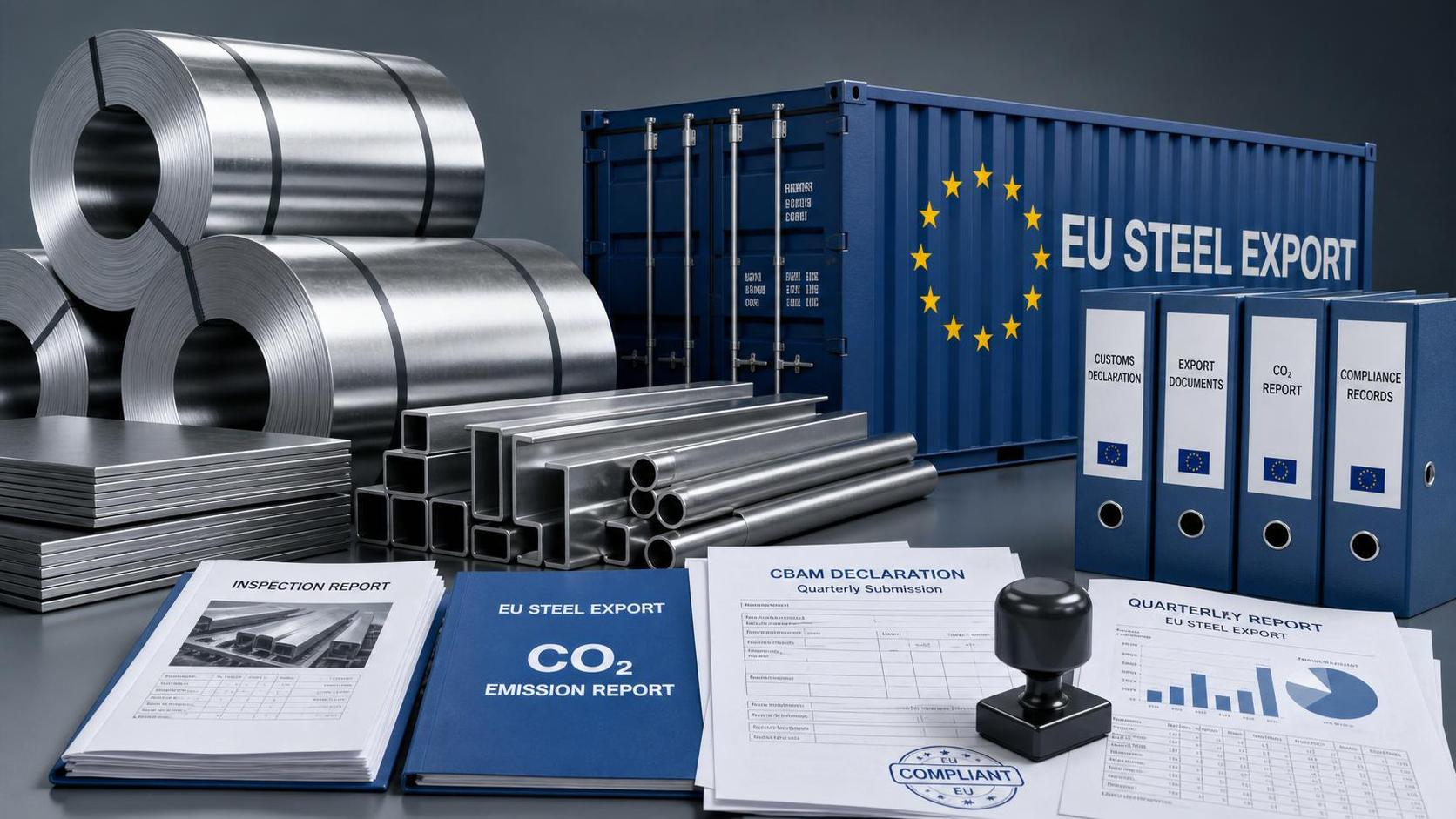
On July 16, 2026, the EU moved CBAM for steel products into a new transitional reporting stage. Non-EU companies exporting steel products such as hot-rolled coil, cold-rolled sheet, and stainless steel profiles to the EU are now required to submit quarterly declarations through the CBAM portal covering embedded carbon emissions as well as proof of upstream electricity and coke sources. For Chinese steel exporters and related supply-chain participants, this is worth close attention because it shifts compliance work from general preparation into a recurring reporting obligation that can affect documentation flow, verification costs, and delivery scheduling.
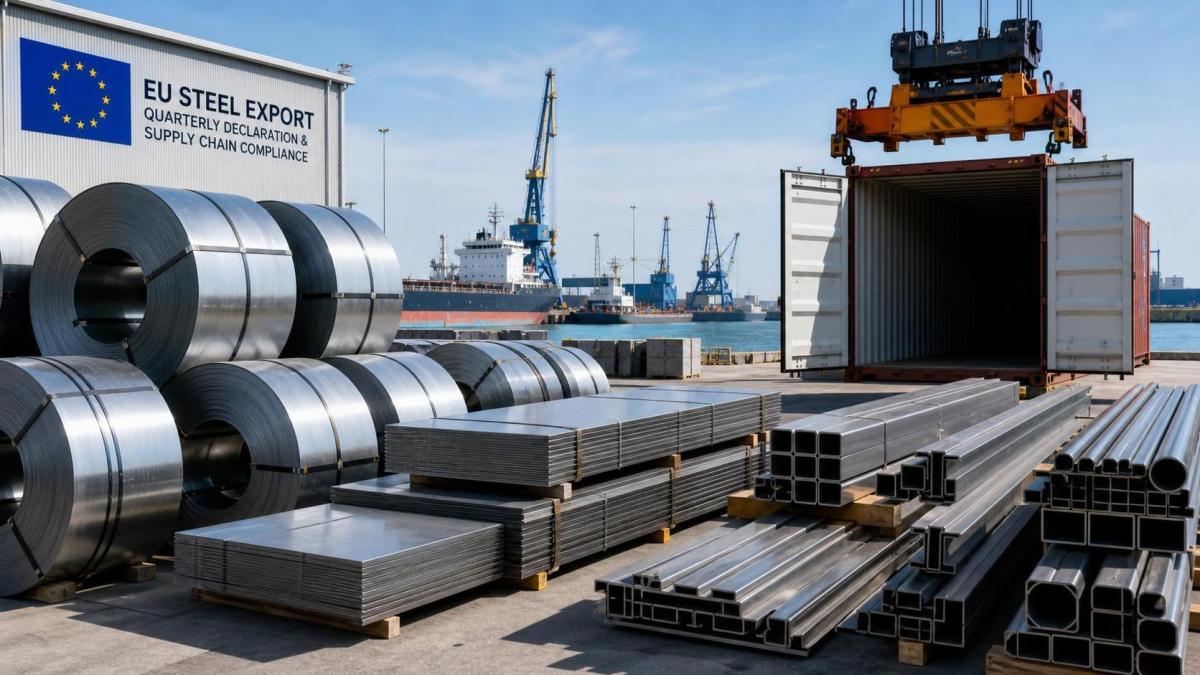
What Has Taken Effect From July 16
According to the provided event information, the EU CBAM entered the third stage of its transitional period on July 16, 2026. From that date, all non-EU enterprises exporting steel products to the EU are required to report embedded carbon emissions on a quarterly basis through the CBAM portal.
The reporting scope described in the input covers steel products including hot-rolled coil, cold-rolled sheet, and stainless steel profiles. The same input also states that exporters must provide proof relating to upstream electricity and coke sources.
The confirmed impact stated in the input is that this change directly affects the compliance preparation pace of Chinese steel exporters, the cost of third-party verification, and delivery cycle arrangements.
Where The Operational Pressure Is Likely To Appear
Export documentation moves closer to shipment planning
From an industry perspective, direct exporters are likely to feel the impact first because the new requirement is tied to quarterly portal reporting rather than a one-off filing exercise. The practical pressure point is not only carbon data collection itself, but also whether shipment-related records, product information, and upstream source evidence can be organized in a way that supports reporting without delaying transactions.
What deserves closer attention is the link between compliance timing and delivery execution. Where export schedules are tight, any gap in emissions records or upstream source proof may create friction in internal review, customer communication, or handover planning.
Upstream purchasing data becomes more relevant
For companies involved in raw material sourcing and production input management, the stated requirement for proof of electricity and coke sources means procurement records may become more significant in export compliance workflows. Analysis shows that purchasing teams may need to pay closer attention to how source information is retained, matched to product batches, and passed into export documentation packages.
This does not mean a confirmed new procurement rule has been issued beyond the provided facts. It does mean that supplier-facing document readiness is more likely to matter where exporters need to support quarterly CBAM declarations.
Verification and service providers may face a more frequent workload pattern
The input specifically notes an effect on third-party verification costs. Observably, this suggests that testing, verification, and related compliance service providers may see demand shaped less by isolated export cases and more by repeated reporting cycles. For exporters, the issue is not only external cost, but also whether service capacity and review timing align with quarterly reporting needs and shipment commitments.
EU-facing buyers and channels may pay closer attention to document completeness
For distributors, procurement parties, and other trade participants connected to EU-bound steel flows, the rule change may influence expectations around supporting documents and reporting readiness. Analysis shows that counterparties may increasingly focus on whether carbon-related declarations and upstream source evidence can be prepared in step with supply arrangements, especially for product categories explicitly covered in the provided event summary.
What Companies Should Watch In Practice
Quarterly reporting readiness, not just policy awareness
Analysis shows that companies should treat the change as an operational reporting issue rather than only a policy headline. The key practical question is whether internal teams can produce embedded emissions information and upstream electricity and coke source proof in a repeatable quarterly process.
Supporting records for covered steel categories
What deserves closer attention is document consistency for the steel products identified in the input, including hot-rolled coil, cold-rolled sheet, and stainless steel profiles. Exporters should closely track whether product records, technical files, and source-related supporting materials can be matched clearly to declarations submitted through the CBAM portal.
Budgeting for external review and coordination time
Because the provided summary directly mentions third-party verification costs, companies should watch how external review requirements affect both compliance budgets and coordination calendars. This is better understood as a current area of attention rather than a settled execution outcome, since the input does not provide detailed implementation practice.
Delivery planning under a tighter compliance rhythm
Observably, delivery cycles are one of the clearest business areas affected by the stated rule change. Exporters, logistics coordinators, and customer-facing teams should watch whether reporting preparation, supporting evidence collection, and any required external checks begin to influence booking windows, shipment release timing, or contract execution planning.
Why This Looks More Like An Execution Signal
Analysis shows that this development is more appropriately understood as an execution-stage signal rather than a general policy discussion. The reason is that the provided information points to a specific effective date, a defined reporting channel through the CBAM portal, a quarterly reporting rhythm, and identifiable document expectations related to embedded carbon emissions and upstream sources.
At the same time, it should not be overstated as a fully settled end-state. Observably, the market still needs to watch how reporting expectations are applied in practice, how counterparties interpret documentation sufficiency, and how compliance-related timing affects ordinary trade and delivery arrangements.
How The Market May Need To Read This Change
For the steel trade, this event signals that CBAM-related obligations for EU-bound exports are becoming more embedded in routine operating processes. The immediate significance lies less in abstract policy language and more in the need to connect emissions reporting, upstream source evidence, third-party verification, and shipment execution in a workable sequence.
It is more appropriate to understand this as a rule change that has already entered practical implementation, while still leaving room for continued observation on execution details, market feedback, and document expectations. That makes it relevant not only for exporters, but also for procurement, compliance, verification, and supply-chain coordination teams linked to EU steel business.
Basis Of This Article And Ongoing Verification
This article is based on the user-provided news title, event date, and event summary. No additional policy numbers, institutional releases, market data, company cases, or official links were provided in the input, so specific official source links were not available here and still require follow-up verification.
For developments of this kind, source categories usually worth checking include official announcements, releases from regulatory authorities, customs or trade administration information, industry association updates, standard-setting documents, and reporting by authoritative media. Further observation is still needed regarding implementation detail, compliance interpretation, tender or contract document changes, industry feedback, and how enterprises carry out reporting in practice.
NEWS NAVIGATION
CONTACT US