
NEWS
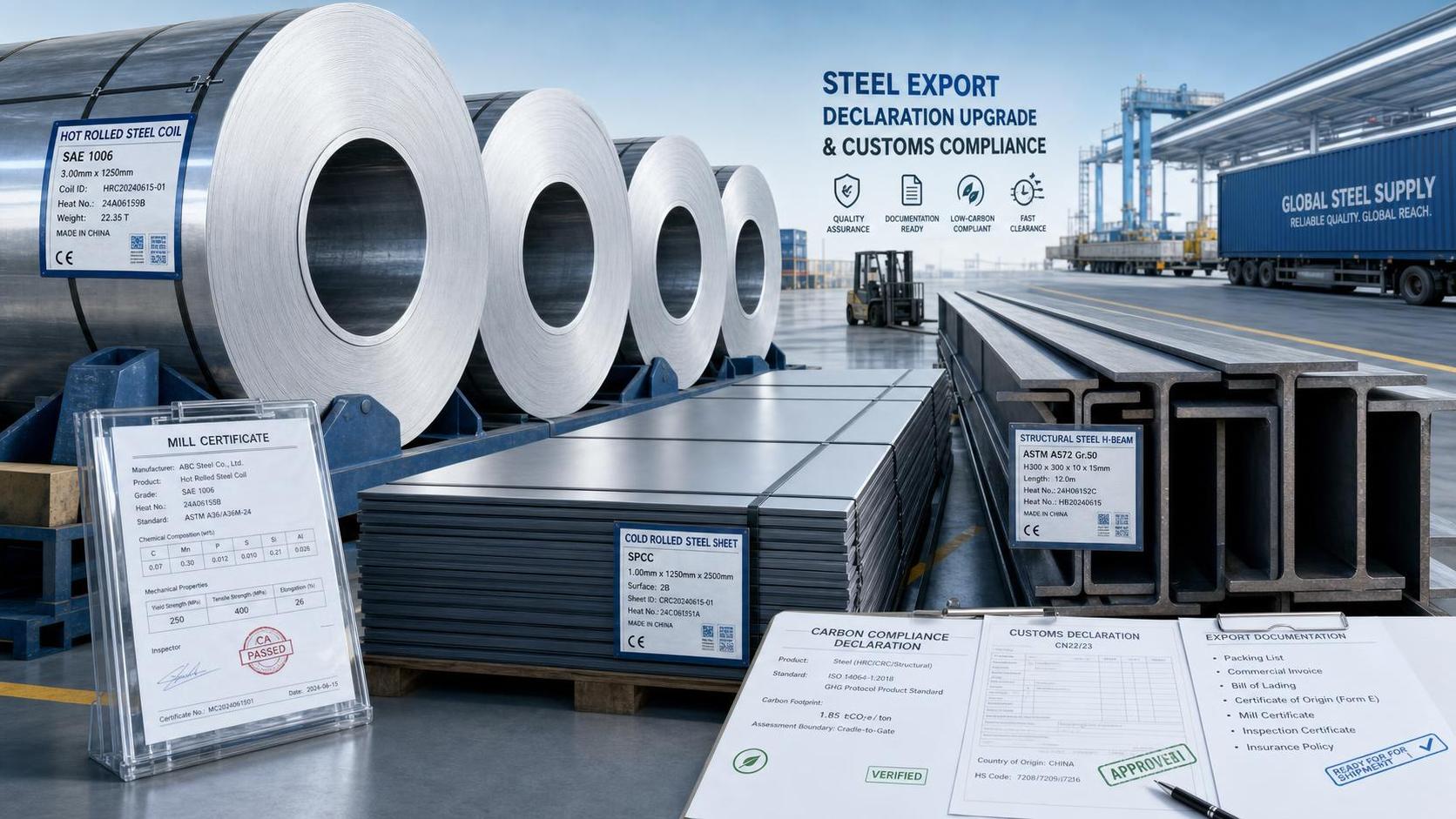
On July 18, 2026, China began enforcing a more detailed export declaration regime for major steel products after the General Administration of Customs released a notice on July 17. The change matters not only for steel exporters, but also for overseas importers, customs brokers, processors, and buyers managing delivery schedules into markets with established green entry requirements. What deserves closer attention is that the update links tariff classification, product documentation, and in some cases carbon-related disclosure into one customs-facing compliance step.
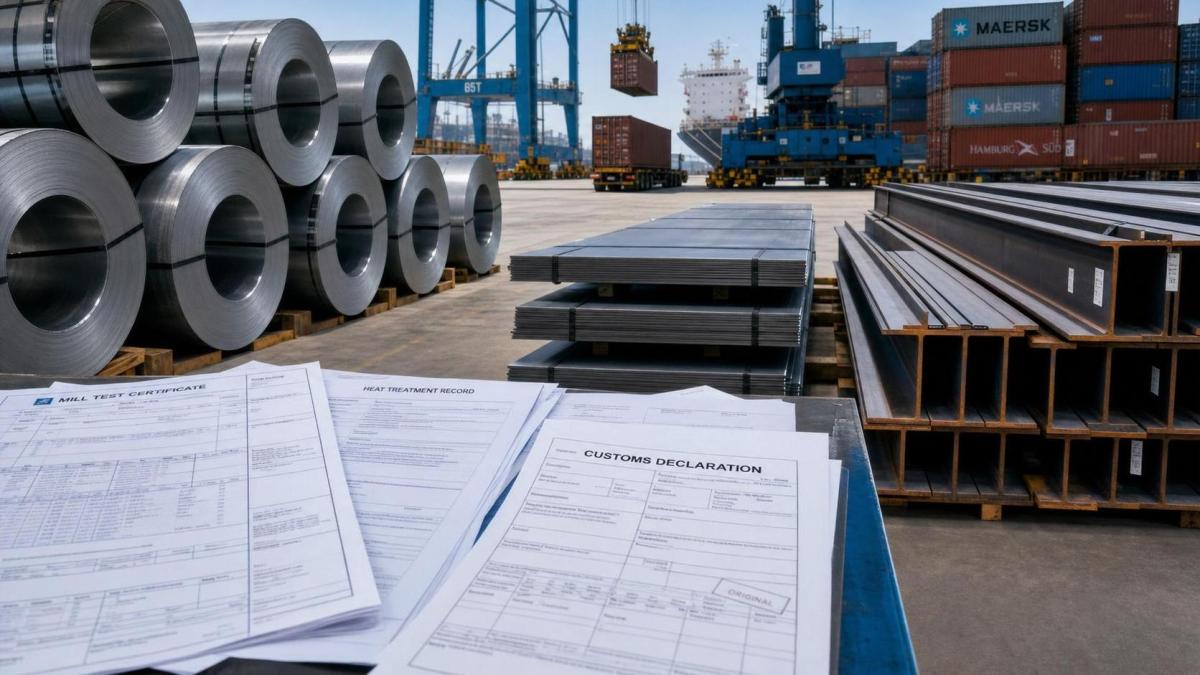
What the new declaration rule now requires
According to the notice issued by the General Administration of Customs on July 17, 2026, further standardized export declaration management now applies to steel products. From July 18, 2026, 12 major export steel categories, including hot-rolled coil, cold-rolled sheet, and H-beam steel, must be declared using fourth-level HS code breakdowns, with newly added 18-digit extended codes.
The same notice also requires supporting submission of material certification, a heat-treatment process declaration, and a carbon footprint declaration where applicable. The adjustment directly affects customs clearance efficiency, compliance costs, and the risk of returned shipments for overseas importers. The summary provided also indicates particular relevance for the EU, South Korea, and Canada, where green market-entry mechanisms are already in place.
Where the practical impact is likely to appear first
Export sellers will face a narrower margin for declaration errors
From an industry perspective, direct trading companies are likely to feel the impact first because product classification and export paperwork sit at the front end of shipment release. A more granular HS declaration requirement means a mismatch between product specifications and customs coding could affect filing speed, document review, and downstream clearance coordination with overseas buyers.
Processors and mills may need tighter document handoff
For manufacturers and processors, the issue is less about the headline policy and more about document readiness. Because the updated requirement includes material certification and heat-treatment process declarations, the operational pressure may shift to how consistently technical product information can be transferred into export documentation. Where carbon footprint declarations are applicable, internal coordination may become more complex.
Importers and customs service providers may see longer verification cycles
Overseas importers and supply chain service providers are also exposed because customs filing quality in the export country can influence import-side clearance efficiency and the risk of delays or return handling. Observably, this is especially relevant in the EU, South Korea, and Canada, where green entry mechanisms already create a higher documentation threshold before goods move smoothly into the market.
Issues companies should track in day-to-day execution
Whether product coding and specification records match shipment reality
Companies dealing in the covered steel categories should pay close attention to whether internal product descriptions, commercial documents, and customs declaration data align with the required fourth-level HS breakdown and the new 18-digit extensions. In practice, the risk is not only miscoding, but also inconsistent interpretation between sales, logistics, and declaration teams.
Whether supporting technical files are complete before shipment
Material certificates and heat-treatment process declarations are no longer peripheral records under this update. Analysis shows that businesses should treat them as shipment-critical documents for covered exports. Where a carbon footprint declaration is applicable, confirming document availability before booking and customs filing may become an important control point.
Which destination markets now create a higher pre-clearance threshold
The summary specifically points to the EU, South Korea, and Canada. That does not by itself redefine each market's import regime, but it does indicate that exporters and buyers serving these destinations should review whether the new Chinese export-side filing requirement changes lead times, document review expectations, or customer-side requests before cargo departure.
Whether official wording evolves in follow-up implementation
What deserves closer attention is the gap between the notice itself and how the requirement is applied in everyday declarations. Companies should continue monitoring any follow-up clarification on scope, filing standards, and document interpretation, especially for carbon footprint declarations where applicability may become a key operational question.
Why this looks bigger than a routine filing adjustment
Analysis shows that this is not just a technical customs coding update. The structure of the rule suggests a stronger link between steel product identity, process disclosure, and destination-market compliance readiness. That does not yet establish a final industry outcome, but it does indicate that export compliance for steel is moving closer to product-level traceability expectations.
It is more appropriate to understand this as both an immediate operational change and a longer-term policy signal. The immediate part is clear: declarations for covered steel products must now be more detailed and better documented. The longer-term signal is that product specification and sustainability-related disclosure may increasingly become part of normal trade execution rather than exceptional requests.
How this update is best understood for now
At this stage, the most balanced reading is that China Customs has raised the documentation and classification threshold for major steel exports effective July 18, 2026, with direct implications for filing accuracy, document preparation, and overseas clearance coordination. The impact should not be overstated beyond the confirmed notice, but it should also not be treated as a minor administrative change for businesses shipping covered steel categories into documentation-sensitive markets.
For the industry, this is best understood as a concrete short-term compliance shift with a longer-term signal value. The practical outcome will depend on how consistently exporters, manufacturers, importers, and service providers adapt their document flows and shipment preparation in the near term.
Basis of this article and what still needs verification
This article is based on the user-provided news title, event date, and event summary concerning the July 17, 2026 notice from the General Administration of Customs and its July 18, 2026 implementation. Typical source types for this kind of development may include official customs notices, company disclosures, industry association updates, authoritative media reporting, and standards-related documents.
No specific official source link was provided in the input, so the exact official publication link still requires ongoing verification. Follow-up attention should remain on any further official clarification about product scope, declaration practice, and the applicable handling of carbon footprint statements in real export scenarios.
NEWS NAVIGATION
CONTACT US