
NEWS
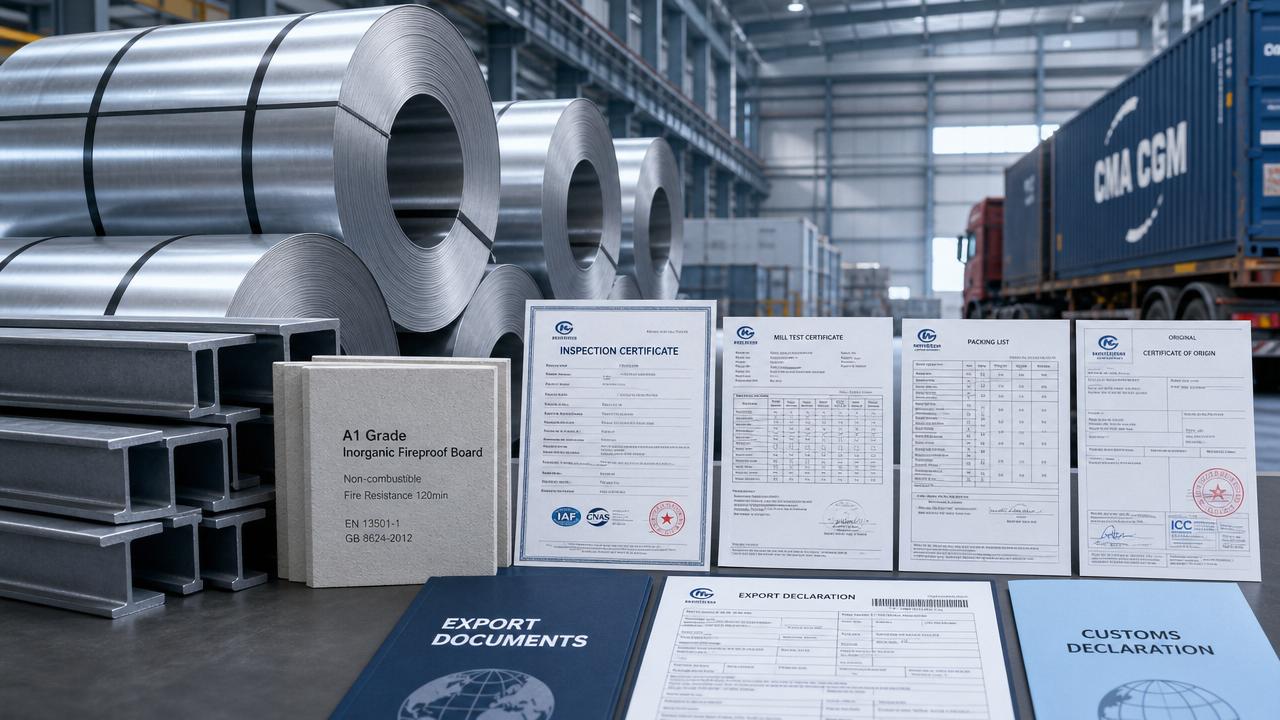
On June 1, 2026, a new export compliance requirement takes effect for Chinese shipments of construction steel and fire-rated building materials headed to key overseas markets, including the EU, the UK, and parts of the Middle East. The change matters not only to exporters of steel products and A1-class inorganic fire boards, but also to importers, procurement teams, testing partners, and customs-facing supply chain operators, because document readiness now becomes part of whether goods can move smoothly into target markets.
What the new filing requirement confirms
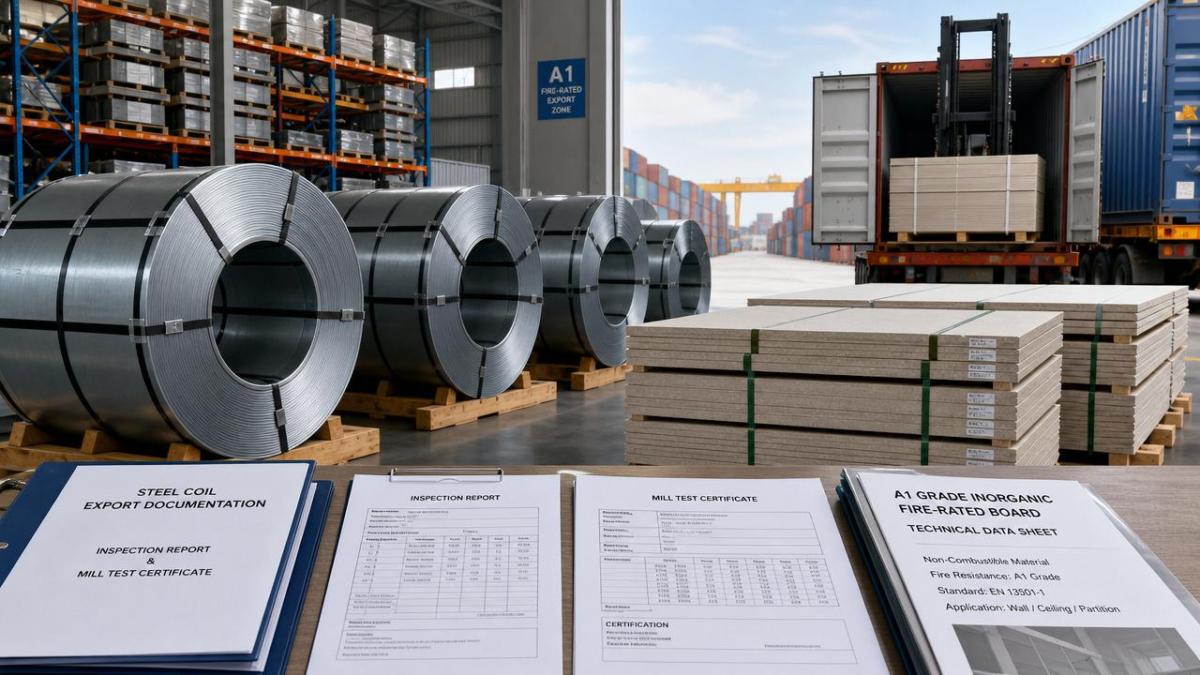
The confirmed change is that, from June 1, 2026, Chinese customs applies mandatory pre-clearance compliance management to exported construction steel and fire protection building materials, including A1-class inorganic fire boards, when these goods are shipped to key markets such as the EU, the UK, and the Middle East.
At the time of customs declaration, exporters are required to submit a third-party testing declaration and related technical documentation showing conformity with EN 13501-1:2018+A1:2023. The measure has also been included in the latest edition of the Export Building Materials Technical Trade Measures Guide (2026Q2).
The event summary further indicates that this requirement directly affects overseas importers in terms of customs clearance timing and market access.
Where the pressure is likely to appear first
Export documentation moves closer to the shipment gate
From an industry perspective, exporters are likely to feel the change first at the declaration stage. The reason is straightforward: compliance evidence is no longer something that can be treated as a downstream customer-side matter only. What deserves closer attention is whether the required EN 13501-1:2018+A1:2023 testing declaration and technical file are complete and aligned before goods are filed for export.
Procurement and project delivery face new timing risks
For buyers, traders, and project procurement teams handling construction steel or fire-rated building materials, the main impact is likely to appear in sourcing and delivery coordination. Analysis shows that if suppliers are not ready with the required third-party declaration and technical documentation, lead times, shipment release, and handover schedules may all come under pressure, especially where imported materials are tied to project milestones or tender commitments.
Testing and certification support becomes more operational
Testing-related service providers and compliance support partners may also see their role shift closer to daily trade execution. The issue is not only whether a product has been assessed, but whether the supporting statement and technical materials can be submitted in the form and timing needed for customs filing and downstream market entry.
Import-side clearance and access checks become more sensitive
For overseas importers and channel operators, the rule change matters because customs speed and access conditions are explicitly linked to the availability of compliant documentation. Observably, this turns technical proof into a practical trade control point rather than a purely background certification item.
What companies should review now
Check whether affected product lines are already mapped
Companies involved in construction steel and fire protection building materials should first identify whether their exported product categories fall within the affected scope described in the event summary. This is especially relevant for A1-class inorganic fire boards and other building materials that may be sold into specification-driven overseas projects.
Review the completeness of technical files
Analysis shows that document sufficiency may become as important as product conformity itself. Exporters and suppliers should pay close attention to whether third-party testing declarations and related technical files are available, current, and internally consistent with the product being declared.
Watch contract, tender, and delivery interfaces
Where shipments support bids, project supply, or distributor replenishment, companies may need to review whether existing tender documents, customer specifications, and delivery commitments assume documentation pathways that no longer fit the new filing requirement. This is more appropriate to understand as an operational compliance check rather than only a legal review item.
Follow later clarifications in execution practice
The input does not provide detailed enforcement mechanics, submission formats, or case-by-case interpretation. For that reason, companies should continue monitoring any later clarification affecting execution language, documentation expectations, or market-side acceptance in the targeted destinations.
Why this reads as an execution signal
Analysis shows that this development is best read as a concrete execution signal rather than a distant policy discussion. The reason is that the requirement is tied to customs declaration timing and linked to a named technical standard, which makes it relevant to real shipment preparation, not just to general compliance awareness.
At the same time, it would be premature to treat the event as proof of fully settled market practice across all affected products and transactions. Observably, the next layer the industry still needs to watch is how documentation review, customs handling, importer expectations, and project-side specification checks interact once the measure is applied in day-to-day trade.
How the market may need to interpret this change
In practical terms, the event signals that export compliance for certain building materials and construction steel is moving further upstream in the transaction process. That does not by itself define every commercial consequence, but it clearly raises the importance of testing declarations, technical documentation, and filing readiness.
Current industry understanding should therefore remain measured: this is an implemented rule change with direct operational implications, while some aspects of execution and market feedback still require continued observation.
About the basis of this article
This article is generated from the user-provided news title, event date, and event summary. It does not rely on additional unverified facts, company examples, market data, or unpublished regulatory details.
For events of this type, commonly relevant source categories may include official notices, regulator publications, customs or trade authority information, industry association updates, standard-setting documents, and reporting by authoritative trade media. A specific official source link was not provided in the input, so later verification is still needed.
Items that still merit continued tracking include detailed implementation language, certification interpretation in practice, changes in tender or specification documents, market feedback from importers and exporters, and how companies adapt their document workflows after the rule takes effect.
NEWS NAVIGATION
CONTACT US