
NEWS
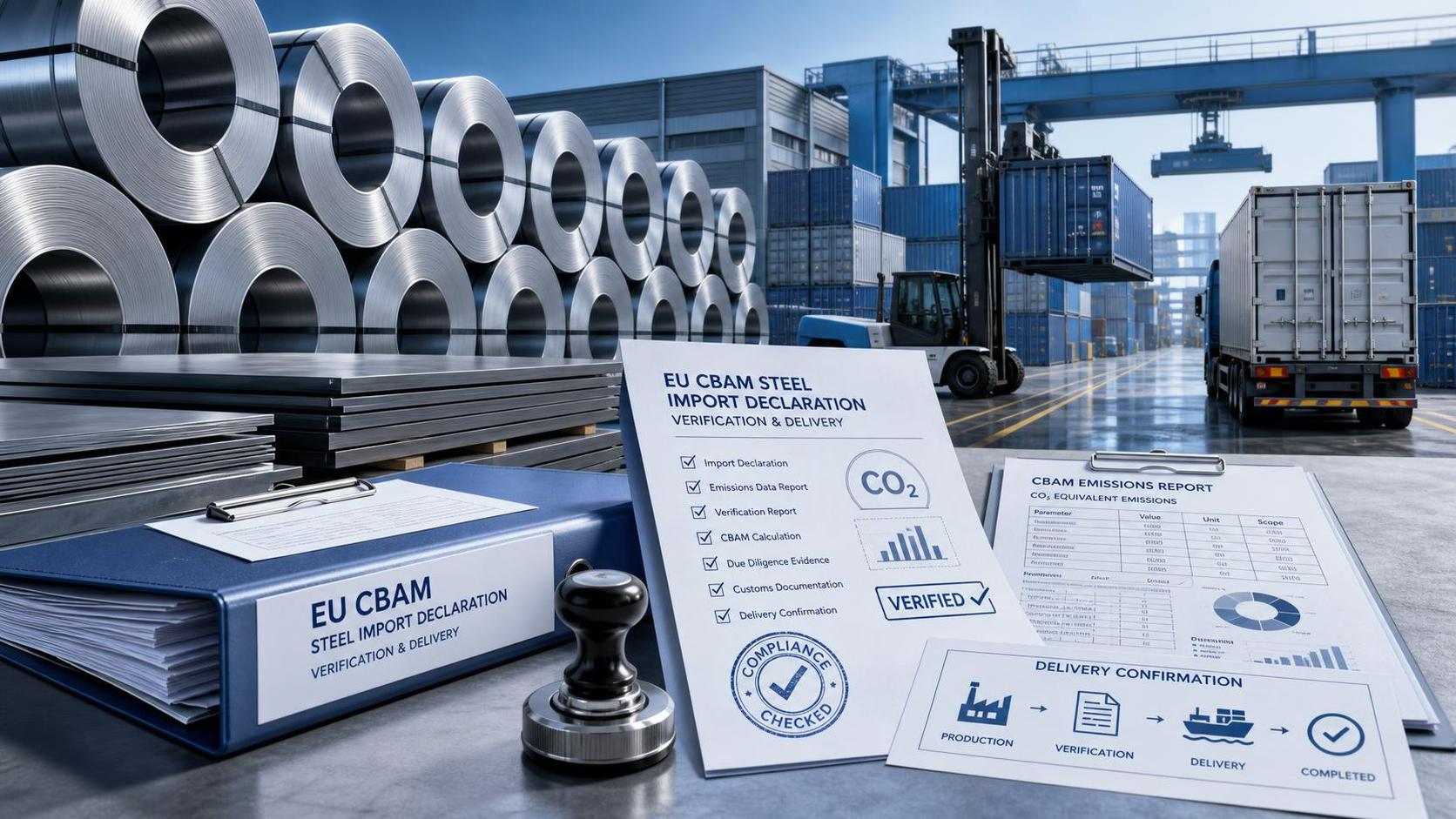
From 1 August 2026, the EU will apply CBAM transitional reporting requirements across steel imports, making quarterly embedded carbon reporting and verification by EU-recognized bodies a practical compliance issue for steel exporters. For manufacturers, exporters, import-facing supply chain partners, and buyers serving the EU market, this is worth close attention because the change connects carbon reporting directly with customs processing, market access in the later formal phase, delivery timing, and compliance cost.
What the new requirement now covers
The confirmed change is that, from 1 August 2026, the EU CBAM transitional phase fully covers steel product imports. Manufacturers exporting steel to the EU are required to submit quarterly reports on embedded carbon emissions. These reports must be certified through verification bodies recognized by the EU. According to the provided event summary, non-compliant reporting may affect customs clearance and later eligibility for access under the formal phase. The requirement directly affects major steel exporting parties from China, Southeast Asia, and Turkey by influencing delivery rhythm and compliance cost.
Where the pressure is likely to appear first
Export shipments tied to EU customs entry
From an industry perspective, exporters serving EU customers are likely to feel the impact first because the reporting obligation is linked to customs treatment and future access conditions. What deserves closer attention is whether reporting records, verification status, and shipment documentation remain aligned across each quarterly cycle, as any gap may create pressure on dispatch timing and handover planning.
Manufacturing sites supplying emissions data
Analysis shows that steel producers shipping into the EU market may face a more demanding documentation burden because the new requirement focuses on embedded carbon data at the manufacturing end. In practice, the affected business link is not only export administration but also the internal preparation of emissions information, supporting records, and coordination with recognized verification bodies. For producers, the compliance issue is therefore tied to both technical data readiness and external certification timing.
Procurement and sourcing decisions for EU-facing orders
Buyers, traders, and procurement teams handling EU-facing steel orders may also need to reassess supplier readiness. Observably, the immediate concern is less about general policy awareness and more about whether suppliers can provide reportable embedded carbon data and complete the required verification on schedule. That can influence sourcing choices, order sequencing, and the practicality of committing to delivery windows.
Service providers around trade and compliance workflows
Supply chain service providers and compliance-related intermediaries may be affected where shipment documents, reporting submissions, and verification evidence have to move in step. The relevant business risk lies in process coordination: if reporting and certification are not available when needed, trade execution may face delays even where the commercial order itself is unchanged.
What companies should watch in the near term
Quarterly reporting readiness should be treated as an operating task
Analysis shows that companies exposed to EU steel trade should pay close attention to the quarterly nature of the reporting requirement. This points to a recurring compliance workflow rather than a one-time filing issue. Exporters and manufacturers should therefore focus on whether their internal reporting cycle, supporting records, and approval process can match shipment planning and customer commitments.
Verification capacity and document consistency matter
What deserves closer attention is the requirement for certification through EU-recognized verification bodies. The provided information does not specify execution details, so it is more appropriate to treat this as a live compliance checkpoint rather than assume a settled market practice. Companies should closely monitor whether technical files, emissions records, and trade documents remain consistent enough to support verification without disrupting order release.
Delivery schedules may need additional buffer
Observably, the event summary already points to possible effects on delivery rhythm. That makes logistics planning, booking commitments, and customer delivery promises areas to review carefully. For companies selling into the EU, the practical question is whether reporting and verification timelines should now be reflected in production scheduling and shipment preparation, especially for orders with limited flexibility.
Supplier qualification may become more documentation-driven
From an industry perspective, procurement teams may need to look more closely at supplier qualification for EU-bound steel business. The current information does not confirm a detailed screening model, but it does indicate that reporting capability and recognized verification status may become more relevant in assessing whether a supplier can support ongoing exports without avoidable compliance friction.
Why this looks like an execution signal rather than a distant policy topic
Analysis shows that this development is better understood as an implemented compliance signal within the CBAM transitional phase, not merely as a policy discussion. The date is defined, the reporting obligation is specific, and the consequence described in the event summary reaches practical trade functions such as customs clearance and later-stage access. At the same time, it remains necessary to observe how reporting expectations, verification practice, and market responses develop in day-to-day execution, because the input does not provide further operational detail.
How the market is likely to read this change
At this stage, the most balanced reading is that the new requirement raises the operational importance of carbon data, third-party verification, and document discipline in EU-facing steel trade. It should not be read as a complete outcome in itself, but rather as a rule change with immediate process consequences and with further execution feedback still worth tracking. For affected companies, the practical significance lies in compliance readiness, shipment planning, and supplier coordination rather than in headline interpretation alone.
Basis of this article and what still needs verification
This article is based on the user-provided news title, event date, and event summary. For developments of this kind, commonly relevant source types may include official announcements, releases from regulatory authorities, customs or trade administration information, industry association updates, standard-setting documents, and reporting by authoritative media. A specific official source link was not provided in the input, so the underlying official documentation still needs to be verified on an ongoing basis. Further observation should focus on detailed policy wording, verification practice, tender document changes, market feedback, and how companies are implementing the requirement in actual export operations.
NEWS NAVIGATION
CONTACT US