
NEWS

On July 29, 2026, the U.S. Department of Commerce opened an annual antidumping review covering zinc-coated steel sheet exports from China under ASTM A653/A792. For distributors, importers, and downstream buyers serving the U.S. market, the significance is not only the review itself, but the possibility that duty exposure, customs timing, and cash-flow assumptions for Q3 orders may need to be recalculated around a changing trade-compliance baseline.
What Has Been Confirmed So Far
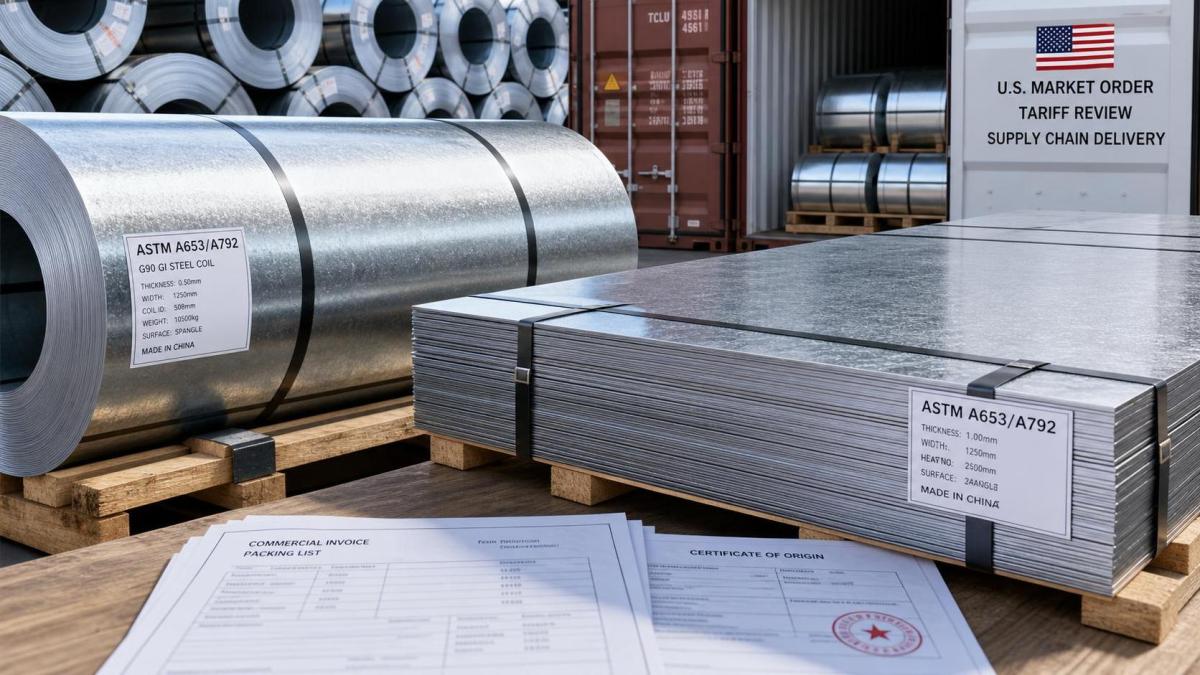
According to the announced action dated July 29, 2026, the review concerns antidumping case A-570-054 and focuses on export data from July through December 2025 for zinc-coated steel sheet from China identified under ASTM A653/A792. The review may lead to adjustments to the current weighted-average duty rates of 12.8% to 42.3%. The event summary also indicates potential effects on customs clearance timing and deposit ratios, with practical implications for U.S. distributors, importers, and end buyers beginning with Q3 order planning.
Where the Pressure Is Likely to Show First
Cost planning for import-side trading companies
From an industry perspective, U.S.-facing import and distribution businesses are likely to feel the earliest impact because antidumping review outcomes can affect landed-cost assumptions even before a final commercial response is formed. What deserves closer attention is the connection between potential rate changes and deposit requirements, since that can alter pricing discipline, margin buffers, and the timing of purchase commitments.
Order scheduling for buyers and procurement teams
For end purchasers and procurement functions, the issue is not limited to nominal tariff exposure. Analysis shows that if customs timing becomes less predictable, ordering cycles, delivery windows, and internal approval schedules may require extra buffer. Buyers handling Q3 deliveries may therefore need to examine whether quoted lead times still reflect a realistic compliance path under the current review environment.
Document readiness across the supply chain
Supply-chain service providers and exporters may also face pressure around document response quality. The summary specifically highlights the need to verify a supplier's ability to respond to CBP Form 28. Observably, that makes document control, transaction traceability, and internal coordination more relevant in day-to-day execution, especially where shipments depend on timely customs interaction rather than only on factory output.
Practical Points Companies Should Track Now
Recheck cost models against duty uncertainty
Analysis shows that companies with U.S.-bound orders should revisit cost calculations tied to the current 12.8% to 42.3% weighted-average range. This is not yet a confirmed new result, but it is a live review process that may affect how pricing, deposits, and order acceptance are evaluated.
Build more time into Q3 delivery commitments
Where delivery promises depend on customs clearance assumptions, it is more appropriate to understand this as a need for operational caution rather than as proof of immediate disruption. Even so, importers and buyers may need to leave more compliance buffer in shipping and receiving plans while the review remains active.
Verify supplier responsiveness on CBP Form 28
The event summary directly points to CBP Form 28 response capability. For companies sourcing covered material, this makes supplier responsiveness a near-term screening issue. What deserves closer attention is whether suppliers can support document requests in a timely and consistent way, because that may affect shipment handling and importer confidence.
Watch for changes in official wording and execution practice
No detailed execution outcome has been provided in the input, so companies should avoid treating the review as a settled commercial result. Observably, the more useful near-term task is to monitor whether subsequent official communications clarify scope, duty treatment, timing, or related compliance expectations affecting covered orders.
How This Should Be Read at This Stage
Analysis shows that this development is better read as an active enforcement and execution signal than as a completed rule outcome. The review has already introduced a reason for market participants to reassess cost exposure and documentation readiness, but the final commercial effect still depends on how the review progresses and how counterparties adjust their operating assumptions. From an industry perspective, the immediate change is in risk management behavior rather than in any confirmed new settlement of trade terms.
Why the Market Will Keep Watching
The practical significance of this case lies in its effect on trade execution: pricing, deposits, customs timing, supplier screening, and delivery commitments may all need closer control while the review is underway. It is more appropriate to understand this event as a rule-driven market signal that has already entered planning decisions, while the full extent of impact on orders and compliance practice still requires continued observation.
Basis of This Article
This article is based on the user-provided news title, event date, and event summary. For events of this type, relevant source categories typically include official announcements, releases from regulatory authorities, customs or trade-administration information, industry association updates, standards-related documents, and reporting by established business media. A specific official source link was not provided in the input, so the underlying notice and any later updates still require ongoing verification. Items that remain worth monitoring include subsequent policy detail, execution language, customs practice, tender or procurement document changes, industry feedback, and how affected companies implement their responses.
NEWS NAVIGATION
CONTACT US