
NEWS
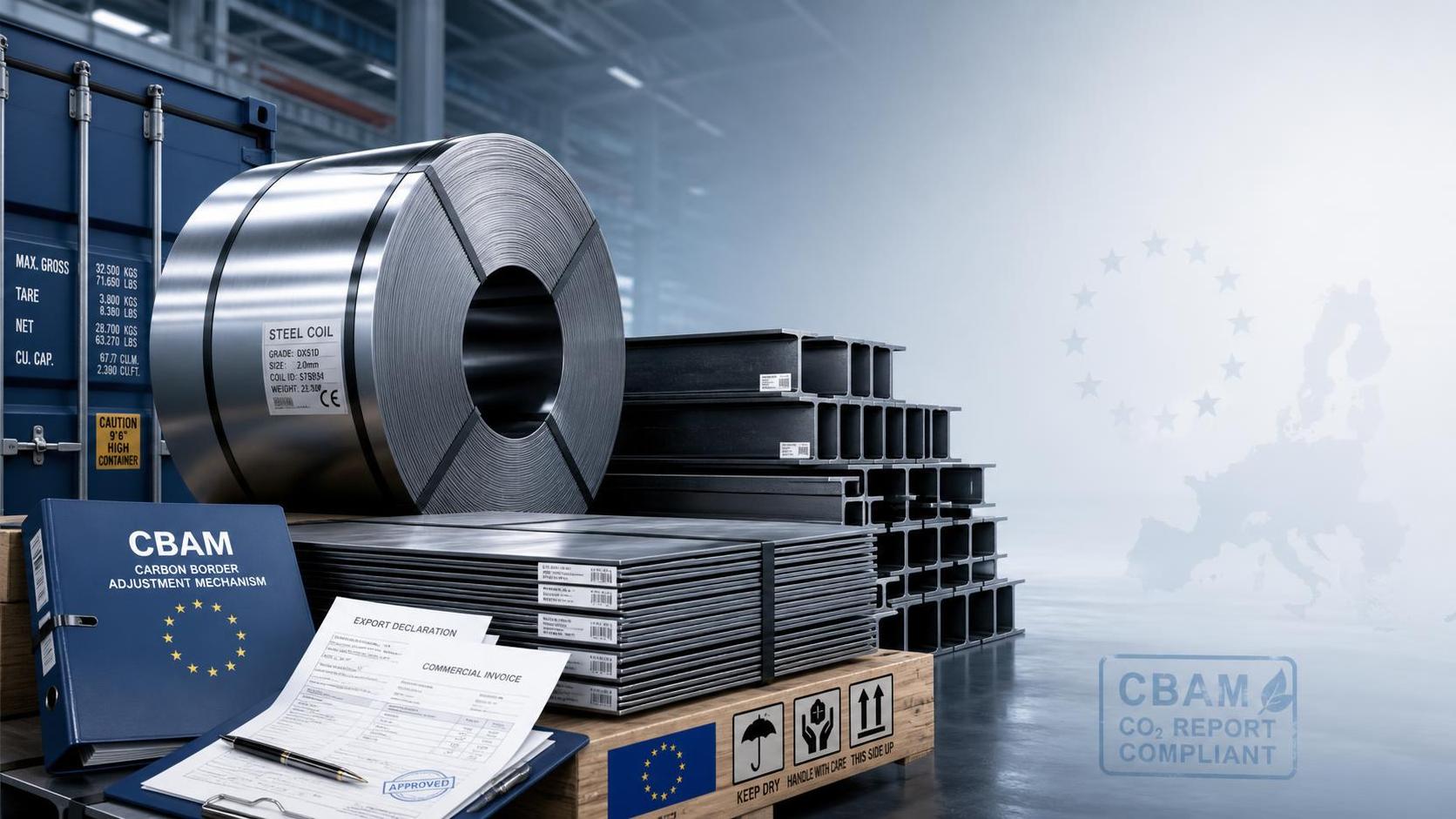
On August 1, 2026, the European Commission formally moved the CBAM transitional period for steel into a new reporting stage by requiring exporters, including Chinese suppliers, to submit quarterly embedded carbon emissions data through the EU CBAM system. The change matters because it shifts carbon reporting from a general compliance topic into an operational requirement tied to customs clearance and future eligibility under the tax framework, directly affecting exporters, buyers, supply chain coordinators, and delivery planning for major steel products.
What the new filing requirement now covers
The confirmed change is that, from August 1, 2026, the second stage of the CBAM transitional period applies to steel products and requires quarterly submission of embedded carbon emissions data through the EU CBAM system.
The requirement is stated to cover steel exporters, including Chinese suppliers. The product scope specifically includes major export steel categories such as hot-rolled coil, cold-rolled sheet, and H-beams.
The confirmed compliance consequence is also clear in the notice: failure to submit on time may affect customs clearance and later qualification under the formal taxation stage.
Where the pressure is likely to appear first
Export transactions may face a tighter documentation gate
From an industry perspective, steel exporters are the first group exposed because the new requirement is tied directly to quarterly emissions reporting in the EU CBAM system. The practical impact is likely to fall on export documentation, filing readiness, internal data collection, and shipment coordination where reporting timing could affect customs-related processes.
Procurement and order management may need earlier data alignment
For buyers and sourcing teams handling the covered steel categories, the rule change may matter because product purchases are no longer only about price, grade, and delivery schedule. Analysis shows that procurement teams may need to pay closer attention to whether suppliers can provide the emissions-related information needed for quarterly reporting, especially where order timing and customs handling are sensitive.
Supply chain service providers may face new coordination duties
Logistics coordinators, traders, and other supply chain service providers may also be affected because customs clearance risk is explicitly linked to missed reporting. What deserves closer attention is whether shipment planning, filing support, and document handover processes are able to keep pace with the reporting cycle for covered steel exports.
Manufacturing and processing suppliers may be pulled into compliance support
For mills and processors supplying hot-rolled coil, cold-rolled sheet, or H-beams, the impact may arise through customer requests for supporting emissions information. Observably, even where the formal filing sits with the exporter, upstream suppliers may be asked to provide data inputs or supporting records that help complete quarterly declarations.
What companies should monitor in practice
Readiness of emissions data for quarterly submission
Analysis shows that the immediate practical question is whether covered exporters and their suppliers can organize embedded carbon emissions data in a form suitable for quarterly filing through the EU CBAM system. Since the input does not provide detailed technical filing rules, this should be treated as a compliance watchpoint rather than a settled execution standard.
Document flow between supplier, exporter, and customer
Companies involved in the covered steel categories should closely review how product records, technical documents, and trade documents move across the transaction chain. It is more appropriate to understand this as a documentation management issue as much as a regulatory issue, because late or incomplete handover could create filing risk even before any tax stage is triggered.
Delivery schedules and customs-facing milestones
Because late submission may affect customs clearance, exporters and delivery teams should pay attention to the interaction between reporting deadlines and shipment timing. The current information does not define the full operational mechanism, so businesses should continue monitoring how the requirement is applied in practice.
Covered product lines and supplier qualification checks
Where companies handle hot-rolled coil, cold-rolled sheet, H-beams, or similar steel exports within the stated scope, supplier qualification and product-level data availability deserve closer attention. Observably, firms may need to check not only whether a supplier can deliver the product, but whether it can support the compliance records that the exporter must submit.
How this development is best understood at this stage
Analysis shows that this is more than a policy signal in the abstract. The requirement begins on a stated date, identifies covered steel product categories, and links non-compliance to customs clearance and later tax-stage eligibility. For that reason, it is more appropriate to understand this as an implementation signal with immediate operational implications.
At the same time, the available information remains limited to the notice summary provided here. Observably, the market still needs to watch how filing expectations, supporting document standards, and execution practices are clarified through later official language and actual business handling.
A rule change that now touches day-to-day trade execution
The main industry significance of this development is that CBAM compliance for covered steel exports is moving closer to routine trade operations. For exporters, buyers, and supply chain partners, the issue is no longer only whether the rule exists, but whether the necessary data and documents can be assembled on time without disrupting clearance or downstream delivery.
It is more appropriate to read this update as a rule now entering practical execution, while still leaving room for continued observation on detailed implementation. That balance matters for companies deciding how urgently to review product scope, reporting readiness, and supplier coordination.
Basis of this article and what still needs verification
This article is based on the user-provided news title, event date, and event summary. For developments of this kind, relevant source types typically include official notices, releases from regulatory authorities, customs or trade administration information, industry association communications, standards-related documents, and reporting by authoritative media.
No specific official source link was provided in the input, so the exact official reference still needs to be verified on an ongoing basis. What also remains worth monitoring includes later policy detail, filing interpretation, certification or documentation expectations, procurement document changes, market feedback, and how companies actually implement the requirement in cross-border steel trade.
NEWS NAVIGATION
CONTACT US