
NEWS
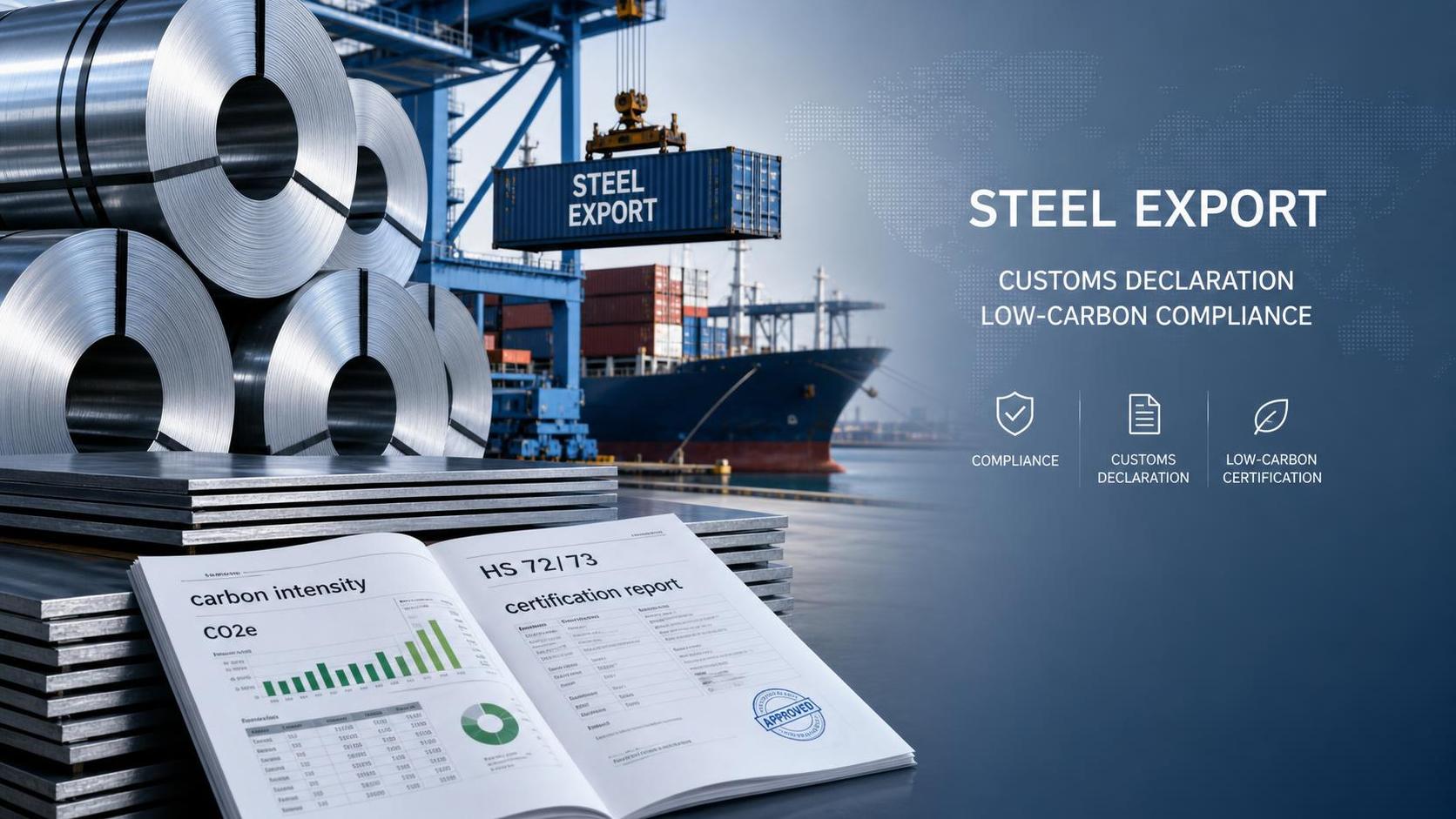
From August 1, 2026, China Customs will require carbon intensity data in export declarations for all steel products under HS Chapters 72 and 73 through the China International Trade Single Window. The change links customs filing with LCA-based CO2e reporting and a certification report under GB/T 39471-2023, making it relevant not only for steel exporters but also for importers, procurement teams, certification-related service providers, and supply chain operators dealing with customs clearance, CBAM transitional data alignment, and EU purchasing access.
A New Mandatory Data Point in Steel Export Declarations
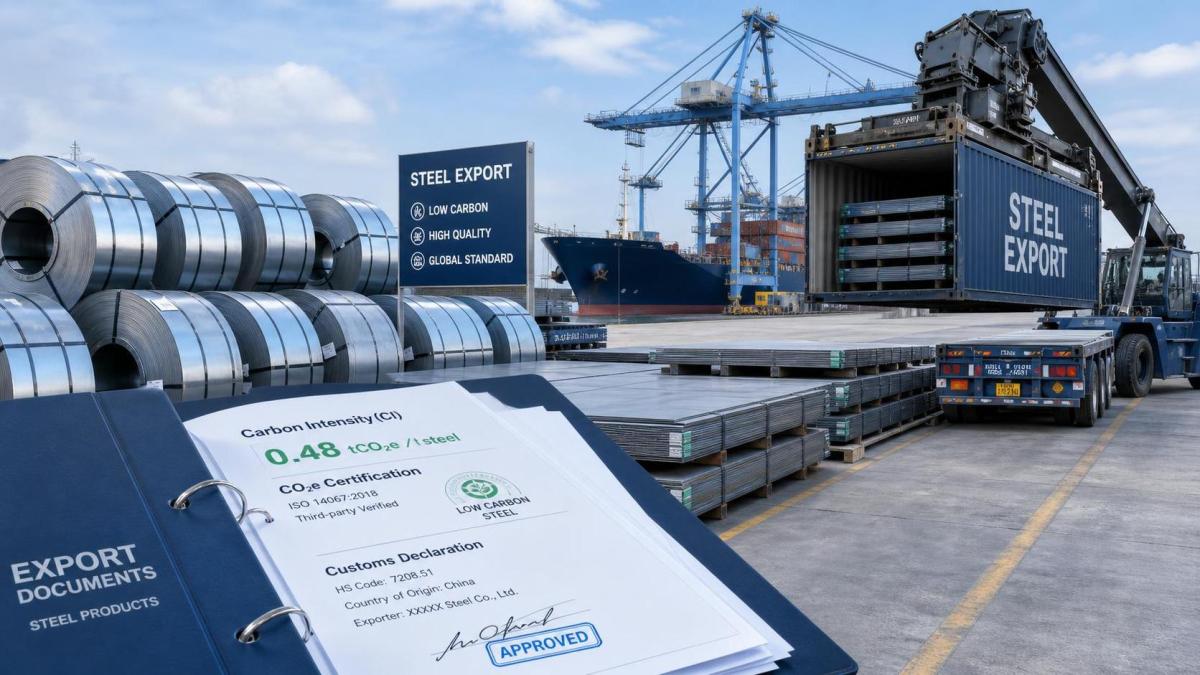
The confirmed change is that, effective on 2026-08-01, China Customs has added a mandatory carbon intensity field in the China International Trade Single Window for all exported steel products classified under HS Chapters 72 and 73. Exporting companies are required to provide an LCA-based unit product CO2e emissions value expressed in kg/t. The declaration must also be linked to a certification report under GB/T 39471-2023, the general rules for carbon footprint accounting of steel products. The event summary also states that this change is directly relevant to overseas importers' customs compliance, CBAM transitional data mutual recognition, and access to EU procurement.
Where the Rule Change Reaches Across the Trade Chain
Export filing now depends on carbon data readiness
From an industry perspective, exporters are the first group affected because the new field is embedded in the declaration process itself. The impact is likely to appear in customs documentation, internal product data preparation, and coordination between trade, compliance, and technical teams. What deserves closer attention is whether the required LCA-based figure and the linked GB/T 39471-2023 certification report can be prepared in a form that supports timely filing and avoids disruption to shipment release.
Overseas buyers may treat customs data as part of procurement screening
Observably, overseas importers and procurement teams may be affected because the event summary directly connects the declaration change to customs compliance, CBAM transitional data mutual recognition, and EU purchasing access. The practical effect may show up in supplier onboarding, document review, purchase order conditions, and pre-shipment compliance checks. Buyers are likely to pay closer attention to whether the declared emissions data and supporting certification can be matched with their own import and procurement requirements.
Certification and testing-related service providers may face higher demand for document alignment
Analysis shows that certification-related companies and testing or verification service providers may see a more operational role in the export cycle. The reason is straightforward: the customs declaration now references a carbon figure that must be associated with a GB/T 39471-2023 certification report. The main business impact may fall on report consistency, document traceability, and the ability to support exporters when customs, customer, or tender documentation needs to point to the same emissions basis.
Supply chain and delivery planning may need tighter coordination
Supply chain service providers, logistics coordinators, and trading intermediaries may also be affected because a new mandatory declaration field can influence document completeness before shipment. The relevant change is less about freight execution itself and more about handoff timing, document collection, and exception handling when a shipment is ready but supporting carbon data or linked certification is still under review.
What Companies Should Track Before This Becomes Routine
Check whether internal product data can support customs filing
Analysis shows that companies handling steel exports should review whether they can consistently generate LCA-based unit product CO2e values in kg/t for products under HS Chapters 72 and 73. This is not yet a conclusion about filing outcomes, but it is a practical checkpoint because the data field is described as mandatory.
Review how certification reports connect to declaration documents
What deserves closer attention is the linkage between the customs declaration and the GB/T 39471-2023 certification report. Companies should pay attention to whether internal document flows, customer-facing compliance packs, and shipment files are organized in a way that allows the declared value and the referenced report to remain consistent.
Watch for changes in buyer requirements and tender documentation
Observably, the event may influence how buyers frame procurement access, especially where customs compliance, CBAM transitional data alignment, or EU purchasing conditions are involved. Since the input does not provide detailed implementation rules beyond the mandatory field and certification linkage, companies should treat buyer questionnaires, specification documents, and tender language as areas that may change and still require monitoring.
Allow for possible effects on shipment timing and supplier coordination
From an industry perspective, firms should also watch operational interfaces: supplier data collection, document readiness before export, and coordination between production, trade compliance, and logistics teams. It is more appropriate to understand this as a preparation issue at this stage rather than a confirmed outcome, because the provided information does not include detailed enforcement scenarios or processing timelines.
Why This Looks Like an Execution Signal, Not Just a Policy Note
Analysis shows that this development is better understood as an execution-level compliance signal because the change appears inside the actual customs declaration workflow rather than as a general policy discussion. At the same time, it would be premature to treat all downstream market effects as settled. Observably, the rule change has a clear immediate feature, namely a mandatory filing field and a linked certification basis, but the market response still depends on how customs practice, buyer document demands, and certification interpretation are applied in day-to-day transactions.
What deserves closer attention is not only the existence of the new field, but also whether it becomes a common reference point across export declarations, importer clearance reviews, CBAM transitional data handling, and procurement gatekeeping. That is why continued observation is still necessary.
How the Market Should Read This Development Now
At this stage, the event is most appropriately read as a concrete compliance change for exported steel rather than a distant policy direction. The confirmed facts already point to a direct link between customs declarations, product carbon data, and certification support. Analysis shows that the most immediate consequence is procedural: exporters and related trade participants need to prepare for a filing environment where carbon intensity becomes a required declaration element. Broader commercial effects may follow, but they still need to be assessed through actual implementation, customer requirements, and market feedback.
Basis of This Article and What Still Needs Verification
This article is based on the user-provided news title, event date, and event summary. For events of this type, relevant source categories commonly include official announcements, releases from regulatory authorities, customs or trade administration information, industry association updates, standard-setting documents, and reporting by authoritative media. No specific official source link was provided in the input, so the exact official publication path still needs to be verified on an ongoing basis.
Further observation is also needed on detailed implementation language, certification application practice under GB/T 39471-2023, any changes in tender or procurement documents, market feedback from importers and exporters, and how companies handle execution in actual shipments.
NEWS NAVIGATION
CONTACT US