
NEWS

China exported 9.854 million tonnes of steel in October 2026, down 6.1% from the previous month, according to figures released by the General Administration of Customs on November 10. The decline ended a five-month run in which monthly exports exceeded 10 million tonnes.
October shipments were nevertheless 0.7% higher than a year earlier. For the first ten months of 2026, steel exports totalled 95.495 million tonnes, down 2.3% year on year. China imported 395,000 tonnes of steel in October, while imports for January through October reached 4.461 million tonnes, a decrease of 11.6% from the same period a year earlier.
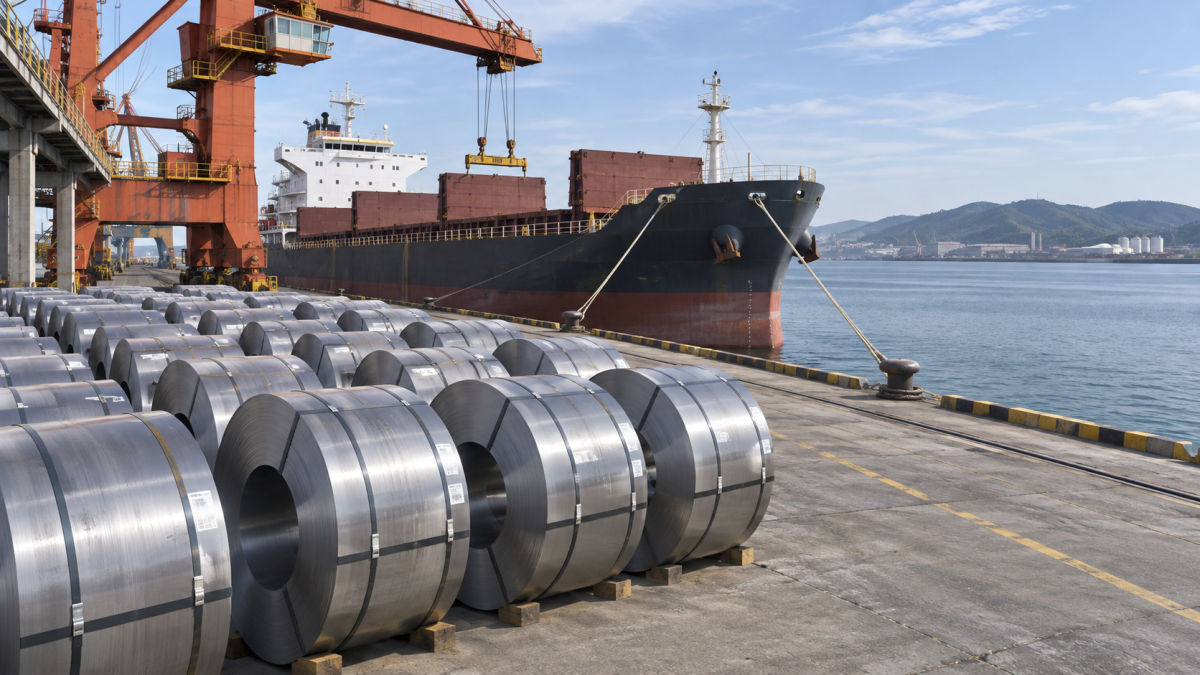
A monthly decline, but a small annual increase
The October figures describe two different comparisons. Exports fell from September, bringing monthly volume below the 10-million-tonne mark after five consecutive months above it. At the same time, October's total remained slightly higher than in October 2025. The month-on-month decrease therefore does not, by itself, mean that October exports were weaker than a year earlier.
The cumulative figure adds another perspective: exports over the first ten months were lower than in the corresponding period of 2025, despite October's modest year-on-year increase. A single month's annual comparison can differ from the direction of the year-to-date total because the two measures cover different periods.
Crossing below 10 million tonnes is a clear change in the monthly series, but the threshold alone does not explain why shipments fell or establish whether the decline will continue. The reported figures do not identify the causes of the monthly movement or show how it was distributed across steel products and destinations.
What the figures mean for steel trade
For exporters and businesses involved in handling shipments, the immediate signal is a lower aggregate volume than in the preceding month. If lower volumes persist, the amount of steel moving through export-related ordering, logistics and delivery arrangements could also change. October's headline figure alone does not show how individual businesses or product segments were affected.
The import figures point to a separate movement: the January-to-October total was 11.6% below the comparable period a year earlier. The monthly import total provides a snapshot of October activity, but the figures given do not establish the month-on-month or year-on-year change for October imports. Nor do the aggregate totals show which products account for the decline in cumulative imports.
Export and import volumes should also be read separately. October exports exceeded imports in aggregate, but the totals do not describe the composition of either flow. They therefore cannot establish whether changes in one directly offset changes in the other for a particular steel product or buyer.
The next useful indication will be whether subsequent monthly export figures remain below 10 million tonnes and how they compare with both the preceding month and the same month a year earlier. A sustained change would provide a firmer basis for assessing the direction of shipments; one month's decline marks a break in the previous run without settling the longer-term trend.
NEWS NAVIGATION
CONTACT US