
NEWS

From 17 November 2026, the European Union imposed anti-dumping duties on imports of cold-rolled steel from India, Japan, Taiwan, Turkey and Vietnam. With rates reaching 27.9%, the measure introduces a significant trade cost for affected shipments and warrants attention from exporters, European steel buyers and downstream manufacturers, including the automotive industry. The immediate rule change is the imposition of duties; its effects on purchasing, contract pricing and supply chains will depend on how the measure applies to individual transactions and how market participants respond.
Five origins face different duty rates
The EU measure applies to cold-rolled steel imports from India, Japan, Taiwan, Turkey and Vietnam from 17 November 2026. It is intended to address the dumping of cold-rolled steel from those origins at prices below a fair price. The imports involved are valued at approximately €1.78 billion.
The highest stated rate is 27.9%, faced by Japanese companies. The stated rates are 20.7% to 27% for Taiwan, 16% for Vietnam, 9.5% for India and 3% to 7.8% for Turkey. The measure concerns imports into the EU and affects the trade costs associated with the specified cold-rolled steel.
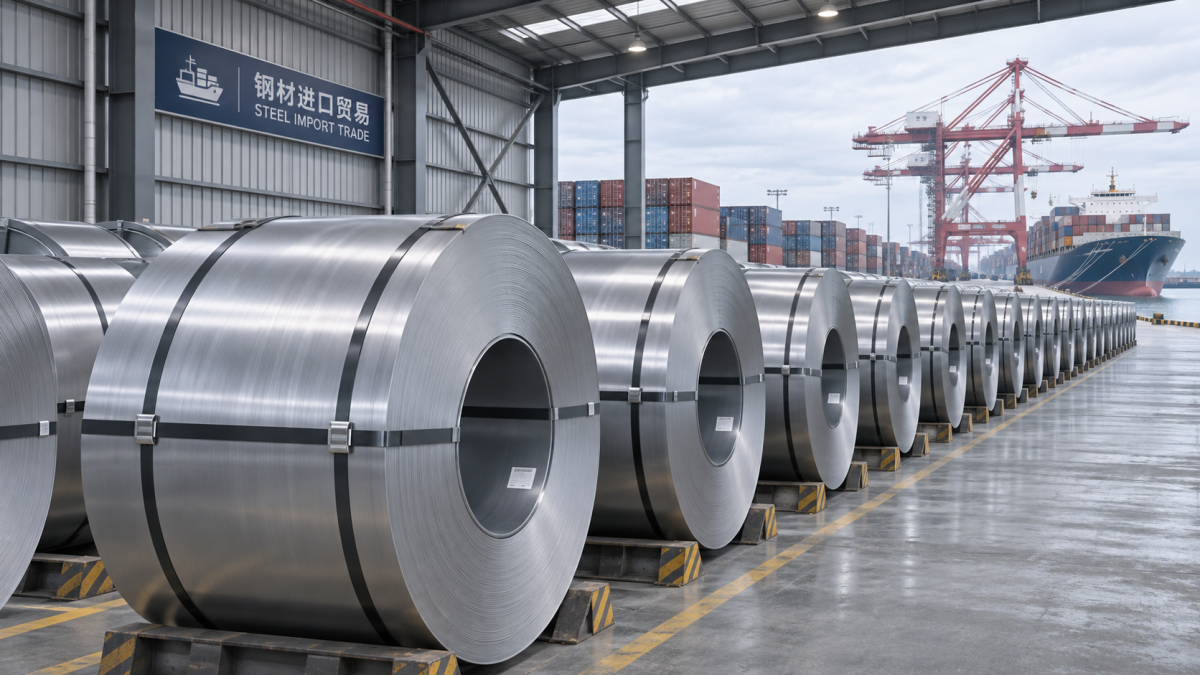
Where the added cost could travel through the supply chain
Export offers and European import decisions
From an industry perspective, exporters in the five affected origins may need to reassess offers to EU customers because an anti-dumping duty can alter the total cost of a shipment. The difference between the stated rates also means that businesses cannot assume that every affected origin faces the same cost exposure. For transactions involving Taiwan or Turkey, where ranges are given, the rate relevant to a particular shipment deserves verification.
Analysis suggests that the commercial effect on an exporter will depend partly on how its contracts allocate import charges and whether customers accept revised prices. Exporters may also need to discuss delivery commitments with buyers if either side seeks to review an existing order. The available information does not establish which party must bear the duty under a particular contract, so that question remains transaction-specific.
Steel purchasing and downstream manufacturing
For European buyers, the duty may change the relative economics of competing supply offers. A quoted steel price alone may no longer provide a sufficient basis for comparison if the applicable duty and other transaction costs have not been considered. Purchasing teams may therefore need to recalculate the expected landed cost of affected material and examine whether a price adjustment can be accommodated within existing budgets.
Automotive manufacturers and other users of cold-rolled steel could face indirect exposure when suppliers pass through some or all of an increased import cost. The extent of any pass-through is uncertain: it may depend on contract terms, supplier negotiations and the availability of material that meets the buyer's requirements. A duty on imported steel does not, by itself, establish a specific increase in the price of a finished vehicle or component.
Distributors, processors and logistics partners
Distributors and processors handling affected steel may need to review quotations for material that has not yet entered the EU. In analysis, their exposure could arise between the price agreed with a supplier and the price recoverable from a customer, particularly where orders were negotiated before the duty was included in the commercial calculation. Businesses further along the chain may also face questions about the origin and cost basis of steel incorporated into their products.
Logistics and supply-chain service providers may receive more requests for information about shipment timing and documentation. They can help customers assemble the information needed to assess a transaction, although the input does not specify new documentary requirements or a new customs procedure. Whether delivery schedules change will depend on the circumstances of each shipment and the way the measure is administered.
Decisions to review before the next shipment
Confirm the product, origin and applicable rate
Businesses considering an affected transaction should verify whether the particular cold-rolled steel product falls within the measure's scope and which rate applies. The supplied summary identifies origins and rates but does not provide detailed product definitions, rate assignments within the stated ranges, exemptions or calculation methods. Those details should be checked against the relevant official material before a duty is incorporated into a final quotation or declaration.
For each order, a practical review may begin with the product description, the stated origin, the supplier's identity and the planned import arrangements. Supporting commercial and origin documentation should be checked for consistency. This is a suggested preparation step, not a claim that the measure has introduced a particular new document or certification requirement. Where information is incomplete, buyers and sellers may need to resolve it before relying on an estimated rate.
Recalculate costs and revisit contract terms
Importers and their suppliers may find it useful to model the duty as a separate cost item alongside the agreed steel price and other known shipment costs. Scenarios can then reflect different outcomes for the allocation of charges between the parties. Because the input does not specify how the duty is calculated for an individual transaction, any estimate should remain provisional until the relevant basis and rate have been verified.
Existing orders deserve particular attention where shipment, import or payment occurs after the stated start date. A contract review can clarify how price adjustments, taxes and import charges are addressed and whether a discussion with the counterparty is needed. The date alone does not resolve the treatment of every order: the input does not describe transitional provisions or the timing rules for individual shipments.
Test procurement alternatives against production needs
Buyers considering other suppliers or materials should compare more than the headline duty rate. Analysis suggests that a lower estimated import cost may be less useful if the alternative cannot meet the required material properties, processing needs, volume or delivery schedule. For automotive and other manufacturing applications, technical and commercial validation may be needed before a change in supply can be implemented.
Purchasing teams could also review how much exposure sits in open orders, planned purchases and supplier commitments. This may help identify where an early discussion about price or timing is most useful. The information supplied does not establish that alternative sources are available, suitable or cheaper, so any substitution should be treated as an option for assessment rather than an assumed solution.
Keep shipment information aligned across the chain
Exporters, importers and downstream customers may benefit from agreeing on the information each party needs for an affected order. Product descriptions, supplier details, origin records, invoices and delivery plans are examples of information that may support a transaction review. The precise documents needed for compliance should be verified through the applicable official guidance and the parties responsible for the import.
Where several businesses handle the same material, consistent records may also make it easier to explain cost changes and trace an affected purchase through commercial arrangements. This is an operational recommendation. The supplied event summary does not state that the EU measure creates a separate traceability scheme or changes technical certification rules.
What the stated start date establishes—and what remains open
Editorial analysis: the event is best understood as an implemented duty measure from 17 November 2026, based on the information supplied, rather than merely a proposal. That conclusion applies to the stated imposition of duties. It does not establish every detail that a business needs to apply the measure to a particular product, supplier or shipment.
What deserves closer attention is the relationship between the published rate ranges and individual transactions. The supplied information does not identify how rates within those ranges are assigned or whether other conditions affect their application. Official details on product coverage, rate application and any relevant procedural provisions could materially change a company's cost assessment. Businesses should also watch for subsequent official statements or changes to the measure rather than assuming that the summary answers every execution question.
Market feedback will be another useful indicator. Analysis suggests that price negotiations, supplier selection and delivery planning may respond at different speeds, and that the effect could vary between direct steel importers and manufacturers purchasing through intermediaries. At this stage, however, there is no supplied evidence of actual price changes, shipment disruption or a particular response by buyers. Those outcomes remain matters for observation.
Managing exposure while execution details are verified
The EU decision adds a stated anti-dumping duty to trade in cold-rolled steel from five specified origins, with substantially different rates across them. For affected businesses, the immediate practical issue is to identify relevant purchases and sales, verify the rate and scope for each transaction, and assess how contract terms allocate the resulting cost.
The wider effects on exports and European manufacturing supply chains are plausible but not yet quantified by the supplied information. A measured response is to treat the duty as an enacted change while keeping cost estimates, sourcing decisions and delivery assumptions under review as authoritative execution details and market feedback become available.
Basis for this report and points for verification
This article is based on the user-provided news title, event date and event summary. No specific official source link was provided in the input, so the measure and its detailed application require continued verification. Relevant source types for follow-up include official EU announcements, customs or trade authority information, industry association material and authoritative media reporting.
Further monitoring should focus on the measure's product coverage, the application of the stated rates, any official clarification or subsequent change, trade execution and feedback from affected companies. Procurement and delivery decisions should be assessed against the verified information relevant to each transaction.
NEWS NAVIGATION
CONTACT US