
NEWS

Trade barriers tightened in Europe and the United States in late November 2026, with an EU import quota for Chinese hybrid vehicles starting in December, according to a Mysteel analysis published on November 27. The measure places automotive exporters at the center of a trade change that may also reach steelmakers, processors and material buyers. Mysteel estimates that lower Chinese vehicle exports to Europe in 2027 could translate into a reduction of approximately 390,000 to 610,000 tonnes in steel demand. The estimate makes the effect on automotive production and procurement an issue to watch alongside the operation of the quota itself.
A vehicle quota with implications for steel demand
Mysteel reported that European and US trade barriers were upgraded in late November 2026. Its analysis identified an EU import quota on Chinese hybrid vehicles beginning in December, with a first-year ceiling of approximately 350,000 vehicles.
The article estimated that a reduction in Chinese automotive exports to Europe in 2027 would correspond to a decrease of about 390,000 to 610,000 tonnes in steel demand. This is Mysteel's estimate of an indirect demand effect associated with lower vehicle exports. The information supplied does not specify the quota's detailed operating provisions or explain the calculation behind the steel-demand range.
While the reported change concerns trade barriers in both Europe and the United States, the supplied account gives a specific quota and steel-demand estimate only for the European measure. It does not describe a particular US measure or attribute a separate volume of steel demand to it.
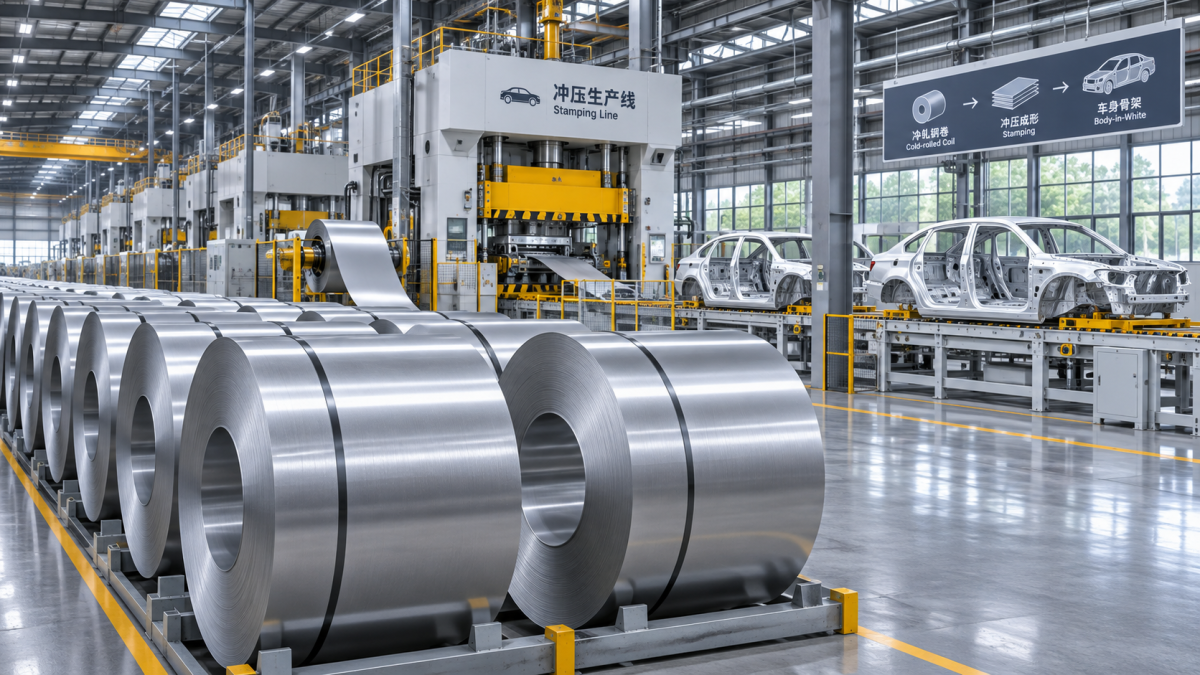
How an automotive trade restriction could reach the steel supply chain
Vehicle exporters and their production plans
From an industry perspective, the most immediate question for exporters is how the reported quota applies to their planned shipments of Chinese hybrid vehicles to the EU. A ceiling on imports could affect the volume and timing of deliveries, but the supplied information does not establish how access to the quota is allocated or how individual shipments are assessed. Exporters may therefore need to distinguish confirmed delivery commitments from volumes that depend on further clarification.
Analysis suggests that any change in export expectations could also influence production scheduling. If a manufacturer revises its anticipated European deliveries, it may reassess the materials and components needed for those vehicles. The size of that adjustment would depend on the vehicles affected and on the manufacturer's actual plans; it cannot be inferred for an individual business from Mysteel's industry-level range.
Steel suppliers and automotive processors
For steel producers and processors serving automotive customers, the relevant exposure is indirect. The reported measure concerns vehicle imports, while Mysteel's estimate concerns steel demand associated with changes in vehicle exports. Suppliers may feel an effect if customers alter orders for material used in the vehicles concerned, but the estimate does not establish that orders have already been reduced.
Analysis suggests that suppliers may want to examine which customer forecasts and delivery schedules are linked to the affected export business. A reduction in vehicle exports would not necessarily produce an identical change in every steel order: inventory, existing commitments, production choices and demand from other customers could affect how an individual supplier experiences the change. The supplied information does not quantify those factors.
Traders and supply-chain service providers
Businesses arranging vehicle shipments or supplying steel and processed material may face uncertainty over delivery timing and quantities. If customers revise shipment plans while quota procedures are being clarified, traders and service providers could need to revisit schedules, documentation and contractual assumptions. These are possible operational consequences, not confirmed effects reported by Mysteel.
The distinction matters for planning. A vehicle shipment's eligibility under a quota is a different question from the volume of steel a manufacturer will eventually purchase. Both may affect a supply chain, but neither can be settled solely by applying the headline steel-demand estimate to a particular contract.
What businesses can check as the quota takes effect
Confirm the scope and operation of the measure
For companies involved in the relevant trade, a practical first step is to verify the official scope of the EU measure and the procedures that apply to their products and shipments. The supplied summary identifies Chinese hybrid vehicles and an approximate first-year ceiling, but it does not provide definitions, allocation methods, documentation requirements or treatment of shipments already arranged. Businesses should avoid treating any assumption about those points as an established rule.
Once authoritative details are available, exporters and their customers can compare them with vehicle specifications, planned shipment dates and contract terms. Where the available information is incomplete, recording the unresolved questions may help commercial and compliance teams update plans consistently as further guidance appears.
Review forecasts before changing material commitments
Automotive manufacturers and their suppliers may find it useful to review forecasts connected to European deliveries separately from their broader production plans. The purpose would be to identify where a change in vehicle export expectations could affect steel procurement, processing capacity or delivery dates. Mysteel's range provides a reason to examine that link; it does not establish the appropriate adjustment for any one buyer.
Buyers could discuss the timing and flexibility of existing orders with suppliers before revising commitments. Suppliers, in turn, may seek updated customer forecasts and assess whether planned deliveries remain aligned with those forecasts. Any changes would depend on commercial agreements and verified demand, rather than on the assumption that the full estimated reduction will occur.
Check records and shipment information
Exporters and logistics providers may also review whether the information they hold is sufficient to assess shipments against the measure once its detailed requirements are confirmed. Depending on the eventual rules, product descriptions, shipment records and other trade documents may become relevant to that assessment. The input does not establish which documents will be required, so this is a preparation point rather than a statement of compliance obligations.
Clear records can also help manufacturers connect changes in vehicle delivery plans with related material orders. For steel suppliers, an updated order or delivery schedule is more useful for operational decisions than an industry-wide estimate alone. Where customers have not changed their instructions, the uncertainty should be treated as such.
Keep alternative scenarios proportionate
Businesses may consider comparing plans under different levels of vehicle exports and associated material demand. Such scenarios could help identify which purchases or delivery arrangements are sensitive to a change in European shipments. They should be presented as planning assumptions, not as forecasts confirmed by the reported quota.
Alternative sales or procurement arrangements may be worth evaluating where commercially relevant, but the supplied information does not establish that lost European exports will be replaced elsewhere or that replacement demand will use the same amount of steel. Any proposed adjustment would need its own assessment of customer requirements, availability and contractual terms.
Why the demand estimate needs to be read with the execution details
At this stage, it is appropriate to understand the reported EU quota as a stated rule change with execution details still requiring verification. The associated steel figure is an estimate of a possible downstream effect, not a confirmed loss of orders or a final measurement of 2027 demand. The supplied information does not show the calculation, the vehicle mix or the assumptions used to derive the range.
Those missing details limit how precisely the estimate can be applied. Observers will need to assess how the quota operates in practice, how vehicle exporters respond and whether changes in automotive production translate into corresponding material purchases. The first-year ceiling alone does not establish the number of vehicles that would otherwise have been exported, so it cannot by itself establish the resulting change in steel demand.
Industry feedback may also help distinguish a change in expected orders from a change in actual deliveries. For businesses making near-term decisions, the relevant evidence will include confirmed customer schedules and the applicable official guidance. For a broader market assessment, the key question is how much of any change in vehicle exports is reflected in steel consumption over the period considered by Mysteel.
Link trade decisions to verified orders
The reported quota illustrates how a rule aimed at vehicle imports may affect an upstream material market through production and purchasing decisions. Mysteel's estimate indicates the potential scale of that connection, while leaving substantial detail about execution and individual exposure unresolved.
A measured response is to verify the applicable trade provisions, monitor vehicle delivery plans and update steel procurement or supply arrangements when supported by customer information. The reported range is best used as a signal for closer review, with the actual industry effect remaining subject to trade execution and market feedback.
Basis for this report and points to verify
This article is based on the user-provided news title, event timing and event summary, including the description of Mysteel's November 27 analysis. No specific official source link was provided in the input. The measure and its implementation therefore require continuing verification against relevant official announcements and trade authority information, as well as subsequent industry reporting.
Further details to watch include the quota's product scope and operating procedures, actual trade execution, any changes in vehicle delivery plans, and feedback from automotive and steel businesses. Those details may clarify both compliance decisions and the extent to which the estimated steel-demand effect materializes.
NEWS NAVIGATION
CONTACT US