
NEWS

The US International Trade Commission (ITC) has voted unanimously to maintain antidumping and countervailing duty orders on welded line pipe from South Korea and Turkey, according to the supplied event summary. The event date is listed as unspecified, although the summary dates the vote to November 12, 2026. The decision is relevant to exporters, US buyers and supply chain participants because the orders will remain in place; their effects on individual transactions and future market conditions require further examination.
Six Commissioners Support Continuing the Orders
The supplied summary states that the ITC voted unanimously on November 12, 2026, to maintain the antidumping and countervailing duty orders covering welded line pipe from South Korea and Turkey. All six commissioners found that ending the orders would be highly likely to cause material injury to the US domestic industry.
The summary says that continuation of the orders will keep limiting exports of the products from the two countries to the United States, with implications for the related supply chain and the balance of supply and demand in the US domestic pipe market. It does not provide duty rates, individual company treatment, detailed product definitions or a link to an official announcement.
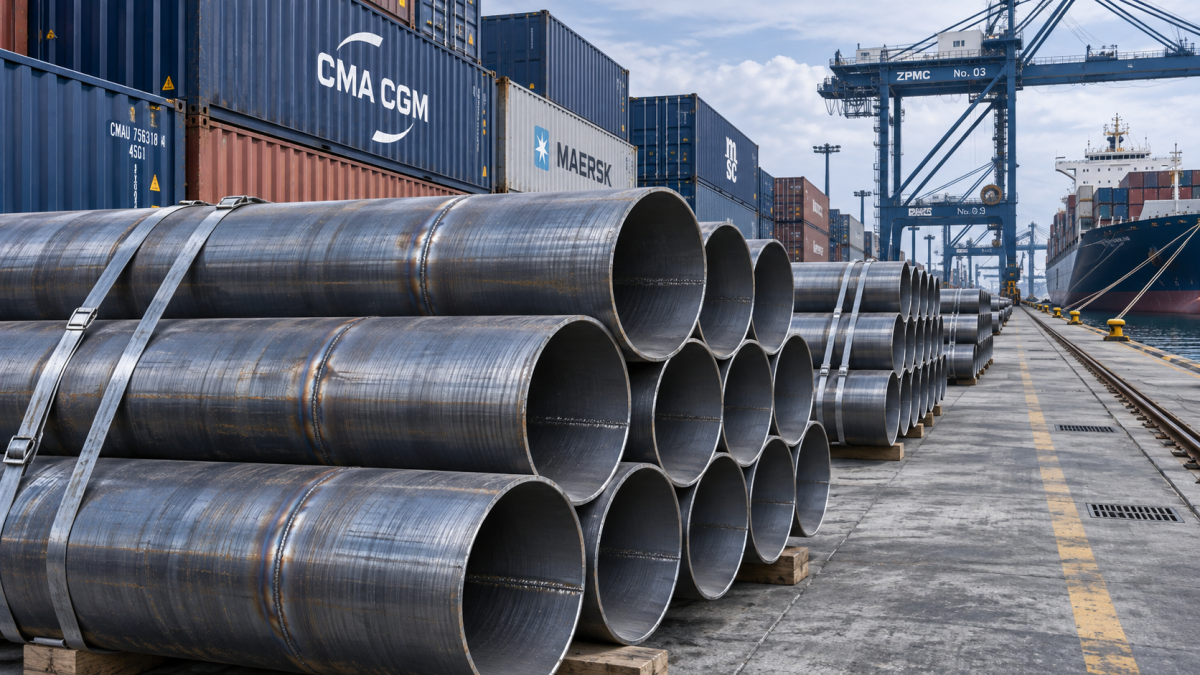
Where Continued Duties May Affect the Supply Chain
Exporters Face Continued Trade-Cost Uncertainty
For producers and exporters in South Korea and Turkey, the immediate analytical point is that the reported decision preserves existing trade measures rather than announcing their removal. Firms considering US sales may therefore need to keep potential duty exposure in their pricing and delivery discussions. The actual effect on a particular shipment cannot be determined from the supplied summary alone.
Product coverage is likely to be a central question. A description such as welded line pipe may not, by itself, establish whether a specific product falls within the relevant orders. Exporters could compare their product specifications and transaction details with the applicable official documentation before making commercial commitments. They may also need to revisit quotations if a buyer and seller have different assumptions about who bears trade-related costs.
Continuation does not establish that every exporter faces the same rate or treatment. Analysis of individual transactions would require information that the summary does not provide, including the applicable terms of the orders and any relevant company-specific treatment. Until those details are verified, an estimate of landed cost should be treated as an estimate.
US Buyers May Reassess Purchase Options
Buyers sourcing welded line pipe for the US market may need to review whether their procurement plans depend on the removal of the orders. If a supplier has assumed that the measures would end, the reported vote could prompt a reassessment of quoted prices, allocation of duty-related costs and delivery commitments. Whether a purchase is affected will depend on the product, transaction and applicable official rules.
From a procurement perspective, comparison of suppliers may require more than comparing unit prices. Buyers could examine the proposed delivery schedule, product specifications and contractual treatment of costs alongside any potential trade exposure. A supplier offering a different origin or product may be a commercial option, but its availability, suitability and applicable trade treatment cannot be inferred from the decision described in the input.
Buyers considering a substitute may also need to confirm that it meets the requirements of the intended application and the relevant purchasing documents. Such a review is a practical precaution, not a new certification requirement established by the reported vote. The supplied information does not identify any change to product standards, testing rules or certification procedures.
Distributors and Service Providers May Need Clearer Records
Distributors and supply chain service providers may be affected when customers ask them to explain the origin, product description or cost assumptions behind an offer. Analysis suggests that inconsistent descriptions across commercial documents could make it harder to assess whether a transaction may be covered by the orders. Participants may therefore find it useful to check that specifications and origin information are consistent across the documents used for a proposed shipment.
Logistics and delivery planning may also need attention if parties pause to verify trade treatment or revise commercial terms. The summary does not establish that shipments have been delayed or that new documentation has been imposed. Any effect on timing would depend on the circumstances of the transaction and the information available to the parties handling it.
Practical Checks Before Committing to a Shipment
Confirm Product Coverage and Applicable Treatment
The first practical step is to verify the relevant official descriptions and determine how they relate to the product being offered or purchased. Companies can assemble the product description, specifications and origin information needed for that review. Where the available documentation leaves uncertainty, they may seek qualified trade advice before relying on an assumed outcome.
It is also sensible to check the current treatment applicable to the parties and transaction. The reported vote establishes that the orders are to be maintained, but the supplied information does not state the duty rates, the duration of continuation or the treatment of particular producers and exporters. These details should not be inferred from the unanimous vote.
Revisit Quotes and Contract Assumptions
Exporters, importers and buyers may benefit from identifying which party is expected to bear duty-related costs and how changes or corrections would be handled under their commercial arrangements. Existing quotations and purchasing plans could be reviewed for assumptions that the orders would end. If such assumptions are present, the parties may need to discuss revised terms before proceeding.
For ongoing procurement, scenario planning can help distinguish a confirmed commitment from a preliminary estimate. A buyer might compare the financial and scheduling implications of a current offer with those of a technically acceptable alternative. The result should remain conditional until product coverage, pricing and supply availability have been checked.
Keep Product and Transaction Information Accessible
Businesses may wish to organize the records needed to assess a shipment, including product specifications, commercial descriptions, origin information and relevant purchase documents. The purpose is to support a consistent review of the transaction and facilitate discussions among suppliers, buyers and service providers. The input does not identify a new recordkeeping rule or a new document that must be filed.
Where procurement documents specify technical characteristics or delivery conditions, teams could check those requirements alongside the trade review. That is particularly relevant if a buyer is considering a different supplier or product: a commercially attractive option may still require technical and contractual validation before it can be used.
Monitor Official Follow-Up and Market Feedback
Companies with exposure to these products may want to monitor the relevant official communications for the terms and practical consequences of the continued orders. Areas to check include product scope, applicable treatment and any subsequent instructions relevant to transactions. The summary does not establish when additional information will be released or whether it will change existing practices.
Supplier quotations, buyer responses and delivery discussions may also provide useful market feedback. Such information can help firms assess their own options, but individual reports should not be treated as proof of a market-wide price movement or supply shortage. The input provides no data on either outcome.
A Continuation Decision With Details Still to Verify
At this stage, the reported decision is best understood as the continuation of existing trade measures, accompanied by unresolved questions about their application to particular transactions. It is not described as the introduction of a new duty order, and the supplied summary does not specify a change in rates. The ITC finding explains the stated basis for maintaining the orders: all six commissioners considered material injury to the US domestic industry highly likely if the orders ended.
From an industry perspective, the significance lies in the persistence of a trade constraint that exporters and buyers must account for when evaluating US transactions. The scale of any effect on sourcing, pricing or delivery remains an analytical question. It may vary according to product coverage, applicable treatment, contractual terms and the availability of acceptable supply.
The date information also warrants careful handling. The dedicated event-time input says the date is unspecified, while the event summary gives November 12, 2026, as the date of the vote. Readers should verify the date against an official source before using it for time-sensitive decisions. The supplied material does not resolve that inconsistency or provide an official link.
Planning Around a Measure That Remains in Place
The unanimous vote described in the input points to continued antidumping and countervailing duty orders on welded line pipe from South Korea and Turkey. For affected businesses, the measured response is to assess possible exposure at the product and transaction level, verify the relevant official terms, and reflect confirmed information in procurement and delivery decisions.
The decision may influence supply chain choices and the US pipe market, but the available information does not establish a particular price change, delivery disruption or outcome for individual companies. Continued observation of trade execution and industry feedback will be needed to assess those effects.
Basis for This Report and Further Verification
This article is based on the user-provided news title, event-time field and event summary. No specific official source link was provided in the input, so the reported decision, its date and its transaction-level implications require continued verification. Relevant source types may include official announcements and communications from the responsible trade authorities, as well as subsequent industry reports.
Further review should focus on the terms of the maintained orders, their practical application to affected products and parties, trade execution, procurement responses and industry feedback. Any assessment of certification or technical requirements should be checked against the documents applicable to the specific purchase; no certification change is established by the supplied summary.
NEWS NAVIGATION
CONTACT US